

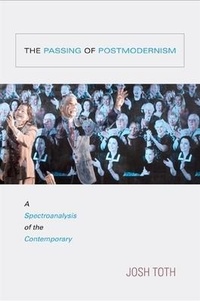
The Passing of Postmodernism
A Spectroanalysis of the Contemporary
Published on 2. January 2011
Book
Paperback/Softback
210 pages
978-1-4384-3036-2 (ISBN)
Description
Examines the increasingly prevalent assumption that postmodernism is over and that literature and film are once again engaging sincerely with issues of ethics and politics.
The Passing of Postmodernism addresses the increasingly prevalent assumption that a period marked by poststructuralism and metafiction has passed and that literature and film are once again engaging sincerely with issues of ethics and politics. In discussions of various twentieth- and twenty-first-century writers, directors, and theorists-from Michel Foucault and Slavoj Zizek to Thomas Pynchon and David Lynch-Josh Toth demonstrates that a certain utopian spirit persisted within, and actually defined, the postmodern project. Just as modernism was animated by an idealistic belief that it could finally realize the utopia beckoning on the horizon, postmodernism was compelled by an equally utopian belief that it could finally reject the possibility of all such illusory ideals. Toth argues that this specter of an impossible future is and must remain both possible and impossible, a ghostly promise of what is always still to come.
Josh Toth teaches literature and critical theory at Grant MacEwan College and is coeditor (with Neil Brooks) of The Mourning After: Attending the Wake of Postmodernism.
The Passing of Postmodernism addresses the increasingly prevalent assumption that a period marked by poststructuralism and metafiction has passed and that literature and film are once again engaging sincerely with issues of ethics and politics. In discussions of various twentieth- and twenty-first-century writers, directors, and theorists-from Michel Foucault and Slavoj Zizek to Thomas Pynchon and David Lynch-Josh Toth demonstrates that a certain utopian spirit persisted within, and actually defined, the postmodern project. Just as modernism was animated by an idealistic belief that it could finally realize the utopia beckoning on the horizon, postmodernism was compelled by an equally utopian belief that it could finally reject the possibility of all such illusory ideals. Toth argues that this specter of an impossible future is and must remain both possible and impossible, a ghostly promise of what is always still to come.
Josh Toth teaches literature and critical theory at Grant MacEwan College and is coeditor (with Neil Brooks) of The Mourning After: Attending the Wake of Postmodernism.
Reviews / Votes
Josh Toth teaches literature and critical theory at Grant MacEwan College and is coeditor (with Neil Brooks) of The Mourning After: Attending the Wake of Postmodernism.More details
Series
Language
English
Place of publication
Albany, NY
United States
Target group
Professional and scholarly
US School Grade: College Graduate Student and over
Product notice
Paperback (trade)
Dimensions
Height: 221 mm
Width: 150 mm
Thickness: 15 mm
Weight
218 gr
ISBN-13
978-1-4384-3036-2 (9781438430362)
Copyright in bibliographic data and cover images is held by Nielsen Book Services Limited or by the publishers or by their respective licensors: all rights reserved.
Schweitzer Classification
Other editions
Additional editions

E-Book
04/2010
1st Edition
State University of New York Press
from
€84.99
Available for download
Person
Josh Toth teaches literature and critical theory at Grant MacEwan University and is coeditor (with Neil Brooks) of The Mourning After: Attending the Wake of Postmodernism.
Content
Acknowledgments
1.The Phantom Project Returning: The Passing (On) of the Still Incomplete Project of Modernity
Introduction
Ruptures and Specters
Exorcisms Without End
The (Phantom) Project Still Incomplete
2. Spectral Circumventions (of the Specter): Poststructuralism, Derrida, and the Project Renewed
Poststructuralism and/as Postmodernism
Private Irony All the Way Down?
The Force of Derrida's Indecision
3. Writing of the Ghost (Again): The Failure of Postmodern
Metafiction and the Narrative of Renewalism
Neither Logocentric nor Logo Centric
From an Ethics of Perversity to an Ethics of Indecision
Metafiction's Failure and the Rise of Neo-Realism
The Project of Renewalism
A Conclusion... Perhaps
Notes
Works Cited
Index
1.The Phantom Project Returning: The Passing (On) of the Still Incomplete Project of Modernity
Introduction
Ruptures and Specters
Exorcisms Without End
The (Phantom) Project Still Incomplete
2. Spectral Circumventions (of the Specter): Poststructuralism, Derrida, and the Project Renewed
Poststructuralism and/as Postmodernism
Private Irony All the Way Down?
The Force of Derrida's Indecision
3. Writing of the Ghost (Again): The Failure of Postmodern
Metafiction and the Narrative of Renewalism
Neither Logocentric nor Logo Centric
From an Ethics of Perversity to an Ethics of Indecision
Metafiction's Failure and the Rise of Neo-Realism
The Project of Renewalism
A Conclusion... Perhaps
Notes
Works Cited
Index