

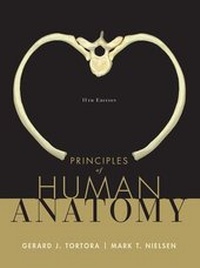
Principles of Human Anatomy
11th Edition
Published on 1. January 2008
Book
Hardback
972 pages
978-0-471-78931-4 (ISBN)
Description
Principles of Human Anatomy pared with WileyPLUS makes a wide variety of visual, audio, tactile, and blended resources easily accessible and provides ample opportunity to SEE, HEAR, and DO Anatomy.
Visualizing human structure has never been clearer. Beautiful new illustrations, outstanding cadaver photographs, and clear micrographs grace every page of this new edition. Visual support for study also includes animations, new cadaver videos, and the dynamic new DVD, Real Anatomy.
Recall what was said in lecture by listening to the MP3 downloads linked to key illustrations from each chapter. Build your vocabulary and learn the language of anatomy with a complete pronunciation dictionary.
Actively engage with the content and review for exams and practicals with a wealth of activities, including the all new Visual Anatomy Exercises, Practice Quizzes, Flashcards, Review Sheets linked to animations and Real Anatomy.
Visualizing human structure has never been clearer. Beautiful new illustrations, outstanding cadaver photographs, and clear micrographs grace every page of this new edition. Visual support for study also includes animations, new cadaver videos, and the dynamic new DVD, Real Anatomy.
Recall what was said in lecture by listening to the MP3 downloads linked to key illustrations from each chapter. Build your vocabulary and learn the language of anatomy with a complete pronunciation dictionary.
Actively engage with the content and review for exams and practicals with a wealth of activities, including the all new Visual Anatomy Exercises, Practice Quizzes, Flashcards, Review Sheets linked to animations and Real Anatomy.
More details
Edition
11., Auflage
Language
English
Place of publication
New York
United States
Publishing group
John Wiley and Sons Ltd
Target group
Professional and scholarly
Edition type
Revised edition
Illustrations
col. Illustrations
Dimensions
Height: 30.5 cm
Width: 24.5 cm
Thickness: 3.5 cm
Weight
2898 gr
ISBN-13
978-0-471-78931-4 (9780471789314)
Schweitzer Classification
Other editions
Previous edition
Gerard J. Tortora
Principles of Human Anatomy with Atlas
Book
06/2004
10th Edition
Wiley
€222.00
Article exhausted; check for reprint
Persons
Jerry Tortora is Professor of Biology Coordinator at Bergen Community College in Paramus, New Jersey, where he teaches human anatomy and physiology as well as microbiology. He received his bachelor's degree in biology from Fairleigh Dickinson University and his master's degree in science education from Montclair State College. He is a member of many professional organizations, including the Hyman Anatomy and Physiology Society (HAPS), the American Society of Microbiology (ASM), American Association for the Advancement of Science (AAAS), National Education Association (NEA), and the Metropolitan Association of College and University Biologists (MACUB).
Above all, Jerry is devoted to his students and their aspirations. In recognition of this commitment, Jerry was the recipient of MACUB's 1992 President's Memorial Award. In 1996, he received a National Institute for Staff and Organizational Development (NISOD) excellence award from the University of Texas and was selected to represent Bergen Community College in a campaign to increase awareness of the contributions of community colleges to higher education.
Jerry is the author of several best-selling science textbooks and laboratory manuals, a calling that often requires an additional 40 hours per week beyond his teaching responsibilities. Nevertheless, he still makes time for four or five weekly aerobic workouts that include biking and running. He also enjoys attending college basketball and professional hockey games and performances at the Metropolitan Opera House.
Mark Nielsen is a Professor in the Department of biology at the University of Utah and for the past twenty-one years has taught anatomy and its related subjects to over 16,000 students. In addition to teaching human anatomy in the Department of biology, he also teaches neuroantomy, embryology, a human dissection course, a teaching human anatomy course, and assist with the comparative vertebrate morphology course. he developed the anatomy course for the physician assistant program at the University of Utah School of Medicine. He developed and continues to help maintain the anatomy and physiology program for the Utah college of Massage Therapy (presently the largest massage school in the United States) and taught his program there for twelve years during its inception and development. His graduate training is in anatomy and his anatomy expertise has a strong basis in dissection. He has prepared and participated in hundreds of dissections of both humans and other vertebrate animals. All his courses incorporate a cadaver-based component in the training with an outstanding exposure to cadaver anatomy. He is a member of the American Association of Anatomists (AAA), the Human Anatomy and Physiology Society (HAPS), and the Anatomical Society of Great Britain and Ireland (ASGBI).
Mark has a passion for teaching anatomy and sharing his knowledge with his students. In addition to the many students he has taught, he has trained and mentored 900 students who have worked in his anatomy laboratory as teaching assistants. His concern for students and his teaching excellence have been acknowledged through numerous awards. He received the prestigious Presidential Teaching Scholar Award at the University of Utah, is a five-time recipient of the University of Utah Student Choice Award for Outstanding Teacher and Mentor, a two time winner of the Outstanding Teacher n the Physician Assistant Program, recipient of the American Massage Therapy Association Jerome Perlinski Teacher of the Year Award, and a two time recipient of Who's Who Among America's Teachers.
Above all, Jerry is devoted to his students and their aspirations. In recognition of this commitment, Jerry was the recipient of MACUB's 1992 President's Memorial Award. In 1996, he received a National Institute for Staff and Organizational Development (NISOD) excellence award from the University of Texas and was selected to represent Bergen Community College in a campaign to increase awareness of the contributions of community colleges to higher education.
Jerry is the author of several best-selling science textbooks and laboratory manuals, a calling that often requires an additional 40 hours per week beyond his teaching responsibilities. Nevertheless, he still makes time for four or five weekly aerobic workouts that include biking and running. He also enjoys attending college basketball and professional hockey games and performances at the Metropolitan Opera House.
Mark Nielsen is a Professor in the Department of biology at the University of Utah and for the past twenty-one years has taught anatomy and its related subjects to over 16,000 students. In addition to teaching human anatomy in the Department of biology, he also teaches neuroantomy, embryology, a human dissection course, a teaching human anatomy course, and assist with the comparative vertebrate morphology course. he developed the anatomy course for the physician assistant program at the University of Utah School of Medicine. He developed and continues to help maintain the anatomy and physiology program for the Utah college of Massage Therapy (presently the largest massage school in the United States) and taught his program there for twelve years during its inception and development. His graduate training is in anatomy and his anatomy expertise has a strong basis in dissection. He has prepared and participated in hundreds of dissections of both humans and other vertebrate animals. All his courses incorporate a cadaver-based component in the training with an outstanding exposure to cadaver anatomy. He is a member of the American Association of Anatomists (AAA), the Human Anatomy and Physiology Society (HAPS), and the Anatomical Society of Great Britain and Ireland (ASGBI).
Mark has a passion for teaching anatomy and sharing his knowledge with his students. In addition to the many students he has taught, he has trained and mentored 900 students who have worked in his anatomy laboratory as teaching assistants. His concern for students and his teaching excellence have been acknowledged through numerous awards. He received the prestigious Presidential Teaching Scholar Award at the University of Utah, is a five-time recipient of the University of Utah Student Choice Award for Outstanding Teacher and Mentor, a two time winner of the Outstanding Teacher n the Physician Assistant Program, recipient of the American Massage Therapy Association Jerome Perlinski Teacher of the Year Award, and a two time recipient of Who's Who Among America's Teachers.
Content
Table of Contents
Chapter 1: An Introduction To The Human Body
Chapter 2: Cells
Chapter 3: Tissues
Chapter 4: Development
Chapter 5: The Integumentary System
Chapter 6: Bone Tissue
Chapter 7: The Skeletal System: The Axial Skeleton
Chapter 8: The Skeletal System: The Appendicular Skeleton
Chapter 9: Joints
Chapter 10: Muscle Tissue
Chapter 11: The Muscular System
Chapter 12: Surface Anatomy
Chapter 13: The Cardiovascular System: Blood
Chapter 14: The Cardiovascular System: The Heart
Chapter 15: The Cardiovascular System: Blood Vessels
Chapter 16: The Lymphatic And Immune System
Chapter 17: Nervous Tissue
Chapter 18: The Spinal Cord And The Spinal Nerves
Chapter 19: The Brain And The Cranial Nerves
Chapter 20: The Autonomic Nervous System
Chapter 21: Somatic Senses
Chapter 22: The Special Senses
Chapter 23: The Endocrine System
Chapter 24: The Respiratory System
Chapter 25: The Digestive System
Chapter 26: The Urinary System
Chapter 27: The Reproductive Systems
Appendices
Chapter 1: An Introduction To The Human Body
Chapter 2: Cells
Chapter 3: Tissues
Chapter 4: Development
Chapter 5: The Integumentary System
Chapter 6: Bone Tissue
Chapter 7: The Skeletal System: The Axial Skeleton
Chapter 8: The Skeletal System: The Appendicular Skeleton
Chapter 9: Joints
Chapter 10: Muscle Tissue
Chapter 11: The Muscular System
Chapter 12: Surface Anatomy
Chapter 13: The Cardiovascular System: Blood
Chapter 14: The Cardiovascular System: The Heart
Chapter 15: The Cardiovascular System: Blood Vessels
Chapter 16: The Lymphatic And Immune System
Chapter 17: Nervous Tissue
Chapter 18: The Spinal Cord And The Spinal Nerves
Chapter 19: The Brain And The Cranial Nerves
Chapter 20: The Autonomic Nervous System
Chapter 21: Somatic Senses
Chapter 22: The Special Senses
Chapter 23: The Endocrine System
Chapter 24: The Respiratory System
Chapter 25: The Digestive System
Chapter 26: The Urinary System
Chapter 27: The Reproductive Systems
Appendices