

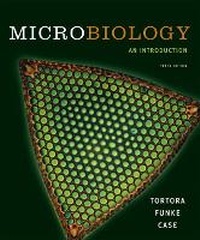
Microbiology
An Introduction with MasteringMicrobiology
10th Edition
Published on 20. January 2011
Book
Hardback
960 pages
978-0-321-74269-8 (ISBN)
Description
This #1 selling non-majors microbiology textbook is praised for its straightforward presentation of complex topics, careful balance of concepts and applications, and proven art that teaches. In its Tenth Edition, Tortora/Funke/Case responds to the #1 challenge of the microbiology course: teaching a wide range of student levels, while still addressing student under-preparedness. The Tenth Edition meets students at their respective skill levels.
First, the book signals core microbiology content to students with the new and highly visual Foundation Figures that students need to understand before moving forward in a chapter. Second, the book gives students frequent opportunities for self-assessment with the new Check Your Understanding questions that correspond by number to the chapter Learning Objectives. Then, a new "visual learning" orientation includes: an increased number of the popular Diseases in Focus boxes, newly illustrated end-of-chapter Study Outlines that provide students with visual cues to remind them of chapter content, and new end-of-chapter Draw It questions. The all-new art program is contemporary without compromising Tortora/Funke/Case's hallmark reputation for precision and clarity. Content revisions include substantially revised immunity chapters and an increased emphasis on antimicrobial resistance, bioterrorism, and biofilms. The new Get Ready for Microbiology workbook and online practice and assessment materials help students prepare for the course.
This text comes packaged with:
Access to MasteringMicrobiology (TM)
First, the book signals core microbiology content to students with the new and highly visual Foundation Figures that students need to understand before moving forward in a chapter. Second, the book gives students frequent opportunities for self-assessment with the new Check Your Understanding questions that correspond by number to the chapter Learning Objectives. Then, a new "visual learning" orientation includes: an increased number of the popular Diseases in Focus boxes, newly illustrated end-of-chapter Study Outlines that provide students with visual cues to remind them of chapter content, and new end-of-chapter Draw It questions. The all-new art program is contemporary without compromising Tortora/Funke/Case's hallmark reputation for precision and clarity. Content revisions include substantially revised immunity chapters and an increased emphasis on antimicrobial resistance, bioterrorism, and biofilms. The new Get Ready for Microbiology workbook and online practice and assessment materials help students prepare for the course.
This text comes packaged with:
Access to MasteringMicrobiology (TM)
More details
Edition
10th edition
Language
English
Place of publication
San Francisco
United States
Publishing group
Pearson Education (US)
Target group
Professional and scholarly
Weight
2431 gr
ISBN-13
978-0-321-74269-8 (9780321742698)
Copyright in bibliographic data is held by Nielsen Book Services Limited or its licensors: all rights reserved.
Schweitzer Classification
Other editions
New editions
Gerard J. Tortora | Berdell R. Funke | Christine L. Case
Microbiology
An Introduction Plus MasteringMicrobiology with eText -- Access Card Package
Book
01/2012
11th Edition
Benjamin Cummings
€166.15
Article is exhausted; no reprint
Previous edition

Gerard J. Tortora | Berdell R. Funke | Christine L. Case
Microbiology
An Introduction with Masteringmicrobiology" and Mymicrobiologyplace Website
Book
03/2010
10th Edition
Benjamin Cummings
€170.87
No shipping information available
Persons
Gerard J. Tortora is a professor of biology and teaches microbiology, human anatomy, and physiology at Bergen Community College in Paramus, New Jersey. He received his M.A. in Biology from Montclair State College in 1965. He belongs to numerous biology/microbiology organizations, such as the American Society of Microbiology (ASM), Human Anatomy and Physiology Society (HAPS), American Association for the Advancement of Science (AAAS), National Education Association (NEA), New Jersey Educational Association (NJEA), and the Metropolitan Association of College and University Biologists (MACUB). Jerry is the author of a number of biological science textbooks. In 1995, he was selected as one of the finest faculty scholars at Bergen Community College and was named Distinguished Faculty Scholar. In 1996, Jerry received a National Institute for Staff and Organizational Development (NISOD) excellence award from the University of Texas and was selected to represent Bergen Community College in a campaign to increase awareness of the contributions of community colleges to higher education.
Berdell R. Funke received his Ph.D., M.S., and B.S. in microbiology from Kansas State University. He has spent his professional years as a professor of microbiology at North Dakota State University. He taught introductory microbiology, including laboratory sections, general microbiology, food microbiology, soil microbiology, clinical parasitology, and pathogenic microbiology. As a research scientist in the Experiment Station at North Dakota State, he has published numerous papers on soil microbiology and food microbiology.
Christine L. Case is a registered microbiologist and a professor of microbiology at Skyline College in San Bruno, California, where she has taught for the past 38 years. She received her Ed. D. in curriculum and instruction from Nova Southeastern University and her M.A. in microbiology from San Francisco State University. She was Director for the Society for Industrial Microbiology (SIM). She received the ASM and California Hayward outstanding educator awards. In addition to teaching, Chris contributes regularly to professional literature, develops innovative educational methodologies, and maintains a personal and professional commitment to conservation and the importance of science in society. Chris is also an avid photographer, and many of her photographs appear in this book.
Berdell R. Funke received his Ph.D., M.S., and B.S. in microbiology from Kansas State University. He has spent his professional years as a professor of microbiology at North Dakota State University. He taught introductory microbiology, including laboratory sections, general microbiology, food microbiology, soil microbiology, clinical parasitology, and pathogenic microbiology. As a research scientist in the Experiment Station at North Dakota State, he has published numerous papers on soil microbiology and food microbiology.
Christine L. Case is a registered microbiologist and a professor of microbiology at Skyline College in San Bruno, California, where she has taught for the past 38 years. She received her Ed. D. in curriculum and instruction from Nova Southeastern University and her M.A. in microbiology from San Francisco State University. She was Director for the Society for Industrial Microbiology (SIM). She received the ASM and California Hayward outstanding educator awards. In addition to teaching, Chris contributes regularly to professional literature, develops innovative educational methodologies, and maintains a personal and professional commitment to conservation and the importance of science in society. Chris is also an avid photographer, and many of her photographs appear in this book.
Content
I. FUNDAMENTALS OF MICROBIOLOGY
1. The Microbial World and You
2. Chemical Principles
3. Observing Microorganisms Through a Microscope
4. Functional Anatomy of Prokaryotic and Eukaryotic Cells
5. Microbial Metabolism
6. Microbial Growth
7. The Control of Microbial Growth
8. Microbial Genetics
9. Biotechnology and Recombinant DNA
II. A SURVEY OF THE MICROBIAL WORLD
10. Classification of Microorganisms
11. The Prokaryotes: Domains Bacteria and Archaea
12. The Eukaryotes: Fungi, Algae, Protozoa, and Helminths
13. Viruses, Viroids, and Prions
III. INTERACTION BETWEEN MICROBE AND HOST
14. Principles of Disease and Epidemiology
15. Microbial Mechanisms of Pathogenicity
16. Innate Immunity: Nonspecific Defenses of the Host
17. Adaptive Immunity: Specific Defenses of the Host
18. Practical Applications of Immunology
19. Disorders Associated with the Immune System
20. Antimicrobial Drugs
IV. MICROORGANISMS AND HUMAN DISEASE
21. Microbial Diseases of the Skin and Eyes
22. Microbial Diseases of the Nervous System
23. Microbial Diseases of the Cardiovascular and Lymphatic Systems
24. Microbial Diseases of the Respiratory System
25. Microbial Diseases of the Digestive System
26. Microbial Diseases of the Urinary and Reproductive Systems
V. ENVIRONMENTAL AND APPLIED MICROBIOLOGY
27. Environmental Microbiology
28. Applied and Industrial Microbiology
1. The Microbial World and You
2. Chemical Principles
3. Observing Microorganisms Through a Microscope
4. Functional Anatomy of Prokaryotic and Eukaryotic Cells
5. Microbial Metabolism
6. Microbial Growth
7. The Control of Microbial Growth
8. Microbial Genetics
9. Biotechnology and Recombinant DNA
II. A SURVEY OF THE MICROBIAL WORLD
10. Classification of Microorganisms
11. The Prokaryotes: Domains Bacteria and Archaea
12. The Eukaryotes: Fungi, Algae, Protozoa, and Helminths
13. Viruses, Viroids, and Prions
III. INTERACTION BETWEEN MICROBE AND HOST
14. Principles of Disease and Epidemiology
15. Microbial Mechanisms of Pathogenicity
16. Innate Immunity: Nonspecific Defenses of the Host
17. Adaptive Immunity: Specific Defenses of the Host
18. Practical Applications of Immunology
19. Disorders Associated with the Immune System
20. Antimicrobial Drugs
IV. MICROORGANISMS AND HUMAN DISEASE
21. Microbial Diseases of the Skin and Eyes
22. Microbial Diseases of the Nervous System
23. Microbial Diseases of the Cardiovascular and Lymphatic Systems
24. Microbial Diseases of the Respiratory System
25. Microbial Diseases of the Digestive System
26. Microbial Diseases of the Urinary and Reproductive Systems
V. ENVIRONMENTAL AND APPLIED MICROBIOLOGY
27. Environmental Microbiology
28. Applied and Industrial Microbiology