

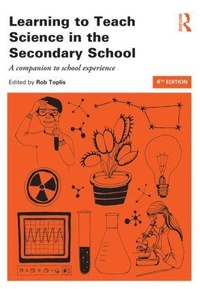
Learning to Teach Science in the Secondary School
A companion to school experience
4th Edition
Published on 13. January 2015
Book
Paperback/Softback
314 pages
978-0-415-82643-3 (ISBN)
Description
Learning to Teach Science in the Secondary School is an indispensable guide with a fresh approach to the process, practice and reality of teaching and learning science in a busy secondary school. This fourth edition has been fully updated in the light of changes to professional knowledge and practice and revisions to the national curriculum.
Written by experienced practitioners, this popular textbook comprehensively covers the opportunities and challenges of teaching science in the secondary school. It provides guidance on:
* the knowledge and skills you need, and understanding the science department at your school
* development of the science curriculum
* the nature of science and how science works, biology, chemistry, physics and astronomy, earth science
* planning for progression, using schemes of work to support planning , and evaluating lessons
* language in science, practical work, using ICT , science for citizenship, Sex and Health Education and learning outside the classroom
* assessment for learning and external assessment and examinations
Every unit includes a clear chapter introduction, learning objectives, further reading, lists of useful resources and specially designed tasks - including those to support Masters Level work - as well as cross-referencing to essential advice in the core text Learning to Teach in the Secondary School, sixth edition.
Learning to Teach Science in the Secondary School is designed to support student teachers through the transition from graduate scientist to practising science teacher, while achieving the highest level of personal and professional development.
Written by experienced practitioners, this popular textbook comprehensively covers the opportunities and challenges of teaching science in the secondary school. It provides guidance on:
* the knowledge and skills you need, and understanding the science department at your school
* development of the science curriculum
* the nature of science and how science works, biology, chemistry, physics and astronomy, earth science
* planning for progression, using schemes of work to support planning , and evaluating lessons
* language in science, practical work, using ICT , science for citizenship, Sex and Health Education and learning outside the classroom
* assessment for learning and external assessment and examinations
Every unit includes a clear chapter introduction, learning objectives, further reading, lists of useful resources and specially designed tasks - including those to support Masters Level work - as well as cross-referencing to essential advice in the core text Learning to Teach in the Secondary School, sixth edition.
Learning to Teach Science in the Secondary School is designed to support student teachers through the transition from graduate scientist to practising science teacher, while achieving the highest level of personal and professional development.
Reviews / Votes
"The book is user friendly and written in an understandable and jargon-free way by current and experienced practitioners. It maintains its accessibility throughout in a refreshingly non-condescending manner. In keeping with good practice, each chapter starts with a series of objectives and many include a number of tasks to help develop the skills needed to be a reflective and critical teacher. The references and ideas for further reading are recent and relevant, and would be a good starting point for trainee teachers to further engage with the topics discussed" - John Caroll, Education in ChemistryMore details
Series
Edition
4th edition
Language
English
Place of publication
London
United Kingdom
Publishing group
Taylor & Francis Ltd
Target group
College/higher education
Professional and scholarly
Edition type
New edition
Product notice
Paperback (trade)
Unsewn / adhesive bound
Illustrations
4 s/w Photographien bzw. Rasterbilder, 22 s/w Zeichnungen, 21 s/w Tabellen
21 Tables, black and white; 22 Line drawings, black and white; 4 Halftones, black and white
Dimensions
Height: 246 mm
Width: 174 mm
Thickness: 22 mm
Weight
605 gr
ISBN-13
978-0-415-82643-3 (9780415826433)
Copyright in bibliographic data and cover images is held by Nielsen Book Services Limited or by the publishers or by their respective licensors: all rights reserved.
Schweitzer Classification
Other editions
New editions
Lindsay Hetherington | Luke Graham | Darren Moore
Learning to Teach Science in the Secondary School
A Companion to School Experience
Book
06/2024
5th Edition
Routledge
€46.80
Shipment within 15-20 days
Additional editions
E-Book
02/2015
4th Edition
Routledge
€78.29
Available for download
E-Book
02/2015
4th Edition
Routledge
€78.29
Available for download
Book
02/2015
4th Edition
Routledge
€170.84
Article exhausted; check for reprint
Previous edition
Rob Toplis | Jenny Frost
Learning to Teach Science in the Secondary School
A Companion to School Experience
Book
03/2010
3rd Edition
Routledge
€52.18
Article exhausted; check for reprint
Person
Rob Toplis is Senior Lecturer in Secondary Science Education at Brunel University, UK.
Content
1. BECOMING A SCIENCE TEACHER 1.1. Learning to be a science teacher Rob Toplis 1.2. Managing your professional learning Caro Garrett 1.3. Working in a science department Rob Toplis 2. THE SCIENCE CURRICULUM 2.1. Science in the National Curriculum Paul Davies 2.2. Science 11-14 Paul Davies 2.3. Science 14-19 Paul Davies 3. GETTING TO GRIPS WITH SCIENCE 3.1. The nature of science Michael J. Reiss 3.2. Biology Katherine Little ls and DNA 3.3. Chemistry Ann Childs 3.4. Physics and astronomy Steven Chapman 3.5. Earth and atmospheric science Paul Davies 4. PLANNING FOR TEACHING AND LEARNING SCIENCE 4.1. Planning for progression in science Ralph Levinson 4.2. Using schemes of work to support planning Kevin Smith 4.3. Planning and evaluating lessons Kevin Smith 4.4. Teaching strategies and organising learning Pete Sorensen 5. TEACHING SCIENCE: SPECIFIC CONTEXTS 5.1 Language in learning science Rob Toplis 5.2. Practical work Rob Toplis 5.3. Using technologies to support learning science Ruth Amos 5.4. Science for citizenship Marcus Grace 5.5. Sex and health education Sandra Campbell 5.6. Beyond the classroom Ruth Amos 6. ASSESSMENT IN SCIENCE 6.1. Assessment for Learning - A Formative Approach Christine Harrison 6.2 Summative assessment and examinations in science Christine Harrison 7. IS EDUCATION RESEARCH VALUABLE FOR TEACHERS OF SCIENCE? John Oversby