

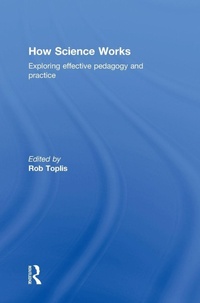
How Science Works
Exploring effective pedagogy and practice
Published on 26. November 2010
Book
Hardback
168 pages
978-0-415-56279-9 (ISBN)
Description
How Science Works provides student and practising teachers with a comprehensive introduction to one of the most dramatic changes to the secondary science curriculum. Underpinned by the latest research in the field, it explores the emergence and meaning of How Science Works and reviews major developments in pedagogy and practice.
With chapters structured around three key themes - why How Science Works, what it is and how to teach it - expert contributors explore issues including the need for curriculum change, arguments for scientific literacy for all, school students' views about science, what we understand about scientific methods, types of scientific enquiry, and, importantly, effective pedagogies and their implications for practice. Aiming to promote discussion and reflection on the ways forward for this new and emerging area of the school science curriculum, it considers:
teaching controversial issues in science
argumentation and questioning for effective teaching
enhancing investigative science and developing reasoned scientific judgments
the role of ICT in exploring How Science Works
teaching science outside the classroom.
How Science Works is a source of guidance for all student, new and experienced teachers of secondary science, interested in investigating how the curriculum can provide creativity and engagement for all school students.
With chapters structured around three key themes - why How Science Works, what it is and how to teach it - expert contributors explore issues including the need for curriculum change, arguments for scientific literacy for all, school students' views about science, what we understand about scientific methods, types of scientific enquiry, and, importantly, effective pedagogies and their implications for practice. Aiming to promote discussion and reflection on the ways forward for this new and emerging area of the school science curriculum, it considers:
teaching controversial issues in science
argumentation and questioning for effective teaching
enhancing investigative science and developing reasoned scientific judgments
the role of ICT in exploring How Science Works
teaching science outside the classroom.
How Science Works is a source of guidance for all student, new and experienced teachers of secondary science, interested in investigating how the curriculum can provide creativity and engagement for all school students.
Reviews / Votes
'A thorough exploration, highlighting the importance of How Science Works in the science curriculum. This will be a very useful companion for many beginning teachers as they explore ways to develop a deeper understanding of the nature of science and how best to teach this.' - Helen Bowhay, Lecturer, PGCE Science, University of Nottingham, UKMore details
Language
English
Place of publication
London
United Kingdom
Publishing group
Taylor & Francis Ltd
Target group
College/higher education
Professional and scholarly
Illustrations
11 s/w Abbildungen, 4 s/w Tabellen
4 Tables, black and white; 11 Illustrations, black and white
Dimensions
Height: 250 mm
Width: 175 mm
Thickness: 14 mm
Weight
484 gr
ISBN-13
978-0-415-56279-9 (9780415562799)
Copyright in bibliographic data and cover images is held by Nielsen Book Services Limited or by the publishers or by their respective licensors: all rights reserved.
Schweitzer Classification
Other editions
Additional editions
E-Book
12/2010
Routledge
€51.49
Available for download
E-Book
12/2010
Routledge
€51.49
Available for download
Book
11/2010
Routledge
€57.70
Shipment within 15-20 days
Person
Rob Toplis is Senior Lecturer in Secondary Science Education at Brunel University, UK.
Content
Chapter 1. How did we get here? Some background to How Science Works in the school curriculum 1 Chapter 2. What do students think about science? Chapter 3. How do scientists work? Chapter 4. What is scientific enquiry? Chapter 5. Teaching controversial issues Chapter 6. Argumentation Chapter 7. Questions and science Chapter 8. Enhancing investigative science Chapter 9. The role of ICT Chapter 10. Teaching outside the classroom Final thoughts