

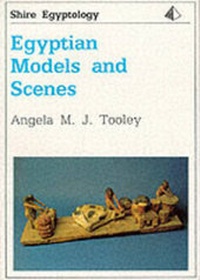
Egyptian Models and Scenes
Published on 1. June 1995
Book
Paperback/Softback
72 pages
978-0-7478-0285-3 (ISBN)
Description
Egyptian models and scenes are frequently mistaken by the public for children's toys, particularly the model boats. But these often crude and charmingly naive figures have a much more serious prupose, namely to provide the staple diet of bread and beer for the tomb owner in the afterlife. This book follows the development of models from their origins in human servant burials at Abydos during the First dynastic and in Old Kingdom tomb decoration, through the stone figures from Old Kingdom mastabas and wooden models of the Eleventh and early Twelfth Dynasties, to their final demise in favour of shabtis in the New Kingdom. Chapters are devoted to single figures or groups which perform a variety of tasks associated with the production of foodstuffs, its storage and its transport by offering bearer and boat. This book discusses where models are found, who owned them, what purpose they served, where abouts in the tomb they were placed and how they relate to tomb scences. An analysis of the types of models found from region to region, along with regional style, is also included.
More details
Series
Language
English
Place of publication
London
United Kingdom
Publishing group
Bloomsbury Publishing PLC
Illustrations
67 b/w pls
Dimensions
Height: 210 mm
Width: 150 mm
Thickness: 5 mm
ISBN-13
978-0-7478-0285-3 (9780747802853)
Copyright in bibliographic data and cover images is held by Nielsen Book Services Limited or by the publishers or by their respective licensors: all rights reserved.
Schweitzer Classification
Person
Angela Tooley achieved a BA Hons in the Archaeology of the Eastern Mediterranean, specialising in Egyptology, at Liverpool University in 1984. Following study visits to Egypt and major European museums she was awarded a PhD on the subject of Middle Kingdom wooden models in 1990. He has excavated in Egypt at Amarna during the seasons 1986 and 1987 and has worked on special projects at Liverpool Museum and as Acting Assistant Keep at the Ashmolean Museum, Oxford, where he was responsible for the re-display of the Nubian collection. She has lectured on Nile cruises and has contributed to a number of articles to learned journals.
Content
Introduction; Model distribution and development; Masters, servants and offering bearers; Kitchens, granaries and storehouses; Industry and agriculture; Travel, home and tomb; Technology; Further reading; Museums