

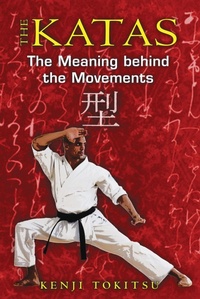
The Katas
The Meaning behind the Movements
Published on 3. September 2010
Book
Paperback/Softback
192 pages
978-1-59477-348-8 (ISBN)
Description
The embodiment of the ancient knowledge that underlies the dedication-to-perfection philosophy of Japan
• How mastering these specific movement sequences known as katas provides a way to deepen one’s martial arts practice spiritually
• Explores the psychological and social importance of the katas in martial arts and Japanese society, including their role in seppuku (ritual suicide)
• Includes many examples from the lives of famous masters, from the legendary samurai Miyamoto Musashi to 20th-century poet Yukio Mishima
An essential part of the martial arts of Japan, such as sumo and karate, the katas are specific sequences of movement that originated during Sakoku, Japan’s period of closure to the outside world from 1633 until 1853. The dedication-to-perfection philosophy of the katas, ubiquitous in Japanese society, is vital to understanding the spiritual aspects of their martial arts as well as other traditional Japanese arts, such as flower arranging, chadō (tea ceremonies), and kabuki theater.
With examples from the lives of famous masters, from legendary samurai Miyamoto Musashi to 20th-century poet Yukio Mishima, this book explores the psychological and social importance of the katas, including their role in seppuku (ritual suicide), the student-master relationship, and gyo (the point at which the practitioner breaks the mold of the kata and begins to embody it). Looking at their origins in the warrior class and how this pursuit of perfection is ultimately a way to accept the power of death, the author explains how performing the katas transmits ancient knowledge much deeper than just technical movements, providing a way to deepen one’s martial arts practice spiritually.
• How mastering these specific movement sequences known as katas provides a way to deepen one’s martial arts practice spiritually
• Explores the psychological and social importance of the katas in martial arts and Japanese society, including their role in seppuku (ritual suicide)
• Includes many examples from the lives of famous masters, from the legendary samurai Miyamoto Musashi to 20th-century poet Yukio Mishima
An essential part of the martial arts of Japan, such as sumo and karate, the katas are specific sequences of movement that originated during Sakoku, Japan’s period of closure to the outside world from 1633 until 1853. The dedication-to-perfection philosophy of the katas, ubiquitous in Japanese society, is vital to understanding the spiritual aspects of their martial arts as well as other traditional Japanese arts, such as flower arranging, chadō (tea ceremonies), and kabuki theater.
With examples from the lives of famous masters, from legendary samurai Miyamoto Musashi to 20th-century poet Yukio Mishima, this book explores the psychological and social importance of the katas, including their role in seppuku (ritual suicide), the student-master relationship, and gyo (the point at which the practitioner breaks the mold of the kata and begins to embody it). Looking at their origins in the warrior class and how this pursuit of perfection is ultimately a way to accept the power of death, the author explains how performing the katas transmits ancient knowledge much deeper than just technical movements, providing a way to deepen one’s martial arts practice spiritually.
More details
Language
English
Place of publication
Rochester, VT
United States
Product notice
Paperback (trade)
Dimensions
Height: 228 mm
Width: 154 mm
Thickness: 15 mm
Weight
310 gr
ISBN-13
978-1-59477-348-8 (9781594773488)
Copyright in bibliographic data and cover images is held by Nielsen Book Services Limited or by the publishers or by their respective licensors: all rights reserved.
Schweitzer Classification
Other editions
Additional editions
E-Book
09/2010
Simon + Schuster LLC
€10.87
Available for download
Person
Kenji Tokitsu has doctorates in sociology and in Japanese civilization. Born in Japan, he began studying martial arts as a child. In 1971 he moved to France and began teaching karate. He founded the Shaolin-mon Karate-do school in Paris in 1983 and the Tokitsu-ryu Academy in 2001. The author of Miyamoto Musashi: His Life and Writings and Ki and the Way of the Martial Arts, he lives in France.
Content
Preface
Part One
An Introduction to Katas
1 Tesshu, or a Model Life
2 Kata, or “Technique and the Man Are One”
Part Two
The Emergence of Katas
3 Closing Japan and Coming Back to Oneself
4 Kami and Japanese Polytheism
5 The Katas of the Social Orders in the Edo Period
6 Breaking Points in History
Part Three
The Dimensions of Kata
7 The Gyō and Self-Investment
8 Death and Time
9 The Psychological Aspect of Kata
Part Four
Persistence and Transformation in a Traditional Culture
10 Seppuku: The Cornerstone of the Warrior’s Kata
11 The Warrior’s Kata in Contemporary Society
12 Effectiveness and Weight of the Katas
13 Katas Today
Conclusion
Notes
Index
Part One
An Introduction to Katas
1 Tesshu, or a Model Life
2 Kata, or “Technique and the Man Are One”
Part Two
The Emergence of Katas
3 Closing Japan and Coming Back to Oneself
4 Kami and Japanese Polytheism
5 The Katas of the Social Orders in the Edo Period
6 Breaking Points in History
Part Three
The Dimensions of Kata
7 The Gyō and Self-Investment
8 Death and Time
9 The Psychological Aspect of Kata
Part Four
Persistence and Transformation in a Traditional Culture
10 Seppuku: The Cornerstone of the Warrior’s Kata
11 The Warrior’s Kata in Contemporary Society
12 Effectiveness and Weight of the Katas
13 Katas Today
Conclusion
Notes
Index