

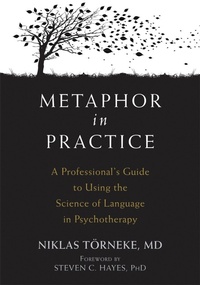
Metaphor in Practice
A Professional's Guide to Using the Science of Language in Psychotherapy
Published on 28. September 2017
Book
Paperback/Softback
256 pages
978-1-62625-901-0 (ISBN)
Description
The use of metaphor is central to the implementation of acceptance and commitment therapy (ACT) and dialectical behavior therapy (DBT), and is a powerful tool for all practicing psychotherapists. In Metaphor in Practice, psychotherapist Niklas Toerneke presents the first practical book to combine the behavioral and linguistic sciences of metaphor, and illustrates how and when to apply metaphors in practice for better treatment outcomes.
The use of metaphors and experiential exercises can help clients gain a deeper understanding of the problems that cause their disorders. Metaphors help clients connect with their values, and often spark the inspiration and motivation needed to make a commitment to change. And while metaphor is central to relational frame theory (RFT), acceptance and commitment therapy (ACT), and dialectical behavior therapy (DBT), research now shows its usefulness has an even broader reach.
In this book, you'll find a scientific analysis of metaphor based on over thirty years of research, as well as trends in research over the last ten years. The book includes an overview of RFT, how metaphor has influenced the community of behavior analysis, as well as available clinical research on metaphor use. You'll also discover how to create metaphors for functional analysis, distance of observation, and things that matter to your client. Most importantly, you'll find practical examples of metaphors and clinical exercises you can use in-session.
The use of metaphors and experiential exercises can help clients gain a deeper understanding of the problems that cause their disorders. Metaphors help clients connect with their values, and often spark the inspiration and motivation needed to make a commitment to change. And while metaphor is central to relational frame theory (RFT), acceptance and commitment therapy (ACT), and dialectical behavior therapy (DBT), research now shows its usefulness has an even broader reach.
In this book, you'll find a scientific analysis of metaphor based on over thirty years of research, as well as trends in research over the last ten years. The book includes an overview of RFT, how metaphor has influenced the community of behavior analysis, as well as available clinical research on metaphor use. You'll also discover how to create metaphors for functional analysis, distance of observation, and things that matter to your client. Most importantly, you'll find practical examples of metaphors and clinical exercises you can use in-session.
More details
Language
English
Place of publication
Oakland, CA
United States
Target group
College/higher education
Professional and scholarly
Product notice
Paperback (UK-trade)
Dimensions
Height: 254 mm
Width: 180 mm
Thickness: 17 mm
Weight
492 gr
ISBN-13
978-1-62625-901-0 (9781626259010)
Copyright in bibliographic data and cover images is held by Nielsen Book Services Limited or by the publishers or by their respective licensors: all rights reserved.
Schweitzer Classification
Other editions
Additional editions
Niklas Torneke
Metaphor in Practice
A Professional's Guide to Using the Science of Language in Psychotherapy
E-Book
07/2017
New Harbinger Publications
€58.99
Available for download
Persons
Niklas Toerneke, MD, is a psychiatrist and has worked as a senior psychiatrist in the department of general psychiatry in his hometown Kalmar (in the southeast of Sweden) from 1991 until he started private practice 1998. He earned license as a psychotherapist in 1996 and was originally trained as a cognitive therapist. Since 1998 he has worked mainly with acceptance and commitment therapy, both in his own practice and as a teacher and clinical supervisor. His clinical experience ranges from psychiatric disorders such as schizophrenia to common anxiety and mood disorders with high prevalence in the general population.