

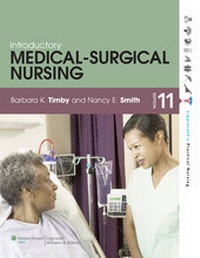
Introductory Medical-Surgical Nursing
11th Edition
Published on 23. October 2013
Book
Paperback/Softback
1328 pages
978-1-4511-7732-9 (ISBN)
Description
This 11th Edition of Timby and Smith's best-selling text equips LPN/LVN students with the practical knowledge and skills necessary to provide safe and effective nursing care to today's medical-surgical clients.
Acclaimed for its highly visual and easy-to-understand presentation, this edition prepares you to manage client nursing care in today's changing healthcare environments and eases the transition from classroom to clinical practice.
Increase your understanding of the nursing process and its relationship to the client's needs through new Nursing Concept Map visuals. Seehow the NCLEX-PN exam relates to chapter content through newIntegrated NCLEX-PN questions that appear in each chapter.
See how research relates to practice through Evidence-Based Practice boxes that include a Clinical Question, Evidence , and Nursing Implication s.
Fine tune your understanding of diseases, procedures, signs, symptoms, and normal vs. abnormal comparisons through dynamic visuals that replace text explanations when a picture better tells the story.
Enhance your understanding of how pathophysiology, signs and symptoms, and nursing care differ for the older population through updated Gerontologic Considerations displays.
Master the special considerations you need to remember when caring for clients who are receiving specific drugs through Pharmacologic Considerations displays .
Handle the special nutritional needs of clients with certain types of conditions with Nutrition Notes displays.
Increase your understanding of important physiological or pathophysiological concepts by viewing Concepts in Action Animations on thePoint website.
Increase your recall and practical assimilation of concepts with each chapter's Stop, Think, and Respond exercises.
Develop a solid understanding of nursing care with more than 30 Nursing Care Plans (with rationales) that address such issues as Alzheimer's disease, cancer, myocardial infarction, stroke, diabetes mellitus, modified radical mastectomy, and chronic renal failure.
Prepare for your future career with Nursing Process sections in each clinical chapter that emphasize a nursing process approach to care and provide rationales in italics for all interventions.
Learn the major categories of drugs used for common conditions with the book's Drug Therapy Tables that list examples of generic and trade names, mechanisms of action, common side effects, and nursing considerations.
Learn to perform specific nursing skills and manage client care using the Nursing Guidelines .
This 11th Edition of Timby and Smith's best-selling text equips LPN/LVN students with the practical knowledge and skills necessary to provide safe and effective nursing care to today's medical-surgical clients.
Acclaimed for its highly visual and easy-to-understand presentation, this edition prepares you to manage client nursing care in today's changing healthcare environments and eases the transition from classroom to clinical practice. <ul><li>Increase your understanding of the nursing process and its relationship to the client's needs through new <b>Nursing Concept Map</b> visuals. Seehow the NCLEX-PN exam relates to chapter content through newIntegrated <b>NCLEX-PN questions</b> that appear in each chapter.</li><li>See how research relates to practice through <b>Evidence-Based Practice boxes</b> that include a <i>Clinical Question, Evidence</i> , and <i>Nursing Implication</i> s. </li><li>Fine tune your understanding of diseases, procedures, signs, symptoms, and normal vs. abnormal comparisons through dynamic visuals that replace text explanations when a picture better tells the story.</li><li>Enhance your understanding of how pathophysiology, signs and symptoms, and nursing care differ for the older population through updated <b>Gerontologic Considerations</b> displays.</li><li>Master the special considerations you need to remember when caring for clients who are receiving specific drugs through <b>Pharmacologic Considerations</b> displays <b>.</b></li><li>Handle the special nutritional needs of clients with certain types of conditions with <b>Nutrition Notes</b> displays.</li><li>Increase your understanding of important physiological or pathophysiological concepts by viewing <b>Concepts in Action Animations</b> on thePoint website.</li><li>Increase your recall and practical assimilation of concepts with each chapter's <b>Stop, Think, and Respond exercises.</b></li><li>Develop a solid understanding of nursing care with <b>more than 30 Nursing Care Plans</b> (with rationales) that address such issues as Alzheimer's disease, cancer, myocardial infarction, stroke, diabetes mellitus, modified radical mastectomy, and chronic renal failure.</li><li>Prepare for your future career with <b>Nursing Process</b> sections in each clinical chapter that emphasize a nursing process approach to care and provide rationales in italics for all interventions.</li><li>Learn the major categories of drugs used for common conditions with the book's <b>Drug Therapy Tables</b> that list examples of generic and trade names, mechanisms of action, common side effects, and nursing considerations.</li><li>Learn to perform specific nursing skills and manage client care using the <b>Nursing Guidelines</b> .</li></ul>
Acclaimed for its highly visual and easy-to-understand presentation, this edition prepares you to manage client nursing care in today's changing healthcare environments and eases the transition from classroom to clinical practice.
Increase your understanding of the nursing process and its relationship to the client's needs through new Nursing Concept Map visuals. Seehow the NCLEX-PN exam relates to chapter content through newIntegrated NCLEX-PN questions that appear in each chapter.
See how research relates to practice through Evidence-Based Practice boxes that include a Clinical Question, Evidence , and Nursing Implication s.
Fine tune your understanding of diseases, procedures, signs, symptoms, and normal vs. abnormal comparisons through dynamic visuals that replace text explanations when a picture better tells the story.
Enhance your understanding of how pathophysiology, signs and symptoms, and nursing care differ for the older population through updated Gerontologic Considerations displays.
Master the special considerations you need to remember when caring for clients who are receiving specific drugs through Pharmacologic Considerations displays .
Handle the special nutritional needs of clients with certain types of conditions with Nutrition Notes displays.
Increase your understanding of important physiological or pathophysiological concepts by viewing Concepts in Action Animations on thePoint website.
Increase your recall and practical assimilation of concepts with each chapter's Stop, Think, and Respond exercises.
Develop a solid understanding of nursing care with more than 30 Nursing Care Plans (with rationales) that address such issues as Alzheimer's disease, cancer, myocardial infarction, stroke, diabetes mellitus, modified radical mastectomy, and chronic renal failure.
Prepare for your future career with Nursing Process sections in each clinical chapter that emphasize a nursing process approach to care and provide rationales in italics for all interventions.
Learn the major categories of drugs used for common conditions with the book's Drug Therapy Tables that list examples of generic and trade names, mechanisms of action, common side effects, and nursing considerations.
Learn to perform specific nursing skills and manage client care using the Nursing Guidelines .
This 11th Edition of Timby and Smith's best-selling text equips LPN/LVN students with the practical knowledge and skills necessary to provide safe and effective nursing care to today's medical-surgical clients.
Acclaimed for its highly visual and easy-to-understand presentation, this edition prepares you to manage client nursing care in today's changing healthcare environments and eases the transition from classroom to clinical practice. <ul><li>Increase your understanding of the nursing process and its relationship to the client's needs through new <b>Nursing Concept Map</b> visuals. Seehow the NCLEX-PN exam relates to chapter content through newIntegrated <b>NCLEX-PN questions</b> that appear in each chapter.</li><li>See how research relates to practice through <b>Evidence-Based Practice boxes</b> that include a <i>Clinical Question, Evidence</i> , and <i>Nursing Implication</i> s. </li><li>Fine tune your understanding of diseases, procedures, signs, symptoms, and normal vs. abnormal comparisons through dynamic visuals that replace text explanations when a picture better tells the story.</li><li>Enhance your understanding of how pathophysiology, signs and symptoms, and nursing care differ for the older population through updated <b>Gerontologic Considerations</b> displays.</li><li>Master the special considerations you need to remember when caring for clients who are receiving specific drugs through <b>Pharmacologic Considerations</b> displays <b>.</b></li><li>Handle the special nutritional needs of clients with certain types of conditions with <b>Nutrition Notes</b> displays.</li><li>Increase your understanding of important physiological or pathophysiological concepts by viewing <b>Concepts in Action Animations</b> on thePoint website.</li><li>Increase your recall and practical assimilation of concepts with each chapter's <b>Stop, Think, and Respond exercises.</b></li><li>Develop a solid understanding of nursing care with <b>more than 30 Nursing Care Plans</b> (with rationales) that address such issues as Alzheimer's disease, cancer, myocardial infarction, stroke, diabetes mellitus, modified radical mastectomy, and chronic renal failure.</li><li>Prepare for your future career with <b>Nursing Process</b> sections in each clinical chapter that emphasize a nursing process approach to care and provide rationales in italics for all interventions.</li><li>Learn the major categories of drugs used for common conditions with the book's <b>Drug Therapy Tables</b> that list examples of generic and trade names, mechanisms of action, common side effects, and nursing considerations.</li><li>Learn to perform specific nursing skills and manage client care using the <b>Nursing Guidelines</b> .</li></ul>
More details
Edition
11th edition
Language
English
Place of publication
Philadelphia
United States
Target group
Professional and scholarly
Product notice
Paperback (trade)
Illustrations
600
Dimensions
Height: 276 mm
Width: 213 mm
Weight
2631 gr
ISBN-13
978-1-4511-7732-9 (9781451177329)
Copyright in bibliographic data and cover images is held by Nielsen Book Services Limited or by the publishers or by their respective licensors: all rights reserved.
Schweitzer Classification
Other editions
Previous edition
Barbara Kuhn Timby | Nancy E. Smith
Introductory Medical-surgical Nursing
Book
09/2009
10th Edition
Lippincott Williams and Wilkins
€89.44
Article exhausted; check for reprint
Content
UNIT 1
Nursing Roles and Responsibilities
1 Concepts and Trends in Healthcare?
2 Settings and Models for Nursing Care?
3 The Nursing Process?
4 Interviewing and Physical Assessment
5 Legal and Ethical Issues?
6 Leadership Roles and Management Functions?
UNIT 2
Client Care Concerns
7 Nurse-Client Relationships
8 Cultural Care Considerations?
9 Complementary and Alternative Therapies?
10 End-of-Life Care?
UNIT 3
Foundations of Medical-Surgical Nursing
11 Pain Management?
12 Infection ?
13 Intravenous Therapy ?
14 Perioperative Care ?
15 Disaster Situations ?
UNIT 4
Caring for Clients with Multisystem Disorders
16 Caring for Clients with Fluid, Electrolyte, and Acid-Base Imbalances?
17 Caring for Clients in Shock ?
18 Caring for Clients with Cancer ?
UNIT 5
Caring for Clients with Respiratory Disorders
19 Introduction to the Respiratory System ?
20 Caring for Clients with Upper Respiratory Disorders ?
21 Caring for Clients with Lower Respiratory Disorders ?
UNIT 6
Caring for Clients with Cardiovascular Disorders
22 Introduction to the Cardiovascular System ?
23 Caring for Clients with Infectious and Inflammatory Disorders of the Heart and Blood Vessels ?
24 Caring for Clients with Valvular Disorders of the Heart ?
25 Caring for Clients with Disorders of Coronary and Peripheral Blood Vessels ?
26 Caring for Clients with Cardiac Dysrhythmias ?
27 Caring for Clients with Hypertension ?
28 Caring for Clients with Heart Failure ?
29 Caring for Clients Undergoing Cardiovascular Surgery ?
UNIT 7
Caring for Clients with Hematopoietic and Lymphatic Disorders
30 Introduction to the Hematopoietic and Lymphatic Systems ?
31 Caring for Clients with Disorders of the Hematopoietic System ?
32 Caring for Clients with Disorders of the Lymphatic System ?
UNIT 8
Caring for Clients with Immune Disorders
33 Introduction to the Immune System ?
34 Caring for Clients with Immune-Mediated Disorders ?
35 Caring for Clients with HIV/AIDS
UNIT 9
Caring for Clients with Neurologic Disorders
?
36 Introduction to the Nervous System ?
37 Caring for Clients with Central and Peripheral Nervous System Disorders ?
38 Caring for Clients with Cerebrovascular Disorders ?
39 Caring for Clients with Head and Spinal Cord Trauma ?
40 Caring for Clients with Neurologic Deficits ?
UNIT 10
Caring for Clients with Sensory Disorders
41 Introduction to the Sensory System ?
42 Caring for Clients with Eye Disorders ?
43 Caring for Clients with Ear Disorders ?
UNIT 11
Caring for Clients with Gastrointestinal Disorders
44 Introduction to the Gastrointestinal System and Accessory Structures ?
45 Caring for Clients with Disorders of the Upper Gastrointestinal Tract ?
46 Caring for Clients with Disorders of the Lower Gastrointestinal Tract ?
47 Caring for Clients with Disorders of the Liver, Gallbladder, or Pancreas ?
48 Caring for Clients with Ostomies ?
UNIT 12
Caring for Clients with Endocrine Disorders
49 Introduction to the Endocrine System ?
50 Caring for Clients with Disorders of the Endocrine System ?
51 Caring for Clients with Diabetes Mellitus ?
UNIT 13
Caring for Clients with Breast and Reproductive Disorders
52 Introduction to the Reproductive System ?
53 Caring for Clients with Disorders of the Female Reproductive System ?
54 Caring for Clients with Breast Disorders ?
55 Caring for Clients with Disorders of the Male Reproductive System ?
56 Caring for Clients with Sexually Transmitted Infections ?
UNIT 14
Caring for Clients with Urinary and Renal Disorders
57 Introduction to the Urinary System ?
58 Caring for Clients with Disorders of the Kidneys and Ureters ?
59 Caring for Clients with Disorders of the Bladder and Urethra ?
UNIT 15
Caring for Clients with Musculoskeletal Disorders
60 Introduction to the Musculoskeletal System ?
61 Caring for Clients Requiring Orthopedic Treatment ?
62 Caring for Clients with Traumatic Musculoskeletal Injuries ?
63 Caring for Clients with Orthopedic and Connective Tissue Disorders ?
UNIT 16
Caring for Clients with Integumentary Disorders
64 Introduction to the Integumentary System ?
65 Caring for Clients with Skin, Hair, and Nail Disorders ?
66 Caring for Clients with Burns ?
UNIT 17
Caring for Clients with Psychobiologic Disorders
67 Interaction of Body and Mind ?
68 Caring for Clients with Anxiety Disorders ?
69 Caring for Clients with Mood Disorders ?
70 Caring for Clients with Eating Disorders ?
71 Caring for Clients with Chemical Dependence ?
72 Caring for Clients with Dementia and Thought Disorders ?
?
APPENDIX A Commonly Used Abbreviations and Acronyms?
APPENDIX B Laboratory Values?
Glossary available on thePoint website
References and Suggested Readings available on thePoint website
Nursing Roles and Responsibilities
1 Concepts and Trends in Healthcare?
2 Settings and Models for Nursing Care?
3 The Nursing Process?
4 Interviewing and Physical Assessment
5 Legal and Ethical Issues?
6 Leadership Roles and Management Functions?
UNIT 2
Client Care Concerns
7 Nurse-Client Relationships
8 Cultural Care Considerations?
9 Complementary and Alternative Therapies?
10 End-of-Life Care?
UNIT 3
Foundations of Medical-Surgical Nursing
11 Pain Management?
12 Infection ?
13 Intravenous Therapy ?
14 Perioperative Care ?
15 Disaster Situations ?
UNIT 4
Caring for Clients with Multisystem Disorders
16 Caring for Clients with Fluid, Electrolyte, and Acid-Base Imbalances?
17 Caring for Clients in Shock ?
18 Caring for Clients with Cancer ?
UNIT 5
Caring for Clients with Respiratory Disorders
19 Introduction to the Respiratory System ?
20 Caring for Clients with Upper Respiratory Disorders ?
21 Caring for Clients with Lower Respiratory Disorders ?
UNIT 6
Caring for Clients with Cardiovascular Disorders
22 Introduction to the Cardiovascular System ?
23 Caring for Clients with Infectious and Inflammatory Disorders of the Heart and Blood Vessels ?
24 Caring for Clients with Valvular Disorders of the Heart ?
25 Caring for Clients with Disorders of Coronary and Peripheral Blood Vessels ?
26 Caring for Clients with Cardiac Dysrhythmias ?
27 Caring for Clients with Hypertension ?
28 Caring for Clients with Heart Failure ?
29 Caring for Clients Undergoing Cardiovascular Surgery ?
UNIT 7
Caring for Clients with Hematopoietic and Lymphatic Disorders
30 Introduction to the Hematopoietic and Lymphatic Systems ?
31 Caring for Clients with Disorders of the Hematopoietic System ?
32 Caring for Clients with Disorders of the Lymphatic System ?
UNIT 8
Caring for Clients with Immune Disorders
33 Introduction to the Immune System ?
34 Caring for Clients with Immune-Mediated Disorders ?
35 Caring for Clients with HIV/AIDS
UNIT 9
Caring for Clients with Neurologic Disorders
?
36 Introduction to the Nervous System ?
37 Caring for Clients with Central and Peripheral Nervous System Disorders ?
38 Caring for Clients with Cerebrovascular Disorders ?
39 Caring for Clients with Head and Spinal Cord Trauma ?
40 Caring for Clients with Neurologic Deficits ?
UNIT 10
Caring for Clients with Sensory Disorders
41 Introduction to the Sensory System ?
42 Caring for Clients with Eye Disorders ?
43 Caring for Clients with Ear Disorders ?
UNIT 11
Caring for Clients with Gastrointestinal Disorders
44 Introduction to the Gastrointestinal System and Accessory Structures ?
45 Caring for Clients with Disorders of the Upper Gastrointestinal Tract ?
46 Caring for Clients with Disorders of the Lower Gastrointestinal Tract ?
47 Caring for Clients with Disorders of the Liver, Gallbladder, or Pancreas ?
48 Caring for Clients with Ostomies ?
UNIT 12
Caring for Clients with Endocrine Disorders
49 Introduction to the Endocrine System ?
50 Caring for Clients with Disorders of the Endocrine System ?
51 Caring for Clients with Diabetes Mellitus ?
UNIT 13
Caring for Clients with Breast and Reproductive Disorders
52 Introduction to the Reproductive System ?
53 Caring for Clients with Disorders of the Female Reproductive System ?
54 Caring for Clients with Breast Disorders ?
55 Caring for Clients with Disorders of the Male Reproductive System ?
56 Caring for Clients with Sexually Transmitted Infections ?
UNIT 14
Caring for Clients with Urinary and Renal Disorders
57 Introduction to the Urinary System ?
58 Caring for Clients with Disorders of the Kidneys and Ureters ?
59 Caring for Clients with Disorders of the Bladder and Urethra ?
UNIT 15
Caring for Clients with Musculoskeletal Disorders
60 Introduction to the Musculoskeletal System ?
61 Caring for Clients Requiring Orthopedic Treatment ?
62 Caring for Clients with Traumatic Musculoskeletal Injuries ?
63 Caring for Clients with Orthopedic and Connective Tissue Disorders ?
UNIT 16
Caring for Clients with Integumentary Disorders
64 Introduction to the Integumentary System ?
65 Caring for Clients with Skin, Hair, and Nail Disorders ?
66 Caring for Clients with Burns ?
UNIT 17
Caring for Clients with Psychobiologic Disorders
67 Interaction of Body and Mind ?
68 Caring for Clients with Anxiety Disorders ?
69 Caring for Clients with Mood Disorders ?
70 Caring for Clients with Eating Disorders ?
71 Caring for Clients with Chemical Dependence ?
72 Caring for Clients with Dementia and Thought Disorders ?
?
APPENDIX A Commonly Used Abbreviations and Acronyms?
APPENDIX B Laboratory Values?
Glossary available on thePoint website
References and Suggested Readings available on thePoint website