

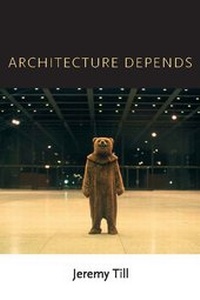
Architecture Depends
Published on 9. January 2009
Book
Hardback
272 pages
978-0-262-01253-9 (ISBN)
Description
Polemics and reflections on how to bridge the gap between what architecture actually is and what architects want it to be.Architecture depends-on what? On people, time, politics, ethics, mess: the real world. Architecture, Jeremy Till argues with conviction in this engaging, sometimes pugnacious book, cannot help itself; it is dependent for its very existence on things outside itself. Despite the claims of autonomy, purity, and control that architects like to make about their practice, architecture is buffeted by uncertainty and contingency. Circumstances invariably intervene to upset the architect's best-laid plans-at every stage in the process, from design through construction to occupancy. Architects, however, tend to deny this, fearing contingency and preferring to pursue perfection. With Architecture Depends, architect and critic Jeremy Till offers a proposal for rescuing architects from themselves: a way to bridge the gap between what architecture actually is and what architects want it to be. Mixing anecdote, design, social theory, and personal experience, Till's writing is always accessible, moving freely between high and low registers, much like his suggestions for architecture itself.
More details
Series
Language
English
Place of publication
Cambridge, Mass.
United States
Publishing group
MIT Press Ltd
Target group
Adult education
Interest Age: From 18 years
Product notice
Cloth over boards
Illustrations
23 s/w Abbildungen
23 b&w illus.
Dimensions
Height: 229 mm
Width: 152 mm
Thickness: 22 mm
Weight
567 gr
ISBN-13
978-0-262-01253-9 (9780262012539)
Copyright in bibliographic data and cover images is held by Nielsen Book Services Limited or by the publishers or by their respective licensors: all rights reserved.
Schweitzer Classification
Other editions
New editions
Person
Jeremy Till is Dean of Architecture and Built Environment at the University of Westminster and a partner at Sarah Wigglesworth Architects. Their projects include the pioneering 9 Stock Orchard Street (The Strawbale House and Quilted Office), winner of multiple awards. He represented Britain at the 2006 Venice Architecture Biennale.