

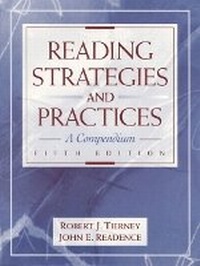
Reading Strategies and Practices
A Compendium
5th Edition
Published on 10. November 1999
Book
Paperback/Softback
530 pages
978-0-205-29808-2 (ISBN)
Description
This fifth edition fills a void by being a ready reference for prospective teachers and literacy education professionals, who want a clear, overall perspective of instructional procedures and who approach their teaching with a view of experimentation and decision making. This book is intended to be an on-going reference to be used in conjunction with almost any literacy education course. It is designed to afford the reader an active role in examining and evaluating instructional techniques. The authors do not expect readers to become familiar with all of the strategies or practices presented in the text; rather, they recommend reading it selectively and reflectively. Students should select the units and strategies they wish to review and evaluate.
More details
Edition
5th edition
Language
English
Place of publication
United States
Publishing group
Pearson Education (US)
Target group
Professional and scholarly
Dimensions
Height: 234 mm
Width: 180 mm
Thickness: 21 mm
Weight
763 gr
ISBN-13
978-0-205-29808-2 (9780205298082)
Copyright in bibliographic data and cover images is held by Nielsen Book Services Limited or by the publishers or by their respective licensors: all rights reserved.
Schweitzer Classification
Other editions
New editions
Book
09/2004
6th Edition
Pearson
€169.34
Article exhausted; check for reprint
Previous edition

Book
05/2000
4th Edition
Allyn & Bacon
€68.27
Article exhausted; check different version
Content
Each chapter includes "Unit Overview."
Preface.
How to Use This Book.
About the Authors.
1.Lesson Frameworks for Reader Support.
Guided Reading.
Four Blocks.
Directed Reading Activity.
Directed Reading - Thinking Activity.
Scaffolded Reading Experience.
2.Holistic, Whole Language, Learner-Centered, and Literature-Based Approaches.
Whole-Language.
Theme-Based Units.
Author-Reader-Inquirer Cycle.
Reading-Writing Workshop.
Book Club.
Uninterrupted Sustained Silent Reading.
Individualized Reading.
Shared Book Experience.
3.Intervention Programs for "At-Risk" Readers.
Reading Recovery.
Success for All.
Early Steps.
Monroe Methods.
Gillingham-Stillman Method.
Fernald Technique.
4.Phonics and Word Identification.
Word Study.
Analytic Method.
Synthetic Word Families.
Syllabaries.
Retrospective Miscue Analysis.
Goodman's Reading Strategy Lessons.
5.Teaching Reading as a Language Experience.
Allen's Language Experience Approach in Communication.
Ashton-Warner's Organic Reading.
Stauffer's Language-Experience Approach.
Patterned Language Approach.
6.Response to Literature and Drama.
Process Drama.
Point, Counterpoint.
Response Heuristic.
Sketch to Stretch.
Readers Theatre.
7.Responding to Readers as Writers and Genre Study.
Author's Chair/Peer Conferencing.
Dialogue Journals.
Style Study.
Story Impressions.
Expository Reading-Writing Think-Sheets.
Reading and Writing as Composing.
8.Discussion and Cooperative Learning.
Literature Circles.
Great Books' Shared Inquiry.
Conversational Discussion Groups.
Discussion Web.
Jigsaw.
9.Comprehension Development and Thinking Critically.
Questioning the Author.
K-W-L.
PReP Technique.
Anticipation Guide.
Text Preview.
ReQuest Procedure.
Question-Answer Relationships.
Explicit Teaching of Reading Comprehension.
Think-Alouds.
Induced Imagery.
Dialogical-Thinking Reading Lesson.
Inquiry Chart.
10.Meaning Vocabulary.
Possible Sentences.
List-Group-Label.
Contextual Redefinition.
Feature Analysis.
Word Map.
Vocabulary Self-Collection Strategy.
11.Content Area Literacy.
Graphic Organizers.
Study Guides.
Selective Reading Guide.
Idea Mapping.
Text Structure Structure.
Story Grammar and Story Maps.
Sentence Combining.
Guided Writing Procedure.
I-Search Paper.
12.Studying.
Survey Technique.
PORPE.
Notetaking System for Learning.
Guided Lecture Procedure.
Graphic Information Lesson.
PLAE.
13.Oral Reading.
Choral and Repeated Reading.
Radio Reading.
Echo Reading.
Topping's Paired Reading.
14.Assessment for Classrooms, Teachers, and Students.
Performance Assessment.
Portfolios.
Anecdotal Records.
Running Records.
Retelling.
Cloze.
Preface.
How to Use This Book.
About the Authors.
1.Lesson Frameworks for Reader Support.
Guided Reading.
Four Blocks.
Directed Reading Activity.
Directed Reading - Thinking Activity.
Scaffolded Reading Experience.
2.Holistic, Whole Language, Learner-Centered, and Literature-Based Approaches.
Whole-Language.
Theme-Based Units.
Author-Reader-Inquirer Cycle.
Reading-Writing Workshop.
Book Club.
Uninterrupted Sustained Silent Reading.
Individualized Reading.
Shared Book Experience.
3.Intervention Programs for "At-Risk" Readers.
Reading Recovery.
Success for All.
Early Steps.
Monroe Methods.
Gillingham-Stillman Method.
Fernald Technique.
4.Phonics and Word Identification.
Word Study.
Analytic Method.
Synthetic Word Families.
Syllabaries.
Retrospective Miscue Analysis.
Goodman's Reading Strategy Lessons.
5.Teaching Reading as a Language Experience.
Allen's Language Experience Approach in Communication.
Ashton-Warner's Organic Reading.
Stauffer's Language-Experience Approach.
Patterned Language Approach.
6.Response to Literature and Drama.
Process Drama.
Point, Counterpoint.
Response Heuristic.
Sketch to Stretch.
Readers Theatre.
7.Responding to Readers as Writers and Genre Study.
Author's Chair/Peer Conferencing.
Dialogue Journals.
Style Study.
Story Impressions.
Expository Reading-Writing Think-Sheets.
Reading and Writing as Composing.
8.Discussion and Cooperative Learning.
Literature Circles.
Great Books' Shared Inquiry.
Conversational Discussion Groups.
Discussion Web.
Jigsaw.
9.Comprehension Development and Thinking Critically.
Questioning the Author.
K-W-L.
PReP Technique.
Anticipation Guide.
Text Preview.
ReQuest Procedure.
Question-Answer Relationships.
Explicit Teaching of Reading Comprehension.
Think-Alouds.
Induced Imagery.
Dialogical-Thinking Reading Lesson.
Inquiry Chart.
10.Meaning Vocabulary.
Possible Sentences.
List-Group-Label.
Contextual Redefinition.
Feature Analysis.
Word Map.
Vocabulary Self-Collection Strategy.
11.Content Area Literacy.
Graphic Organizers.
Study Guides.
Selective Reading Guide.
Idea Mapping.
Text Structure Structure.
Story Grammar and Story Maps.
Sentence Combining.
Guided Writing Procedure.
I-Search Paper.
12.Studying.
Survey Technique.
PORPE.
Notetaking System for Learning.
Guided Lecture Procedure.
Graphic Information Lesson.
PLAE.
13.Oral Reading.
Choral and Repeated Reading.
Radio Reading.
Echo Reading.
Topping's Paired Reading.
14.Assessment for Classrooms, Teachers, and Students.
Performance Assessment.
Portfolios.
Anecdotal Records.
Running Records.
Retelling.
Cloze.