

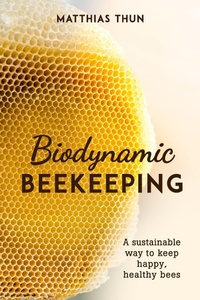
Biodynamic Beekeeping
A Sustainable Way to Keep Happy, Healthy Bees
Published on 17. September 2020
Book
Paperback/Softback
192 pages
978-1-78250-674-4 (ISBN)
Description
Modern beekeeping, influenced by new technologies and breeding methods, has increased honey production but left bee colonies weak and vulnerable to disease. With the alarming decline of the bee population raising concerns about an impending ecological crisis, many beekeepers are seeking a more sustainable way of caring for bees.
Biodynamic Beekeeping is the first book to offer practical instruction on caring for bees using biodynamic theories and methods. By considering the influence of the movement of the stars and the planets on the bees' natural habits, biodynamics encourages beekeepers to be more in tune with their bees indicating, for example, the best days on which to inspect colonies or gather honey.
This fascinating book offers beekeepers detailed advice and instruction on how to work more holistically, including:
-- the challenges and advantages of breeding queen bees
-- how to artificially induce swarming to propagate colonies
-- how to use biodynamic ashing techniques to combat varroa mites
-- instructions for making winter-feed according to current biodynamic thinking
Biodynamic Beekeeping is the first book to offer practical instruction on caring for bees using biodynamic theories and methods. By considering the influence of the movement of the stars and the planets on the bees' natural habits, biodynamics encourages beekeepers to be more in tune with their bees indicating, for example, the best days on which to inspect colonies or gather honey.
This fascinating book offers beekeepers detailed advice and instruction on how to work more holistically, including:
-- the challenges and advantages of breeding queen bees
-- how to artificially induce swarming to propagate colonies
-- how to use biodynamic ashing techniques to combat varroa mites
-- instructions for making winter-feed according to current biodynamic thinking
Reviews / Votes
'David Heaf has prepared this excellent and clear translation, enabling an English-reading audience to access for the first time this biodynamic approach, and translating into modern beekeeping practice Rudolf Steiner?s indications on the essential nature of the honey bee... Plenty of interesting ideas for the thinking beekeeper!'-- Bees for Development Journal
'This book is ideal for the conventional beekeeper who wants to convert to biodynamic methods or for the biodynamic beekeeper who wants to learn more.'
--Cygnus
More details
Language
English
Place of publication
Edinburgh
United Kingdom
Illustrations
over 70 black and white photographs
Dimensions
Height: 231 mm
Width: 153 mm
Thickness: 14 mm
Weight
306 gr
ISBN-13
978-1-78250-674-4 (9781782506744)
Copyright in bibliographic data and cover images is held by Nielsen Book Services Limited or by the publishers or by their respective licensors: all rights reserved.
Schweitzer Classification
Persons
Matthias Thun (1948-2020) was an international expert on biodynamic beekeeping with over 50 years' experience. He had a Masters in Beekeeping and lectured at biodynamic conferences and training seminars internationally. He worked with his mother, biodynamic pioneer Maria Thun, on the annual creation of the seminal Maria Thun Biodynamic Calendar, until her death in 2012 after which he continued it independently. Matthias lived at his family's biodynamic homestead in Dexbach, Germany, until his death.
Content
Foreword by David Heaf
1. The Start of the Bee Year
2. Caring for Bees According to Cosmic Rhythms
3. The First Spring Inspection
4. The Building Frame
5. The Urge to Swarm
6. Colony Regeneration and Propogation
7. Breeding Queen Bees
8. Honeycomb Construction
9. Honey
10. Feeding in Winter
11. Bee Diseases
12. Methods of Ash Usage
13. The Cultivation of Plants for Bees
14. The Conservation of Bees for the Future
Bibliography and Recommended Reading
Index
1. The Start of the Bee Year
2. Caring for Bees According to Cosmic Rhythms
3. The First Spring Inspection
4. The Building Frame
5. The Urge to Swarm
6. Colony Regeneration and Propogation
7. Breeding Queen Bees
8. Honeycomb Construction
9. Honey
10. Feeding in Winter
11. Bee Diseases
12. Methods of Ash Usage
13. The Cultivation of Plants for Bees
14. The Conservation of Bees for the Future
Bibliography and Recommended Reading
Index