

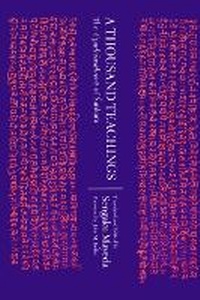
A Thousand Teachings
The Upadesasahasri of Sa?kara
State University of New York Press
Published on 23. January 1992
Book
Hardback
288 pages
978-0-7914-0943-5 (ISBN)
Description
This is the best introduction to Vedanta and to Sa?kara's philosophy. The Upadesasahasri, or A Thousand Teachings consists of a metrical part and a prose part. In the metrical part, Sankara discusses the basic philosophical problems of non-dualism, at the same time refuting the teachings of other philosophical schools. In the prose part, he explains how to teach the way to self realization--to enlightenment.
Sa?kara and the great Abhinavagupta are generally regarded as the two greatest thinkers in the long history of Indian philosophy. Sankara represented Advaita Vedanta, a non-dualistic view of ultimate reality. Most of his works are commentaries on classics of Indian thought. A Thousand Teachings is the only non-commentarial work that can be attributed to him; the other independent writings ascribed to him are probably spurious.
Sa?kara and the great Abhinavagupta are generally regarded as the two greatest thinkers in the long history of Indian philosophy. Sankara represented Advaita Vedanta, a non-dualistic view of ultimate reality. Most of his works are commentaries on classics of Indian thought. A Thousand Teachings is the only non-commentarial work that can be attributed to him; the other independent writings ascribed to him are probably spurious.
More details
Language
English
Place of publication
Albany, NY
United States
Illustrations
Total Illustrations: 0
Dimensions
Height: 229 mm
Width: 152 mm
Thickness: 25 mm
Weight
227 gr
ISBN-13
978-0-7914-0943-5 (9780791409435)
Copyright in bibliographic data and cover images is held by Nielsen Book Services Limited or by the publishers or by their respective licensors: all rights reserved.
Schweitzer Classification
Persons
Sengaku Mayeda, Professor and Chairperson of the Department of Indian Philosophy and Buddhist Studies at the University of Tokyo, is the world's foremost authority on the Upadesaasahasri. With this translation and an extensive introduction to Sankara's life and thought, he makes this classic of Indian philosophy accessible to a wider readership.
Content
FOREWORD
PREFACE
ABBREVIATIONS
An Introduction To The Life And Thought Of Sankara
I. The Life And Works Of Sankara
II. Sankara's Central Doctrine And His Position In The History Of The Vedanta
III. Atman's Identity With Brahman
A. Theological and Cosmological Approach
1. A Cosmological Proof of the Identity
2. Characteristics of Sankara's Cosmological View
3. Sankara's View of Gross Elements
B. Psychological and Epistemological Approach
1. Structure of the Individual
2. Psychology of External Perception
3. Semantic Analysis of Perception
4. Psychology of Internal Perception
5. Four States of Atman
C. Exegetical Approach
1. The Means of Knowledge
2. The Sentence "Tat Tvam Asi"
3. An Exegetical Method: Anvaya and Vyatireka
4. Later Advaitins' Exegetical Method
5. Discontinuance of Sankara's Method
6. The Sentence "Aham Brahmasmi"
IV. Transmigration And Final Release
A. Transmigration
B. Final Release
C. Transmigrator
D. Avidya
1. Nature of Avidya
2. The Locus and the Object of Avidya
3. A Theoretical Defect in Avidya
E. The Means to Final Release
F. Sankara's View of Ethics
A Thousand Teachings(Translation And Notes)
I. Metrical Part (Padyabandha)
1. Pure Consciousness (Caitanyaprakarana)
2. Negation (Pratisedhaprakarana)
3. The Lord (Isvaraprakarana)
4. "I"-notion (Ahampratyayaprakararia)
5. Suspicion of Urine (Mutrasaikaprakarana)
6. Having Cut (Chittvaprakarana)
7. Located in the Intellect (Buddhyarudhaprakarana)
8. The Nature of Pure Consciousness (Citisvarupaprakarana)
9. Subtlety (Suksmataprakarana)
10. Seeing (Drsiprakarana)
11. The Quality of Being the Beholder (Iksitrtvaprakarana)
12. In the Sunlight (Prakasasthaprakarana)
13. Eyelessness (Acaksustvaprakararana)
14. Dream and Memory (Svapnasmrtiprakarana)
15. One Thing Cannot Be Another (Nanyadanyatprakarana)
16. Consisting of Earth (Parthivaprakarana)
17. Right Thought (Samyanmatiprakarana)
18. Thou Art That (Tattvamasiprarkarana)
19. Annihilation of Fever (Jvaranasaprakarana)
II. Prose Part (Gadyabandha)
1. How to Enlighten the Pupil (Sisyapratibodhanaprakarana)
2. Awareness (Avagatiprakarana)
3. Parisamkhyana Meditation (Parisamkhyanaprakarana)
Index
PREFACE
ABBREVIATIONS
An Introduction To The Life And Thought Of Sankara
I. The Life And Works Of Sankara
II. Sankara's Central Doctrine And His Position In The History Of The Vedanta
III. Atman's Identity With Brahman
A. Theological and Cosmological Approach
1. A Cosmological Proof of the Identity
2. Characteristics of Sankara's Cosmological View
3. Sankara's View of Gross Elements
B. Psychological and Epistemological Approach
1. Structure of the Individual
2. Psychology of External Perception
3. Semantic Analysis of Perception
4. Psychology of Internal Perception
5. Four States of Atman
C. Exegetical Approach
1. The Means of Knowledge
2. The Sentence "Tat Tvam Asi"
3. An Exegetical Method: Anvaya and Vyatireka
4. Later Advaitins' Exegetical Method
5. Discontinuance of Sankara's Method
6. The Sentence "Aham Brahmasmi"
IV. Transmigration And Final Release
A. Transmigration
B. Final Release
C. Transmigrator
D. Avidya
1. Nature of Avidya
2. The Locus and the Object of Avidya
3. A Theoretical Defect in Avidya
E. The Means to Final Release
F. Sankara's View of Ethics
A Thousand Teachings(Translation And Notes)
I. Metrical Part (Padyabandha)
1. Pure Consciousness (Caitanyaprakarana)
2. Negation (Pratisedhaprakarana)
3. The Lord (Isvaraprakarana)
4. "I"-notion (Ahampratyayaprakararia)
5. Suspicion of Urine (Mutrasaikaprakarana)
6. Having Cut (Chittvaprakarana)
7. Located in the Intellect (Buddhyarudhaprakarana)
8. The Nature of Pure Consciousness (Citisvarupaprakarana)
9. Subtlety (Suksmataprakarana)
10. Seeing (Drsiprakarana)
11. The Quality of Being the Beholder (Iksitrtvaprakarana)
12. In the Sunlight (Prakasasthaprakarana)
13. Eyelessness (Acaksustvaprakararana)
14. Dream and Memory (Svapnasmrtiprakarana)
15. One Thing Cannot Be Another (Nanyadanyatprakarana)
16. Consisting of Earth (Parthivaprakarana)
17. Right Thought (Samyanmatiprakarana)
18. Thou Art That (Tattvamasiprarkarana)
19. Annihilation of Fever (Jvaranasaprakarana)
II. Prose Part (Gadyabandha)
1. How to Enlighten the Pupil (Sisyapratibodhanaprakarana)
2. Awareness (Avagatiprakarana)
3. Parisamkhyana Meditation (Parisamkhyanaprakarana)
Index