

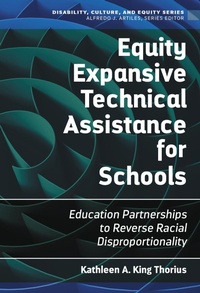
Equity Expansive Technical Assistance for Schools
Education Partnerships to Reverse Racial Disproportionality
Will be published approx. on 23. June 2023
Book
Hardback
208 pages
978-0-8077-6825-9 (ISBN)
Description
Based on the author's experience leading equity-focused technical assistance centers, this book details approaches to partnering with educators and other stakeholders to eliminate racial disproportionality in special education. Because of its historical and current relevance as an indicator of systemic oppression, Thorius centers disproportionality as a crucial issue to be addressed through technical assistance partnerships. For these partnerships to be successful, technical assistance providers must: (1) support partners in engaging with systemic and individual oppressions that contribute to inequities at the intersections of racism and ableism, and (2) introduce partners to resources that mediate learning about, and development of, locally relevant solutions that abolish racism and ableism in tandem. Equity Expansive Technical Assistance for Schools provides a research-based framework for conducting technical assistance, including vignettes and facilitation guides that educational leaders can use to address disproportionality in special education within their local contexts.
Book Features:
Detailed protocols for professional dialogue toward eliminating racial disproportionality in special education.
Expanded definitions and descriptions of disproportionality as an issue of ableism, as well as racism.
Real-life examples of technical assistance and professional development partnership activities that improve conditions leading to, and outcomes of, disproportionality.
Book Features:
Detailed protocols for professional dialogue toward eliminating racial disproportionality in special education.
Expanded definitions and descriptions of disproportionality as an issue of ableism, as well as racism.
Real-life examples of technical assistance and professional development partnership activities that improve conditions leading to, and outcomes of, disproportionality.
More details
Series
Language
English
Place of publication
New York
United States
Target group
Professional and scholarly
Product notice
sewn/stitched
Cloth over boards
Dimensions
Height: 235 mm
Width: 162 mm
Thickness: 14 mm
Weight
413 gr
ISBN-13
978-0-8077-6825-9 (9780807768259)
Copyright in bibliographic data and cover images is held by Nielsen Book Services Limited or by the publishers or by their respective licensors: all rights reserved.
Schweitzer Classification
Person
Kathleen A. King Thorius is an associate professor at Indiana University School of Education-IUPUI and executive director of the Great Lakes Equity Center. Her books include Sustaining Disabled Youth: Centering Disability in Asset Pedagogies and Ability, Equity, and Culture: Sustaining Inclusive Urban Education Reform.
Content
Contents
Acknowledgments ?ix
Introduction and Overview of the Book ?1
Part I: The Quest For Equity And Theory In Partnerships To Eliminate Racial Disproportionality In Special Education
1. ?Disproportionality-A Cultural-Historical Problem in Search of a Cultural-Historical Solution ?13
Meeting the Moment With Equity Assistance ?13
Sorting Through the Research: An Introduction to the Problem of Disproportionality ?15
Reading the Research: A Synopsis of What We Know About Disproportionality's Root Causes ?18
Disproportionality as a Contested Phenomenon: Illuminating and Obscuring Systemic Racism and Ableism ?27
Policy and Practice Approaches to Eliminating Disproportionality ?30
Researcher-Led/Research on Approaches to Eliminating Disproportionality ?36
Implications of Existing Research on Technical Assistance Approaches to Remediating Disproportionality ?38
2. ?Technical Assistance as Cultural-Historical Activity ?42
Enhancing Technical Improvements With Contextual Analysis and Application ?47
Considering Context in the Development and Design of Evidence-Based Practices: Equity Cannot Be "Implemented" ?49
3. ?Theoretical and Conceptual Foundations of Equity Expansive Technical Assistance ?53
PART II: Facilitating Critical En/Counters: The Application Of Equity Expansive Technical Assistance Partnerships To Reverse Racial Disproportionality In Special Education
4. ?Equity Expansive Technical Assistance ?61
Technical Assistance Organized by Duration and Intensity ?61
The Defining Elements of Equity Expansive Technical Assistance ?66
From Top-Down Expert to Critically Conscious Partner ?67
Expanding and Enhancing Technical Solutions With Contextual and Critical Analysis and Systemic Transformation ?79
Process-Based Conceptualization of Systemic Transformation Informed by Expansive Learning Theory ?90
Critical Tools for Encountering and Expanding Policies and Practices ?93
Revisiting the Goal of Equity Expansive Technical Assistance: Something for Everyone ?106
5. ?Equity Expansive Technical Assistance for Reversing Disproportionality ?108
Equity Expansive Learning Cycle(s) of a Technical Assistance Partnership to Eliminate Disproportionality ?109
Step 1: Analyzing the "Dispro Status Quo" ?109
Step 2: Evoking Systemic Tensions, or Framing and Naming the Impact and Relationship of Racism and Ableism ?120
Step 3: Introducing Equity Resources as Mediating Artifacts, or Defining the Elements of Equitable (Special) Education, Curriculum, and Instruction ?129
Step 4: Equity Expansion of the Object Through Innovative Activity Models, or Expanding the Object to a Coordinated System of Equitable Education Practice, Policy, and Contributing Belief Systems ?132
Step 5: Testing out and Refining Innovations, or Engaging in Critical Praxis ?132
Steps 6 and 7: Reflecting on and Refining the New Activity Model and Disseminating the Model Through Distributed Activity Systems, or Distributing Equitable Practice ?134
6. ?The Florence Unified School District ?135
Reframing Perceptions of Isolated Incidents to Understand and Remediate a Pervasive Negative Climate for People of Color ?137
The Primary Contradiction: The Epistemic Question of How We Can Have Two Truths ?138
The Double Bind: We Are Here Because We Want to Help/We Are Not Your Charity ?140
The Tertiary Contradiction: Seeking Resolution Through Trauma and Harm Reduction ?142
Refining the Activity Model: Who Does What, When, and How ?142
7. ?Representative SEA Center Partnership ?145
Background for the Partnership ?145
Site and Participants ?147
How the Partnership Led to the Study ?148
Data Collection and Analysis Processes ?148
The Initial Object of Collecting and Distribution of "Best Practices": Seeking "Critical Friends" to Layer Equity on Technical Acontextual Solutions ?149
Artifacts and Contradictions Expanding the Initial Object of Activity: "Oh My, What Are We Going to Do Now?" ?150
Modeling New Solutions: From Technical Strategies to Transformative Asset Pedagogies ?158
8. ?Ongoing Cycles and Continued Vigilance ?161
Implications of the Approach ?162
References ?167
Index ?191
About the Author ?197
Acknowledgments ?ix
Introduction and Overview of the Book ?1
Part I: The Quest For Equity And Theory In Partnerships To Eliminate Racial Disproportionality In Special Education
1. ?Disproportionality-A Cultural-Historical Problem in Search of a Cultural-Historical Solution ?13
Meeting the Moment With Equity Assistance ?13
Sorting Through the Research: An Introduction to the Problem of Disproportionality ?15
Reading the Research: A Synopsis of What We Know About Disproportionality's Root Causes ?18
Disproportionality as a Contested Phenomenon: Illuminating and Obscuring Systemic Racism and Ableism ?27
Policy and Practice Approaches to Eliminating Disproportionality ?30
Researcher-Led/Research on Approaches to Eliminating Disproportionality ?36
Implications of Existing Research on Technical Assistance Approaches to Remediating Disproportionality ?38
2. ?Technical Assistance as Cultural-Historical Activity ?42
Enhancing Technical Improvements With Contextual Analysis and Application ?47
Considering Context in the Development and Design of Evidence-Based Practices: Equity Cannot Be "Implemented" ?49
3. ?Theoretical and Conceptual Foundations of Equity Expansive Technical Assistance ?53
PART II: Facilitating Critical En/Counters: The Application Of Equity Expansive Technical Assistance Partnerships To Reverse Racial Disproportionality In Special Education
4. ?Equity Expansive Technical Assistance ?61
Technical Assistance Organized by Duration and Intensity ?61
The Defining Elements of Equity Expansive Technical Assistance ?66
From Top-Down Expert to Critically Conscious Partner ?67
Expanding and Enhancing Technical Solutions With Contextual and Critical Analysis and Systemic Transformation ?79
Process-Based Conceptualization of Systemic Transformation Informed by Expansive Learning Theory ?90
Critical Tools for Encountering and Expanding Policies and Practices ?93
Revisiting the Goal of Equity Expansive Technical Assistance: Something for Everyone ?106
5. ?Equity Expansive Technical Assistance for Reversing Disproportionality ?108
Equity Expansive Learning Cycle(s) of a Technical Assistance Partnership to Eliminate Disproportionality ?109
Step 1: Analyzing the "Dispro Status Quo" ?109
Step 2: Evoking Systemic Tensions, or Framing and Naming the Impact and Relationship of Racism and Ableism ?120
Step 3: Introducing Equity Resources as Mediating Artifacts, or Defining the Elements of Equitable (Special) Education, Curriculum, and Instruction ?129
Step 4: Equity Expansion of the Object Through Innovative Activity Models, or Expanding the Object to a Coordinated System of Equitable Education Practice, Policy, and Contributing Belief Systems ?132
Step 5: Testing out and Refining Innovations, or Engaging in Critical Praxis ?132
Steps 6 and 7: Reflecting on and Refining the New Activity Model and Disseminating the Model Through Distributed Activity Systems, or Distributing Equitable Practice ?134
6. ?The Florence Unified School District ?135
Reframing Perceptions of Isolated Incidents to Understand and Remediate a Pervasive Negative Climate for People of Color ?137
The Primary Contradiction: The Epistemic Question of How We Can Have Two Truths ?138
The Double Bind: We Are Here Because We Want to Help/We Are Not Your Charity ?140
The Tertiary Contradiction: Seeking Resolution Through Trauma and Harm Reduction ?142
Refining the Activity Model: Who Does What, When, and How ?142
7. ?Representative SEA Center Partnership ?145
Background for the Partnership ?145
Site and Participants ?147
How the Partnership Led to the Study ?148
Data Collection and Analysis Processes ?148
The Initial Object of Collecting and Distribution of "Best Practices": Seeking "Critical Friends" to Layer Equity on Technical Acontextual Solutions ?149
Artifacts and Contradictions Expanding the Initial Object of Activity: "Oh My, What Are We Going to Do Now?" ?150
Modeling New Solutions: From Technical Strategies to Transformative Asset Pedagogies ?158
8. ?Ongoing Cycles and Continued Vigilance ?161
Implications of the Approach ?162
References ?167
Index ?191
About the Author ?197