

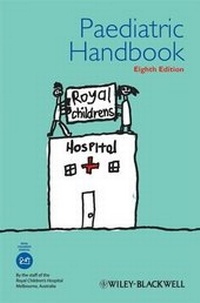
Paediatric Handbook
8th Edition
Published on 13. February 2009
Book
Paperback/Softback
656 pages
978-1-4051-7400-8 (ISBN)
Description
The Paediatric Handbook was first produced as a management guide intended for in-house use by medical officers at the Royal Children's Hospital (RCH) during the 1960s and 1970s. The book has evolved to have broader appeal. The RCH, Melbourne is regarded as the leading clinical and training centre for Paediatric Medicine in Australia. The RCH Handbook is seen as a succinct and relevant guide to managing common and serious disorders in childhood. It has wide appeal within medical, nursing and allied health fields.
Specific features of the Handbook include:
* Clear illustrations and diagnostic and management algorithms that greatly enhance the at a glance accessibility of the information
* A Paediatric Pharmacopoeia
* Emphasis on modern, community-based approach to the management of children's problems
* Strong emphasis on practical management by the doctor of first contact
The 7th edition was published in 2003. The authors now feel that there have been significant changes in paediatric practice that necessitate a new edition.
The management principles in the Handbook align with the published Clinical Practice Guidelines (CPGs) http://www.rch.org.au/clinicalguide/index.cfm?doc_id=5033. The 8th edition will be even more closely linked with the CPGs.
Specific features of the Handbook include:
* Clear illustrations and diagnostic and management algorithms that greatly enhance the at a glance accessibility of the information
* A Paediatric Pharmacopoeia
* Emphasis on modern, community-based approach to the management of children's problems
* Strong emphasis on practical management by the doctor of first contact
The 7th edition was published in 2003. The authors now feel that there have been significant changes in paediatric practice that necessitate a new edition.
The management principles in the Handbook align with the published Clinical Practice Guidelines (CPGs) http://www.rch.org.au/clinicalguide/index.cfm?doc_id=5033. The 8th edition will be even more closely linked with the CPGs.
Reviews / Votes
A"Well presented summarized information means that you can generally pick it up during a consultation and find the answer to your question.A" ( Australian Family Physician, August 2009) "Besides being a guide to clinical management and for rapid decision at point of care the book is a useful source of revision for students and paediatricians in training... It is highly recommended." (Journal of Tropical Pediatrics, May 2009)More details
Edition
8. Auflage
Language
English
Place of publication
Chicester
United Kingdom
Publishing group
John Wiley and Sons Ltd
Target group
Professional and scholarly
Edition type
Revised edition
Illustrations
ill
Dimensions
Height: 18.9 cm
Width: 12.8 cm
Thickness: 3.6 cm
Weight
622 gr
ISBN-13
978-1-4051-7400-8 (9781405174008)
Schweitzer Classification
Other editions
New editions
Amanda Gwee | Romi Rimer | Michael Marks
Paediatric Handbook
Book
08/2015
9th Edition
Wiley
Unfortunately, price unknown
Article exhausted; check for reprint
Persons
Dr Kate Thomson, General Medicine, Royal Children's Hospital, Melbourne, Australia
Dr Dean Tey
Dr Michael Marks, Department of Paediatrics, Royal Children's Hospital, Melbourne
Dr Dean Tey
Dr Michael Marks, Department of Paediatrics, Royal Children's Hospital, Melbourne
Content
1. Medical emergencies.
2. Poisoning and envenomation.
3. Procedures.
4. Pain management in children.
5. Fluid and electrolyte therapy.
6. Nutrition and FTT.
7. Obesity.
8. Immunisation.
9. Immigrant child health.
10. Behavioural and developmental problems.
11. Sleep problems.
12. Constipation and continence.
13. Developmental delay and disability.
14. Adolescent health.
15. Child psychiatry.
16. Child abuse.
17. The death of a child and sudden infant death syndrome.
18. Allergy and immunolgy.
19. Burns Cardiovascular conditions.
20. Dental conditions.
21. Dermatologic conditions.
22. Ear, nose and throat conditions.
23. Diabetes and other endocrine conditions.
24. Eye conditions.
25. Gastrointestinal conditions.
26. Gynaecologic conditions.
27. Haematologic conditions and oncology.
28. Infectious diseases.
29. Metabolic conditions.
30. Neurologic conditions.
31. Orthopaedic conditions.
32. Renal conditions and enuresis.
33. Respiratory conditions.
34. Rheumatologic conditions.
35. Common surgical conditions.
36. Prescribing for children.
Appendices:.
Growth charts and pubertal staging.
Pharmacopoiea.
Antimicrobial guidelines.
Formulae
2. Poisoning and envenomation.
3. Procedures.
4. Pain management in children.
5. Fluid and electrolyte therapy.
6. Nutrition and FTT.
7. Obesity.
8. Immunisation.
9. Immigrant child health.
10. Behavioural and developmental problems.
11. Sleep problems.
12. Constipation and continence.
13. Developmental delay and disability.
14. Adolescent health.
15. Child psychiatry.
16. Child abuse.
17. The death of a child and sudden infant death syndrome.
18. Allergy and immunolgy.
19. Burns Cardiovascular conditions.
20. Dental conditions.
21. Dermatologic conditions.
22. Ear, nose and throat conditions.
23. Diabetes and other endocrine conditions.
24. Eye conditions.
25. Gastrointestinal conditions.
26. Gynaecologic conditions.
27. Haematologic conditions and oncology.
28. Infectious diseases.
29. Metabolic conditions.
30. Neurologic conditions.
31. Orthopaedic conditions.
32. Renal conditions and enuresis.
33. Respiratory conditions.
34. Rheumatologic conditions.
35. Common surgical conditions.
36. Prescribing for children.
Appendices:.
Growth charts and pubertal staging.
Pharmacopoiea.
Antimicrobial guidelines.
Formulae