

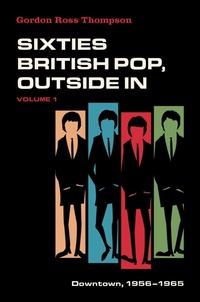
Sixties British Pop, Outside In
Volume I: Downtown, 1956-1965
Published on 27. June 2024
Book
Paperback/Softback
496 pages
978-0-19-067235-5 (ISBN)
Description
Downtown, 1956-1965--the first volume of Sixties British Pop, Outside In--describes the rise of London's music and recording cultures through the stories of those who empowered Britain's youth to be young. As the generations born in the postwar world entered adolescence and demanded a say in their lives, British musicians responded by creating music reflecting youth's quest for love and recognition. With waves of technological innovation sweeping through a world where political and economic superpowers postured for domination, deep-seated English values helped shape both pop music and its audiences.
The music that reverberated in hundreds of local clubs and halls began as fervent attempts to imitate an ongoing American cultural invasion that television helped bring into front rooms across Britain. The emergence of British blues and rock 'n' roll began when broadcasters allowed teens to discover Tommy Steele, Cliff Richard and the Shadows, Adam Faith, Helen Shapiro, and others. These pioneers provided an opening for the Beatles to lead a northwest invasion of an unsuspecting London. Soon, from across the nation, the Rolling Stones, the Animals, the Kinks, and a host of other groups, and singers such as Petula Clark, Tom Jones, and Donovan were feeding their music into the same media stream that the US had dominated. Americans, reeling from the assassination of a president, embraced the unmitigated joy and optimism they heard and called it the British invasion.
Based on extensive research and drawing on vintage and original interviews, Downtown, 1956-1965 frames the extraordinary rise of British pop in an era when pharmaceutical discoveries and electromagnetic innovation were altering lives. A community of musicians, producers, music directors, engineers, songwriters, publishers, promoters, broadcasters, and journalists provided songs, made and played recordings, organized concerts, and wrote about music expressing the exuberance of youth culture. They brought audiences together and gave individuals identity. Moreover, the fruits of their efforts set in motion the musical world in which we live today.
The music that reverberated in hundreds of local clubs and halls began as fervent attempts to imitate an ongoing American cultural invasion that television helped bring into front rooms across Britain. The emergence of British blues and rock 'n' roll began when broadcasters allowed teens to discover Tommy Steele, Cliff Richard and the Shadows, Adam Faith, Helen Shapiro, and others. These pioneers provided an opening for the Beatles to lead a northwest invasion of an unsuspecting London. Soon, from across the nation, the Rolling Stones, the Animals, the Kinks, and a host of other groups, and singers such as Petula Clark, Tom Jones, and Donovan were feeding their music into the same media stream that the US had dominated. Americans, reeling from the assassination of a president, embraced the unmitigated joy and optimism they heard and called it the British invasion.
Based on extensive research and drawing on vintage and original interviews, Downtown, 1956-1965 frames the extraordinary rise of British pop in an era when pharmaceutical discoveries and electromagnetic innovation were altering lives. A community of musicians, producers, music directors, engineers, songwriters, publishers, promoters, broadcasters, and journalists provided songs, made and played recordings, organized concerts, and wrote about music expressing the exuberance of youth culture. They brought audiences together and gave individuals identity. Moreover, the fruits of their efforts set in motion the musical world in which we live today.
Reviews / Votes
As the sequel-companion to a book covered in February's issue of The Beat, the second instalment of Gordon Ross Thompson's study of 60s music in the UK ushers in another cavalcade of diverse performers and pop industry figures. The latter part of the decade in particular generated an enchantingly fascinating assortment of sounds, and the paperback's dense and absorbing text looks at an era resplendent in a vibrant mix of artists. It speaks of a continuing succession of star names, involving both those operating in the mainstream and the maverick iconoclasts-whether seasoned veterans or hustling newcomers who would either become perennials or remain one-hit wonders. * The Beat magazine *More details
Language
English
Place of publication
New York
United States
Illustrations
69
Dimensions
Height: 240 mm
Width: 160 mm
Thickness: 25 mm
Weight
842 gr
ISBN-13
978-0-19-067235-5 (9780190672355)
Copyright in bibliographic data and cover images is held by Nielsen Book Services Limited or by the publishers or by their respective licensors: all rights reserved.
Schweitzer Classification
Other editions
Additional editions
Book
10/2024
Oxford University Press Inc
€79.36
Shipment within 15-20 days
E-Book
08/2024
OUP USA
€24.99
Available for download
Person
Gordon Ross Thompson has taught classes on the musics of India, popular music culture, and media studies at Skidmore College and has served as editor of the Society for Ethnomusicology's Newsletter and as webmaster for the Society for Asian Music. The author of Please Please Me: Sixties British Pop, Inside Out, he has been interviewed by National Public Radio, the Canadian Broadcasting Corporation, and the Australian Broadcasting Corporation among other radio and television broadcasts. At Skidmore College, he also produced a popular annual Beatles concert by students, staff, and faculty.
Content
Preface
Introduction
Part One Before the Flood, 1950-1962
Chapter 1 Common Roots
Chapter 2 First Responders
Chapter 3 Channeling English Pop
Chapter 4 Behind the Stars
Chapter 5 The Beatles as English
Part Two A Door Opens, 1963
Chapter 6 The Beatles: Outside In
Chapter 7 Northwest Passage
Chapter 8 Capital Connections
Chapter 9 Where Stones Roll
Part Three Frontiers, 1964
Chapter 10 Consuming the Beatles
Chapter 11 Northern Waves
Chapter 12 Middle English
Chapter 13 Independents Movement
Part Four The Feminine Musique
Chapter 14 The Problem That Has No Name
Chapter 15 Women: The Next Wave
Part Five Transitions, 1964-1965
Chapter 16 Scenes
Chapter 17 Down the Road a Piece
Chapter 18 Meet the Rolling Stones
Chapter 19 Modifications
Chapter 20 Uncommon Folks
Appendices
Discography
Media Sources
Sources
Music Index
Subject Index
Introduction
Part One Before the Flood, 1950-1962
Chapter 1 Common Roots
Chapter 2 First Responders
Chapter 3 Channeling English Pop
Chapter 4 Behind the Stars
Chapter 5 The Beatles as English
Part Two A Door Opens, 1963
Chapter 6 The Beatles: Outside In
Chapter 7 Northwest Passage
Chapter 8 Capital Connections
Chapter 9 Where Stones Roll
Part Three Frontiers, 1964
Chapter 10 Consuming the Beatles
Chapter 11 Northern Waves
Chapter 12 Middle English
Chapter 13 Independents Movement
Part Four The Feminine Musique
Chapter 14 The Problem That Has No Name
Chapter 15 Women: The Next Wave
Part Five Transitions, 1964-1965
Chapter 16 Scenes
Chapter 17 Down the Road a Piece
Chapter 18 Meet the Rolling Stones
Chapter 19 Modifications
Chapter 20 Uncommon Folks
Appendices
Discography
Media Sources
Sources
Music Index
Subject Index