

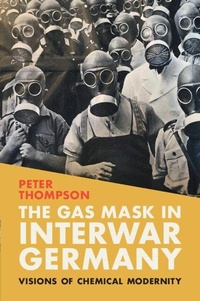
The Gas Mask in Interwar Germany
Visions of Chemical Modernity
Published on 6. March 2025
Book
Paperback/Softback
340 pages
978-1-009-31484-8 (ISBN)
Description
Exploring the history of the gas mask in Germany from 1915 to the eve of the Second World War, Peter Thompson traces how chemical weapons and protective technologies like the gas mask produced new relationships to danger, risk, management and mastery in the modern age of mass destruction. Recounting the apocalyptic visions of chemical death that circulated in interwar Germany, he argues that while everyday encounters with the gas mask tended to exacerbate fears, the gas mask also came to symbolize debates about the development of military and chemical technologies in the Weimar Republic and the Third Reich. He underscores how the gas mask was tied into the creation of an exclusionary national community under the Nazis and the altered perception of environmental danger in the second half of the twentieth century. As this innovative new history shows, chemical warfare and protection technologies came to represent poignant visions of the German future.
More details
Series
Language
English
Place of publication
Cambridge
United Kingdom
Product notice
Paperback (trade)
Illustrations
Worked examples or Exercises
Dimensions
Height: 229 mm
Width: 152 mm
Thickness: 18 mm
Weight
458 gr
ISBN-13
978-1-009-31484-8 (9781009314848)
Copyright in bibliographic data and cover images is held by Nielsen Book Services Limited or by the publishers or by their respective licensors: all rights reserved.
Schweitzer Classification
Other editions
Additional editions
Book
05/2023
Cambridge University Press
€126.50
Shipment within 15-20 days
Person
Peter Thompson is Assistant Professor of History, Philosophy, and Sociology of Science at Lyman Briggs College, Michigan State University.
Content
List of Figures; List of Tables; Acknowledgements; List of Abbreviations; Introduction; 1. The structures of violence: Fritz Haber and the institutionalization of gas warfare; 2. The man in the rubber mask: World War I and the development of the modern gas mask; 3. The first 'chemical subjects': soldiers encounters with the gas mask in World War I; 4. The limits of sympathy: the medical treatment of poison gas during and after World War I; 5. Atmos(fears): the poison gas debates in the Weimar Republic; 6. Technologies of fate: cultural and intellectual prophesies of the future gas war; 7. Synthesizing the 'Nazi chemical subject': gas masks, personal armoring, and vestiary discipline in the Third Reich; 8. Prophets of poison: industrialized murder in the gas chambers of the Holocaust; Conclusion; Bibliography; Index.