

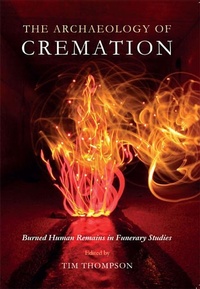
The Archaeology of Cremation
Burned Human Remains in Funerary Studies
Published on 15. June 2015
Book
Paperback/Softback
256 pages
978-1-78297-848-0 (ISBN)
Description
Human societies have disposed of their dead in a variety of ways. However, while considerable attention has been paid to bodies that were buried, comparatively little work has been devoted to understanding the nature of cremated remains, despite their visibility through time. It has been argued that this is the result of decades of misunderstanding regarding the potential information that this material holds, combined with properties that make burned bone inherently difficult to analyse. As such, there is a considerable body of knowledge on the concepts and practices of inhumation yet our understanding of cremation ritual and practice is by comparison, woefully inadequate.
This timely volume therefore draws together the inventive methodology that has been developed for this material and combines it with a fuller interpretation of the archaeological funerary context. It demonstrates how an innovative methodology, when applied to a challenging material, can produce new and exciting interpretations of archaeological sites and funerary contexts.
The reader is introduced to the nature of burned human remains and the destructive effect that fire can have on the body. Subsequent chapters describe important cremation practices and sites from around the world and from the Neolithic period to the modern day. By emphasising the need for a robust methodology combined with a nuanced interpretation, it is possible to begin to appreciate the significance and wide-spread adoption of this practice of dealing with the dead.
This timely volume therefore draws together the inventive methodology that has been developed for this material and combines it with a fuller interpretation of the archaeological funerary context. It demonstrates how an innovative methodology, when applied to a challenging material, can produce new and exciting interpretations of archaeological sites and funerary contexts.
The reader is introduced to the nature of burned human remains and the destructive effect that fire can have on the body. Subsequent chapters describe important cremation practices and sites from around the world and from the Neolithic period to the modern day. By emphasising the need for a robust methodology combined with a nuanced interpretation, it is possible to begin to appreciate the significance and wide-spread adoption of this practice of dealing with the dead.
Reviews / Votes
I congratulate the contributors and editor for producing a solid, valuable, and far-ranging collection that constitutes a timely and necessary addition to the study of death and burial in the human past. * European Journal of Archaeology * These two books reveal, through international case studies, the enormous variety of ways in which inhumation or cremation can occur and has taken place, and why that might have been so. * British Archaeology *More details
Series
Language
English
Place of publication
Oxford
United Kingdom
Target group
Professional and scholarly
Product notice
Paperback (trade)
Unsewn / adhesive bound
Illustrations
b/w and colour illustrations
Dimensions
Height: 241 mm
Width: 169 mm
Thickness: 17 mm
Weight
618 gr
ISBN-13
978-1-78297-848-0 (9781782978480)
Copyright in bibliographic data and cover images is held by Nielsen Book Services Limited or by the publishers or by their respective licensors: all rights reserved.
Schweitzer Classification
Other editions
Additional editions
E-Book
03/2015
Oxbow Books
€27.99
Available for download
E-Book
03/2015
OXBOW BOOKS
€27.99
Available for download
Person
Tim Thompson is a Reader in Biological & Forensic Anthropology in the School of Science & Engineering at Teeside University. His main areas of research focus on the human body and how it changes, particularly in the modern context, with emphasis on studying the effects of burning on the skeleton, the development of new analytical tools and the role of forensic anthropology.
Content
Preamble
1. Foreword, by Jacqueline I. McKinley
2. Fire and the body; fire and the people
Tim Thompson
3. Flesh, Fire, and Funerary Remains from the Neolithic site of La Varde, Guernsey: Investigations Past and Present,
Jenny Cataroche and Rebecca Gowland
4. Past cremation practices from a bioarchaeological perspective - how new methods and techniques revealed conceptual changes in cremation practices during the late Bronze Age and early Iron Age in Denmark
Lise Harvig
5. the bioarchaeological analysis of cremation at the Iron Age necropolis of Tera (Portugal)
David Goncalves,, Vanessa Campanacho, Tim Thompson and Rui Mataloto
6. Funerary rituals and ideologies in the Phoenician-Punic necropolis of Monte Sirai (Carbonia, Sardinia, Italy).
Giampaolo Piga, Michele Guirguis and Ethel Allue
7. The funerary practice of cremation at Augusta Emerita (Merida, Spain)
Filipa Cortesao Silva
8. The integration of microscopic techniques in cremation studies: A new approach to understanding social identity among cremation practicing groups from early Anglo-Saxon England
?Squires
9. Analysing cremated human remains from the southern Brazilian highlands: Interpreting archaeological evidence of funerary practice at mound and enclosure complexes in the Pelotas River Valley
Priscilla Ferreira Ulguim
10. Case Applications of Recent Research on Thermal Effects on the Skeleton
Douglas H. Ubelaker
11. The interpretation and reconstruction of the post mortem events in a case of scattered burned remains in Chile
Claudia Garrido-Varas and Marisol Intriago-Leiva
12. Conclusions
Tim Thompson
1. Foreword, by Jacqueline I. McKinley
2. Fire and the body; fire and the people
Tim Thompson
3. Flesh, Fire, and Funerary Remains from the Neolithic site of La Varde, Guernsey: Investigations Past and Present,
Jenny Cataroche and Rebecca Gowland
4. Past cremation practices from a bioarchaeological perspective - how new methods and techniques revealed conceptual changes in cremation practices during the late Bronze Age and early Iron Age in Denmark
Lise Harvig
5. the bioarchaeological analysis of cremation at the Iron Age necropolis of Tera (Portugal)
David Goncalves,, Vanessa Campanacho, Tim Thompson and Rui Mataloto
6. Funerary rituals and ideologies in the Phoenician-Punic necropolis of Monte Sirai (Carbonia, Sardinia, Italy).
Giampaolo Piga, Michele Guirguis and Ethel Allue
7. The funerary practice of cremation at Augusta Emerita (Merida, Spain)
Filipa Cortesao Silva
8. The integration of microscopic techniques in cremation studies: A new approach to understanding social identity among cremation practicing groups from early Anglo-Saxon England
?Squires
9. Analysing cremated human remains from the southern Brazilian highlands: Interpreting archaeological evidence of funerary practice at mound and enclosure complexes in the Pelotas River Valley
Priscilla Ferreira Ulguim
10. Case Applications of Recent Research on Thermal Effects on the Skeleton
Douglas H. Ubelaker
11. The interpretation and reconstruction of the post mortem events in a case of scattered burned remains in Chile
Claudia Garrido-Varas and Marisol Intriago-Leiva
12. Conclusions
Tim Thompson