

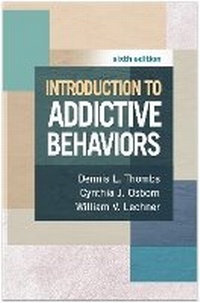
Introduction to Addictive Behaviors, Sixth Edition
6th Edition
Will be published approx. on 23. November 2026
Book
Hardback
471 pages
978-1-4625-6424-8 (ISBN)
Description
The authoritative text that has helped generations of students and practitioners build foundational knowledge about substance use disorders and other addictive behaviors is now in a revised and updated sixth edition. In one accessible volume, the text comprehensively reviews major theories of addiction and their implications for helping people recover. Keys to evidence-based prevention and treatment are highlighted throughout. Chapters address disease models of addiction; public health and prevention approaches; dual diagnosis; psychoanalytic, behavioral, cognitive, and family systems models; sociocultural approaches; behavioral addictions, such as gambling; and motivational models. Student-friendly features include illustrative clinical vignettes, end-of-chapter summaries, and review questions.
New to This Edition
Important developments in research, theory, clinical intervention, and prevention.
The evolving opioid overdose epidemic, the changing legal landscape of cannabis, and the proliferation of e-cigarette use.
New or expanded coverage of epigenetics, sociocultural determinants of addiction, and stigma, plus updates on harm reduction, 12-step, and psychoanalytic models.
Discussions of new diagnoses in ICD-11: gaming disorder and compulsive sexual behavior disorder.
New to This Edition
Important developments in research, theory, clinical intervention, and prevention.
The evolving opioid overdose epidemic, the changing legal landscape of cannabis, and the proliferation of e-cigarette use.
New or expanded coverage of epigenetics, sociocultural determinants of addiction, and stigma, plus updates on harm reduction, 12-step, and psychoanalytic models.
Discussions of new diagnoses in ICD-11: gaming disorder and compulsive sexual behavior disorder.
More details
Edition
6th edition
Language
English
Place of publication
New York
United States
Publishing group
Guilford Publications
Dimensions
Height: 229 mm
Width: 152 mm
ISBN-13
978-1-4625-6424-8 (9781462564248)
Copyright in bibliographic data and cover images is held by Nielsen Book Services Limited or by the publishers or by their respective licensors: all rights reserved.
Schweitzer Classification
Other editions
Previous edition
Dennis L. Thombs | Cynthia J. Osborn
Introduction to Addictive Behaviors, Fifth Edition
Book
06/2019
5th Edition
Guilford Press
€65.00
Shipment within 15-20 days
Persons
Dennis L. Thombs, PhD, FAAHB, is Distinguished Professor of Public Health (retired) at The University of North Texas Health Science Center in Fort Worth, where he formerly served as Dean of the School of Public Health. Before retiring, his research focus was addictive behavior, with special interests in the conceptualization of addiction and in alcohol and drug use during the period of emerging adulthood. Dr. Thombs is a past president and Fellow of the American Academy of Health Behavior.
All titles by Dennis L. Thombs
Cynthia J. Osborn, PhD, LPCC-S, LICDC, is Professor Emerita of Counselor Education and Supervision at Kent State University. Her clinical background is in treatment of adults with co-occurring substance use disorders and mental illness. Before retiring, Dr. Osborn's teaching, supervision, and scholarship focused on addictions counseling, particularly evidence-based practices such as motivational interviewing. She is a member of the Motivational Interviewing Network of Trainers and has extensive experience in the clinical supervision of counselors-in-training and professional counselors.
All titles by Cynthia J. Osborn
William V. Lechner, PhD, is Associate Professor in the Department of Psychological Sciences at Kent State University, where he teaches courses including Drugs and Behavior, Introduction to Psychological Assessment, and Advanced Psychological Assessment. His research focuses on translating human laboratory findings into novel and effective therapeutic interventions for substance use disorders. Dr. Lechner's work explores the bidirectional relationships between cognitive processes and addictive behaviors, including a recent study examining cognitive training combined with neuromodulation to improve executive functioning relevant to addiction outcomes.
All titles by Dennis L. Thombs
Cynthia J. Osborn, PhD, LPCC-S, LICDC, is Professor Emerita of Counselor Education and Supervision at Kent State University. Her clinical background is in treatment of adults with co-occurring substance use disorders and mental illness. Before retiring, Dr. Osborn's teaching, supervision, and scholarship focused on addictions counseling, particularly evidence-based practices such as motivational interviewing. She is a member of the Motivational Interviewing Network of Trainers and has extensive experience in the clinical supervision of counselors-in-training and professional counselors.
All titles by Cynthia J. Osborn
William V. Lechner, PhD, is Associate Professor in the Department of Psychological Sciences at Kent State University, where he teaches courses including Drugs and Behavior, Introduction to Psychological Assessment, and Advanced Psychological Assessment. His research focuses on translating human laboratory findings into novel and effective therapeutic interventions for substance use disorders. Dr. Lechner's work explores the bidirectional relationships between cognitive processes and addictive behaviors, including a recent study examining cognitive training combined with neuromodulation to improve executive functioning relevant to addiction outcomes.
Content
Preface
1.Conceptualization of Addictive Behavior and the Need for Informed Practice
2. The Disease Models
3. Public Health and Prevention Approaches
4. Understanding the Co-Occurrence of Substance Use and Psychiatric Conditions
5. Psychoanalytic Formulations
6. Conditioning Models and Approaches to Contingency Management
7. Cognitive Models
8. The Family System
9. Social and Cultural Foundations
10. The Controversial Science of Behavioral Addiction
11. Promoting Motivation and Autonomy for Personal Change
12. Linking Theory, Evidence, and Practice
References
Author Index
Subject Index
1.Conceptualization of Addictive Behavior and the Need for Informed Practice
2. The Disease Models
3. Public Health and Prevention Approaches
4. Understanding the Co-Occurrence of Substance Use and Psychiatric Conditions
5. Psychoanalytic Formulations
6. Conditioning Models and Approaches to Contingency Management
7. Cognitive Models
8. The Family System
9. Social and Cultural Foundations
10. The Controversial Science of Behavioral Addiction
11. Promoting Motivation and Autonomy for Personal Change
12. Linking Theory, Evidence, and Practice
References
Author Index
Subject Index