

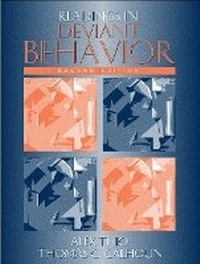
Readings in Deviant Behavior
2nd Edition
Published on 20. April 2001
Book
Paperback/Softback
403 pages
978-0-205-31904-6 (ISBN)
Description
This collection of readings represents the full range of deviance sociology, dealing with many different theories as well as data collected via different research methodologies.
Designed to be used as either a main text or a supplement, Readings in Deviant Behavior includes selections with high student appeal. All of the readings have been carefully edited for clarity, conciseness, and forcefulness to ensure that students will find them easy and enjoyable to read while learning what deviance is all about. The second edition features many new articles that reflect current trends, especially those dealing with noncriminal deviance as well as those that emphasize the constructionist perspective.
Designed to be used as either a main text or a supplement, Readings in Deviant Behavior includes selections with high student appeal. All of the readings have been carefully edited for clarity, conciseness, and forcefulness to ensure that students will find them easy and enjoyable to read while learning what deviance is all about. The second edition features many new articles that reflect current trends, especially those dealing with noncriminal deviance as well as those that emphasize the constructionist perspective.
More details
Edition
2nd edition
Language
English
Place of publication
United States
Publishing group
Pearson Education (US)
Target group
Professional and scholarly
Dimensions
Height: 235 mm
Width: 178 mm
Weight
1000 gr
ISBN-13
978-0-205-31904-6 (9780205319046)
Copyright in bibliographic data and cover images is held by Nielsen Book Services Limited or by the publishers or by their respective licensors: all rights reserved.
Schweitzer Classification
Other editions
New editions
Alex Thio | Thomas C. Calhoun
Readings in Deviant Behavior
Book
11/2003
3rd Edition
Pearson
€65.87
Article is exhausted; no reprint
Content
* Denotes selections new to this edition.
Preface.
About the Editors.
Introduction.
I.DEFINING AND RESEARCHING DEVIANCE.
1.Stephen Pfohl, Images of Deviance.
2.Daniel Patrick Moynihan, Defining Deviancy Down.
3.* Leon Anderson and Thomas C. Calhoun, Strategies for Researching Street Deviance.
4.* Erich Goode, Pleasures and Perils in Deviance Research.
II.POSITIVIST THEORIES.
5.Robert K. Merton, Strain Theory.
6.Edwin H. Sutherland and Donald R. Cressey, Differential Association Theory.
7.Travis Hirschi, Control Theory.
8.John Braithwaite, Shaming Theory.
III.CONSTRUCTIONIST THEORIES.
9.Howard S. Becker, Labeling Theory.
10.Jack Katz, Phenomenological Theory.
11.Richard Quinney, Conflict Theory.
12.Jody Miller, Feminist Theory.
13.* David O. Friedrichs and Jessica Friedrichs, Postmodernist Theory.
IV.CRIMINAL DEVIANCE.
14.Dane Archer and Patricia McDaniel, Men and Violence: Is the Pattern Universal?
15.Martin D. Schwartz, Date Rape on College Campuses.
16.Paul Cromwell, Burglary: The Offender's Perspective.
17.Gilbert Geis, White-Collar Crime.
V.DRUG USE.
18.* Erich Goode, Drug Use in America: An Overview.
19.Elliott Currie, Drug Crisis: The American Nightmare.
20.* Erich Goode, Cigarette Smoking as Deviant Behavior.
21.* Thomas A. Workman, Pleasure versus Public Health: Controlling Collegiate Binge Drinking.
VI.HETEROSEXUAL DEVIANCE.
22.Jody Miller, Sex Tourism in Southeast Asia.
23.Marjorie A. Muecke, Mother Sold Food, Daughter Sells Her Body.
24.Craig J. Forsyth, Parade Strippers: Being Naked in Public.
25.* Thomas C. Calhoun, Julie Ann Harms Cannon, and Rhonda Fisher, The Naked Body as Site and Sight: Accounting Practices of Amateur Strippers.
26.* Elizabeth Anne Wood, Strip Club Dancers: Working in the Fantasy Factory.
VII.HOMOSEXUALITY AND HOMOPHOBIA.
27.Margaret Cooper, Rejecting "Femininity": Gender Identity Development in Lesbians.
28.Bruce Bawer, Radical Gay Activism: A Critical Gay's View.
29.* DeAnn K. Gauthier and Craig J. Forsyth, Bareback Sex, Bug Chasers, and the Gift of Death.
30.* Robert P. McNamara, The Social Organization of Male Prostitution.
31.* Andrew S. Walters and David M. Hayes, Homophobia in Schools.
VIII. ACADEMIC AND PROFESSIONAL DEVIANCE.
32.Emily E. LaBeff, Robert E. Clark, Valerie J. Haines, and George M. Diekhoff, Situational Ethics and College Student Cheating.
33.* Barbara H. Zaitzow and Matthew B. Robinson, Criminologists as Criminals.
34.Mark R. Pogrebin, Eric D. Poole, and Amos Martinez, Psychotherapists' Accounts of Their Professional Misdeeds.
35.* Tom Barker and David Carter, Police Lying: "Fluffing Up the Evidence and Covering Your Ass."
IX.DISABILITIES AND STIGMATIZATION.
36.Michael V. Angrosino, How the Mentally Challenged See Themselves.
37.Jennifer E. Pate, Andres J. Pumariega, Colleen Hester, and David M. Garner, Cross-Cultural Patterns in Eating Disorders.
38.Penelope A. McLorg and Diane E. Taub, Anorexics and Bulimics: Developing Deviant Identities.
39.* Richard Tewksbury and Deanna McGaughey, The Stigmatization of Persons with HIV Disease.
X.CYBERDEVIANCE.
40.* Paul A. Taylor, The Social Construction of Hackers as Deviants.
41.* Diane Kholos Wysocki, Let Your Fingers Do the Talking: Sex on an Adult Chat-Line.
42.* Keith F. Durkin and Clifton D. Bryant, Online Accounts of Unrepentant Pedophiles.
XI.DEVIANT SPORTS.
43.* Donna K. Darden and Steven K. Worden, Cockfighting: The Marketing of Deviance.
44.* Rhonda D. Evans and Craig J. Forsyth, The World of Dogfighting.
45.* Stephen L. Eliason and Richard A. Dodder, The Techniques of Neutralization among Deer Poachers.
46.* Constance Chapple and Stacey Nofziger, Hints of Deviance in Bingo.
XII.PUZZLING DEVIANCES.
47.Kevin E. Early and Ronald L. Akers, "It's a White Thing": African-American Beliefs about Suicide.
48.Amy Binder, Media Depictions of Harm in Heavy Metal and Rap Music.
49.* D. Angus Vail, Tattoos Are Like Potato Chips ... You Can't Have Just One.
50.* Stephen E. Lankenau, Panhandlers: Overcoming the Nonperson Treatment.
Preface.
About the Editors.
Introduction.
I.DEFINING AND RESEARCHING DEVIANCE.
1.Stephen Pfohl, Images of Deviance.
2.Daniel Patrick Moynihan, Defining Deviancy Down.
3.* Leon Anderson and Thomas C. Calhoun, Strategies for Researching Street Deviance.
4.* Erich Goode, Pleasures and Perils in Deviance Research.
II.POSITIVIST THEORIES.
5.Robert K. Merton, Strain Theory.
6.Edwin H. Sutherland and Donald R. Cressey, Differential Association Theory.
7.Travis Hirschi, Control Theory.
8.John Braithwaite, Shaming Theory.
III.CONSTRUCTIONIST THEORIES.
9.Howard S. Becker, Labeling Theory.
10.Jack Katz, Phenomenological Theory.
11.Richard Quinney, Conflict Theory.
12.Jody Miller, Feminist Theory.
13.* David O. Friedrichs and Jessica Friedrichs, Postmodernist Theory.
IV.CRIMINAL DEVIANCE.
14.Dane Archer and Patricia McDaniel, Men and Violence: Is the Pattern Universal?
15.Martin D. Schwartz, Date Rape on College Campuses.
16.Paul Cromwell, Burglary: The Offender's Perspective.
17.Gilbert Geis, White-Collar Crime.
V.DRUG USE.
18.* Erich Goode, Drug Use in America: An Overview.
19.Elliott Currie, Drug Crisis: The American Nightmare.
20.* Erich Goode, Cigarette Smoking as Deviant Behavior.
21.* Thomas A. Workman, Pleasure versus Public Health: Controlling Collegiate Binge Drinking.
VI.HETEROSEXUAL DEVIANCE.
22.Jody Miller, Sex Tourism in Southeast Asia.
23.Marjorie A. Muecke, Mother Sold Food, Daughter Sells Her Body.
24.Craig J. Forsyth, Parade Strippers: Being Naked in Public.
25.* Thomas C. Calhoun, Julie Ann Harms Cannon, and Rhonda Fisher, The Naked Body as Site and Sight: Accounting Practices of Amateur Strippers.
26.* Elizabeth Anne Wood, Strip Club Dancers: Working in the Fantasy Factory.
VII.HOMOSEXUALITY AND HOMOPHOBIA.
27.Margaret Cooper, Rejecting "Femininity": Gender Identity Development in Lesbians.
28.Bruce Bawer, Radical Gay Activism: A Critical Gay's View.
29.* DeAnn K. Gauthier and Craig J. Forsyth, Bareback Sex, Bug Chasers, and the Gift of Death.
30.* Robert P. McNamara, The Social Organization of Male Prostitution.
31.* Andrew S. Walters and David M. Hayes, Homophobia in Schools.
VIII. ACADEMIC AND PROFESSIONAL DEVIANCE.
32.Emily E. LaBeff, Robert E. Clark, Valerie J. Haines, and George M. Diekhoff, Situational Ethics and College Student Cheating.
33.* Barbara H. Zaitzow and Matthew B. Robinson, Criminologists as Criminals.
34.Mark R. Pogrebin, Eric D. Poole, and Amos Martinez, Psychotherapists' Accounts of Their Professional Misdeeds.
35.* Tom Barker and David Carter, Police Lying: "Fluffing Up the Evidence and Covering Your Ass."
IX.DISABILITIES AND STIGMATIZATION.
36.Michael V. Angrosino, How the Mentally Challenged See Themselves.
37.Jennifer E. Pate, Andres J. Pumariega, Colleen Hester, and David M. Garner, Cross-Cultural Patterns in Eating Disorders.
38.Penelope A. McLorg and Diane E. Taub, Anorexics and Bulimics: Developing Deviant Identities.
39.* Richard Tewksbury and Deanna McGaughey, The Stigmatization of Persons with HIV Disease.
X.CYBERDEVIANCE.
40.* Paul A. Taylor, The Social Construction of Hackers as Deviants.
41.* Diane Kholos Wysocki, Let Your Fingers Do the Talking: Sex on an Adult Chat-Line.
42.* Keith F. Durkin and Clifton D. Bryant, Online Accounts of Unrepentant Pedophiles.
XI.DEVIANT SPORTS.
43.* Donna K. Darden and Steven K. Worden, Cockfighting: The Marketing of Deviance.
44.* Rhonda D. Evans and Craig J. Forsyth, The World of Dogfighting.
45.* Stephen L. Eliason and Richard A. Dodder, The Techniques of Neutralization among Deer Poachers.
46.* Constance Chapple and Stacey Nofziger, Hints of Deviance in Bingo.
XII.PUZZLING DEVIANCES.
47.Kevin E. Early and Ronald L. Akers, "It's a White Thing": African-American Beliefs about Suicide.
48.Amy Binder, Media Depictions of Harm in Heavy Metal and Rap Music.
49.* D. Angus Vail, Tattoos Are Like Potato Chips ... You Can't Have Just One.
50.* Stephen E. Lankenau, Panhandlers: Overcoming the Nonperson Treatment.