

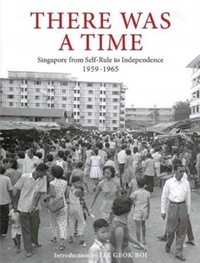
There Was a Time
Singapore 1959-1965 From Self-Rule to Independence
Landmark Books Pte.Ltd ,Singapore (Publisher)
Published on 27. May 2021
Book
Hardback
288 pages
978-981-14-6795-0 (ISBN)
Description
This collection of 328 photographs shows the rhythm of daily life in Singapore between 1959 and 1965 - the pivotal time in its history when the city-state was granted internal self-rule by the British colonial government to the year it became a sovereign nation.
This was when Singapore began its process of great development. Kampong folk moved into high-rise housing, new careers came with factories built in Jurong, the trading of stocks and shares began in Raffles Place, television was introduced to Singapore, and the new red-brick National Library opened on Stamford Road.
Yet, some things remained unchanged. Bumboats still jostled on the fetid waters of the Singapore River, children played on five-foot-ways, families enjoyed the sea air along Queen Elizabeth Walk, and eating out at street-side hawker stalls was a way of life.
For those who remember these scenes, this book will evoke a lost time. And for those who do not, it is a window to a simpler, unhurried life.
This collection of 328 photographs shows the rhythm of daily life in Singapore between 1959 and 1965 - the pivotal time in its history when the city-state was granted internal self-rule by the British colonial government to the year it became a sovereign nation.
This was when Singapore began its process of great development. Kampong folk moved into high-rise housing, new careers came with factories built in Jurong, the trading of stocks and shares began in Raffles Place, television was introduced to Singapore, and the new red-brick National Library opened on Stamford Road.
Yet, some things remained unchanged. Bumboats still jostled on the fetid waters of the Singapore River, children played on five-foot-ways, families enjoyed the sea air along Queen Elizabeth Walk, and eating out at street-side hawker stalls was a way of life.
For those who remember these scenes, this book will evoke a lost time. And for those who do not, it is a window to a simpler, unhurried life.
This was when Singapore began its process of great development. Kampong folk moved into high-rise housing, new careers came with factories built in Jurong, the trading of stocks and shares began in Raffles Place, television was introduced to Singapore, and the new red-brick National Library opened on Stamford Road.
Yet, some things remained unchanged. Bumboats still jostled on the fetid waters of the Singapore River, children played on five-foot-ways, families enjoyed the sea air along Queen Elizabeth Walk, and eating out at street-side hawker stalls was a way of life.
For those who remember these scenes, this book will evoke a lost time. And for those who do not, it is a window to a simpler, unhurried life.
This collection of 328 photographs shows the rhythm of daily life in Singapore between 1959 and 1965 - the pivotal time in its history when the city-state was granted internal self-rule by the British colonial government to the year it became a sovereign nation.
This was when Singapore began its process of great development. Kampong folk moved into high-rise housing, new careers came with factories built in Jurong, the trading of stocks and shares began in Raffles Place, television was introduced to Singapore, and the new red-brick National Library opened on Stamford Road.
Yet, some things remained unchanged. Bumboats still jostled on the fetid waters of the Singapore River, children played on five-foot-ways, families enjoyed the sea air along Queen Elizabeth Walk, and eating out at street-side hawker stalls was a way of life.
For those who remember these scenes, this book will evoke a lost time. And for those who do not, it is a window to a simpler, unhurried life.
More details
Language
English
Place of publication
Singapore
Illustrations
Fully illustrated with photos
Dimensions
Height: 198 mm
Width: 261 mm
Thickness: 30 mm
Weight
1318 gr
ISBN-13
978-981-14-6795-0 (9789811467950)
Copyright in bibliographic data and cover images is held by Nielsen Book Services Limited or by the publishers or by their respective licensors: all rights reserved.
Schweitzer Classification
Person
Lee Geok Boi was Assistant to the Editor of The Straits Times (executive features writer and executive sub-editor) and adjunct lecturer in Temasek Polytechnic/Visual Communications Diploma course. She has been an editorial consultant since 1989. Geok Boi has authored and edited numerous books on social and corporate histories and cookery.
Lee Geok Boi was Assistant to the Editor of The Straits Times (executive features writer and executive sub-editor) and adjunct lecturer in Temasek Polytechnic/Visual Communications Diploma course. She has been an editorial consultant since 1989. Geok Boi has authored and edited numerous books on social and corporate histories and cookery.
Lee Geok Boi was Assistant to the Editor of The Straits Times (executive features writer and executive sub-editor) and adjunct lecturer in Temasek Polytechnic/Visual Communications Diploma course. She has been an editorial consultant since 1989. Geok Boi has authored and edited numerous books on social and corporate histories and cookery.