

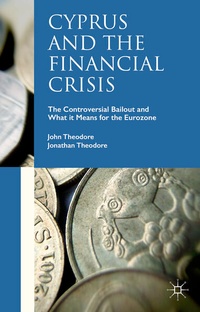
Cyprus and the Financial Crisis
The Controversial Bailout and What it Means for the Eurozone
Published on 27. July 2015
Book
Hardback
XVI, 179 pages
978-1-137-45274-0 (ISBN)
Description
The 2012-2013 economic crisis in the Republic of Cyprus is commonly attributed to a number of factors, including the exposure of Cypriot banks to over leveraged local property companies; the knock-on effect of the Greek government debt crisis; and international credit rating agencies downgrading the Cypriot government's bond credit status. What followed was unexpected and controversial: a bailout on condition of a one-time bank deposit levy on all uninsured deposits in the country's second-largest bank, the Cyprus Popular Bank; and on the uninsured deposits of large proportion of the island's largest commercial bank, the Bank of Cyprus.
Many have questioned the implications of Cyprus' ties with the Russian financial system, as well as the draconian and unprecedented bailout terms imposed on the Cypriot population by the Eurozone.
There has been little written from the Cypriot perspective on these events. This book presents a study of the events surrounding the recent Cypriot Financial Crisis and its impact on the Eurozone. It incorporates insights from leading protagonists in the Cypriot government and banking sectors and focuses on qualitative research to assess the events that formed the backdrop of the crisis. The book analyzes the policies of many public and private institutions and presents the crisis alongside other Eurozone bailouts to compare and contextualize the ongoing issues. Cyprus and the Financial Crisis also explains the political and historical backdrop of the events, including the wider Cypriot experience since the 1974 invasion, and the unravelling financial relationship between Cyprus, Greece and Russia. It incorporates the views of Cypriots from a wide and diverse spectrum, and presents the resilience of the island in fighting back to beat forecasts for recovery, helped by the Eldorado of gas finds off its southern shores.
More details
Edition
1st ed. 2015
Language
English
Place of publication
London
United Kingdom
Target group
Professional and scholarly
Product notice
sewn/stitched
Cloth over boards
With dust jacket
Illustrations
XVI, 179 p.
Dimensions
Height: 216 mm
Width: 140 mm
Thickness: 13 mm
Weight
376 gr
ISBN-13
978-1-137-45274-0 (9781137452740)
DOI
10.1057/9781137452757
Schweitzer Classification
Other editions
Additional editions
John Theodore | Jonathan Theodore
Cyprus and the Financial Crisis
The Controversial Bailout and What it Means for the Eurozone
E-Book
01/2016
1st Edition
Palgrave Macmillan
€96.29
Available for download

John Theodore | Jonathan Theodore
Cyprus and the Financial Crisis
The Controversial Bailout and What It Means for the Eurozone
Book
01/2014
Palgrave Macmillan
€96.29
The article will not be published
Persons
John Theodore BA LLM Barrister - at- Law.
John Theodore is a trained barrister who has published in International law journals. He has spent over 30 years of his professional working life internationally on EU funded projects and leading teams from the UK university and banking sector advising businesses across Europe.
He is both an academic and an experienced practitioner in the delivery of prestigious EU projects and commercial contracts in Eastern Europe, Cyprus and other EU destinations. He is currently a Director of a Research and Consultancy Centre at Manchester Metropolitan University, specializing in the delivery of EU funded international projects, and has a strong network of contacts in the European Parliament, European Commission and in the Cyprus business and political establishment.
As an academic he has published in a number of leading legal journals focusing on the Cyprus situation post-independence and on its relations with the UN and the role that the UN has played through UNFICYP, the UN peacekeeping force on the island. He documented the operations of the United Nations Peacekeeping forces from 1964 through the next few decades and in the 1970's has interviewed leaders of both the Greek-Cypriot and Turkish Cypriot communities prior to the 1974 invasion, as well as UN military commanders and the Undersecretary-General of the UN in New York for Special Political Affairs.
He has been a speaker at the Committee of the Regions in Brussels and in recent years an adviser on business tourism to a number of MEPs in Brussels. He has also been an adviser and visiting professor at Warsaw University of Applied Sciences where he was awarded the Senate Medal of Merit.
Jonathan Theodore BA, M. St. (Oxon) PhD. London
Jonathan graduated from Christ Church Oxford with a First in Modern History together with a postgraduate Master's, where he also edited Cherwell. He has recently completed a PhD at King's College London, where he has been an undergraduate tutor in Roman and Medieval history for three years.
Apart from a number of consultancy assignments for companies engaged in research for the creative industries he has also worked with a university led initiative advising a group of MEPs to support SME growth in their constituencies.
John Theodore is a trained barrister who has published in International law journals. He has spent over 30 years of his professional working life internationally on EU funded projects and leading teams from the UK university and banking sector advising businesses across Europe.
He is both an academic and an experienced practitioner in the delivery of prestigious EU projects and commercial contracts in Eastern Europe, Cyprus and other EU destinations. He is currently a Director of a Research and Consultancy Centre at Manchester Metropolitan University, specializing in the delivery of EU funded international projects, and has a strong network of contacts in the European Parliament, European Commission and in the Cyprus business and political establishment.
As an academic he has published in a number of leading legal journals focusing on the Cyprus situation post-independence and on its relations with the UN and the role that the UN has played through UNFICYP, the UN peacekeeping force on the island. He documented the operations of the United Nations Peacekeeping forces from 1964 through the next few decades and in the 1970's has interviewed leaders of both the Greek-Cypriot and Turkish Cypriot communities prior to the 1974 invasion, as well as UN military commanders and the Undersecretary-General of the UN in New York for Special Political Affairs.
He has been a speaker at the Committee of the Regions in Brussels and in recent years an adviser on business tourism to a number of MEPs in Brussels. He has also been an adviser and visiting professor at Warsaw University of Applied Sciences where he was awarded the Senate Medal of Merit.
Jonathan Theodore BA, M. St. (Oxon) PhD. London
Jonathan graduated from Christ Church Oxford with a First in Modern History together with a postgraduate Master's, where he also edited Cherwell. He has recently completed a PhD at King's College London, where he has been an undergraduate tutor in Roman and Medieval history for three years.
Apart from a number of consultancy assignments for companies engaged in research for the creative industries he has also worked with a university led initiative advising a group of MEPs to support SME growth in their constituencies.
Content
Introduction
1. Birth Of A Nation
The Road To Independence; Nationhood, Its Costs And Consequences; A Unified Country Breaks Down, 1963-64;
2. Forever Divided?
The Turkish Invasion And Its Aftermath; A Final Hope? The Annan Plan, 2002-2004
3. The Financial Crisis Spreads To Cyprus
The Single Currency And International Finance; Akel: An Easy Target For Blame?
Greece, The Psi, And Sacrifice Of Cyprus; Greek Fallout In Cyprus; Casino Economics And Political Games; From Bailouts To Bail-In
4. Bailouts And Bail-Ins
The Cyprus Experiment; International Reactions To The Bail-In; The Piraeus Asset Transfer; Austerity, Banking And Housing Bubble Parallels; Cyprus And The Politicised 'Russian' Connection
5. The Cypriot Recovery And Strategic Challenges
Banking Confidence And The Eurozone; The Rapid Recovery Of Cyprus; Natural Gas And The Strategic Conflict With Turkey
6. Bail-In And The Future Of The Eurozone
A Dream Undone? Monetary Union: Stability Or Systemic Weakness?
Conclusion
Bibliography
1. Birth Of A Nation
The Road To Independence; Nationhood, Its Costs And Consequences; A Unified Country Breaks Down, 1963-64;
2. Forever Divided?
The Turkish Invasion And Its Aftermath; A Final Hope? The Annan Plan, 2002-2004
3. The Financial Crisis Spreads To Cyprus
The Single Currency And International Finance; Akel: An Easy Target For Blame?
Greece, The Psi, And Sacrifice Of Cyprus; Greek Fallout In Cyprus; Casino Economics And Political Games; From Bailouts To Bail-In
4. Bailouts And Bail-Ins
The Cyprus Experiment; International Reactions To The Bail-In; The Piraeus Asset Transfer; Austerity, Banking And Housing Bubble Parallels; Cyprus And The Politicised 'Russian' Connection
5. The Cypriot Recovery And Strategic Challenges
Banking Confidence And The Eurozone; The Rapid Recovery Of Cyprus; Natural Gas And The Strategic Conflict With Turkey
6. Bail-In And The Future Of The Eurozone
A Dream Undone? Monetary Union: Stability Or Systemic Weakness?
Conclusion
Bibliography