


Computational Political Communication
Theory, Applications, and Interdisciplinary Challenges
1st Edition
Published on 11. November 2024
Book
Hardback
202 pages
978-1-032-90244-9 (ISBN)
Description
The challenge of disentangling political communication processes and their effects has grown with the complexity of the new political information environment. But so have scientists' toolsets and capacities to better study and understand them. This edited volume focuses on the use of Computational Communication Science (CCS) to address key questions in political communication, highlighting methodological innovations and the theoretical, practical, and institutional challenges in the field. Topics include clickbaiting, propaganda, political polarization, and media framing.
The book starts by mapping the challenges and opportunities of data collection and analysis, focusing on computational methods to address theory-driven questions in political communication. Chapters highlight the theoretical, empirical, and institutional aspects of Computational Communication Science (CCS) relevant to the field, assessing the challenges of data requirements, digital signal semantics, and the crucial role of infrastructures, academic institutions, ethics, and training in computational methods. Considering all of these aspects, individual chapters showcase methodological innovations, applying CCS to topics like clickbaiting in the context of propaganda in authoritarian regimes, the visual content produced by political elites, political and affective polarization, and the media coverage of public policy as well as framing in the news media. The volume also offers scholarly contributions on the theoretical, practical, and institutional significance of CCS and the challenges in realizing its potential in political communication.
A significant contribution to the field of political communication, this volume will be a key resource for scholars and researchers of communication studies, politics, media studies and sociology. It was originally published in Political Communication.
The book starts by mapping the challenges and opportunities of data collection and analysis, focusing on computational methods to address theory-driven questions in political communication. Chapters highlight the theoretical, empirical, and institutional aspects of Computational Communication Science (CCS) relevant to the field, assessing the challenges of data requirements, digital signal semantics, and the crucial role of infrastructures, academic institutions, ethics, and training in computational methods. Considering all of these aspects, individual chapters showcase methodological innovations, applying CCS to topics like clickbaiting in the context of propaganda in authoritarian regimes, the visual content produced by political elites, political and affective polarization, and the media coverage of public policy as well as framing in the news media. The volume also offers scholarly contributions on the theoretical, practical, and institutional significance of CCS and the challenges in realizing its potential in political communication.
A significant contribution to the field of political communication, this volume will be a key resource for scholars and researchers of communication studies, politics, media studies and sociology. It was originally published in Political Communication.
More details
Language
English
Place of publication
London
United Kingdom
Publishing group
Taylor & Francis Ltd
Target group
College/higher education
Postgraduate, Undergraduate Advanced, and Undergraduate Core
Dimensions
Height: 260 mm
Width: 183 mm
Thickness: 16 mm
Weight
607 gr
ISBN-13
978-1-032-90244-9 (9781032902449)
Copyright in bibliographic data and cover images is held by Nielsen Book Services Limited or by the publishers or by their respective licensors: all rights reserved.
Schweitzer Classification
Other editions
Additional editions
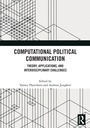
Yannis Theocharis | Andreas Jungherr
Computational Political Communication
Theory, Applications, and Interdisciplinary Challenges
Book
05/2026
1st Edition
Routledge
€57.00
Shipment within 10-20 days
Yannis Theocharis | Andreas Jungherr
Computational Political Communication
Theory, Applications, and Interdisciplinary Challenges
E-Book
11/2024
1st Edition
Routledge
€73.99
Available for download
Yannis Theocharis | Andreas Jungherr
Computational Political Communication
Theory, Applications, and Interdisciplinary Challenges
E-Book
11/2024
1st Edition
Routledge
€73.99
Available for download
Persons
Yannis Theocharis holds the Chair of Digital Governance at the Technical University of Munich. His research interests are in political behavior, political communication, harmful speech and content moderation and computational social science. He is a core member of the Munich Data Science Institute and director of the Content Moderation Lab at the TUM Think Tank.
Andreas Jungherr holds the Chair for Political Science, especially Digital Transformation at the University of Bamberg's Institute for Political Science. His research explores the impact of digital media on politics and society, with a particular emphasis on algorithms, artificial intelligence, and governance. He also investigates the challenges scientific research faces in response to digital change, aiming to unlock the opportunities presented by new data sources and analytical methods. His work centres on leveraging digital methods and computational social science, while also addressing the methodological challenges of integrating these approaches into the social sciences.
Andreas Jungherr holds the Chair for Political Science, especially Digital Transformation at the University of Bamberg's Institute for Political Science. His research explores the impact of digital media on politics and society, with a particular emphasis on algorithms, artificial intelligence, and governance. He also investigates the challenges scientific research faces in response to digital change, aiming to unlock the opportunities presented by new data sources and analytical methods. His work centres on leveraging digital methods and computational social science, while also addressing the methodological challenges of integrating these approaches into the social sciences.
Content
Introduction: Computational Social Science and the Study of Political Communication 1. Capturing Clicks: How the Chinese Government Uses Clickbait to Compete for Visibility 2. Politicians' Self-depiction and Their News Portrayal: Evidence from 28 Countries Using Visual Computational Analysis 3. Facing the Electorate: Computational Approaches to the Study of Nonverbal Communication and Voter Impression Formation 4. Political Polarization on the Digital Sphere: A Cross-platform, Over-time Analysis of Interactional, Positional, and Affective Polarization on Social Media 5. Dictionaries, Supervised Learning, and Media Coverage of Public Policy 6. Computational Identification of Media Frames: Strengths, Weaknesses, and Opportunities 7. Advancing Interdisciplinary Work in Computational Communication Science 8. The Trouble with Sharing Your Privates: Pursuing Ethical Open Science and Collaborative Research across National Jurisdictions Using Sensitive Data