

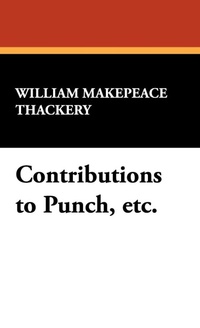
Contributions to Punch, Etc.
Published on 27. September 2024
Book
Hardback
400 pages
978-1-4344-9930-1 (ISBN)
Description
Contributions to Punch, Etc. is a collection of satirical writings by William Makepeace Thackeray, originally published in the famed British humor magazine Punch. Known for his sharp wit and keen observations on society, Thackeray's contributions include essays, poems, and illustrations that lampoon the politics, social customs, and literary trends of his time. These pieces showcase Thackeray's lighter side, offering a humorous and often biting commentary on Victorian life, while also reflecting the wit and humor that would later define his novels, such as Vanity Fair.
More details
Language
English
Place of publication
Holicog
United States
Product notice
sewn/stitched
Cloth over boards
Illustrations
Illustrations
Dimensions
Height: 222 mm
Width: 145 mm
Thickness: 27 mm
Weight
694 gr
ISBN-13
978-1-4344-9930-1 (9781434499301)
Copyright in bibliographic data and cover images is held by Nielsen Book Services Limited or by the publishers or by their respective licensors: all rights reserved.
Schweitzer Classification
Persons
William Makepeace Thackeray (18 July 1811 - 24 December 1863) was an English novelist of the 19th century. Thackeray achieved recognition with his Snob Papers, but the work that really established his fame was the novel Vanity Fair, which first appeared in serialised instalments beginning in January 1847. Even before Vanity Fair completed its serial run Thackeray had become a celebrity, sought after by the very lords and ladies whom he satirised. They hailed him as the equal of Dickens.
In Thackeray's own day some commentators, such as Anthony Trollope, ranked his History of Henry Esmond as his greatest work, perhaps because it expressed Victorian values of duty and earnestness, as did some of his other later novels. It is perhaps for this reason that they have not survived as well as Vanity Fair, which satirises those values.
During the Victorian era Thackeray was ranked second only to Charles Dickens, but he is now much less widely read and is known almost exclusively for Vanity Fair, which has become a fixture in university courses, and has been repeatedly adapted for the cinema and television.
In Thackeray's own day some commentators, such as Anthony Trollope, ranked his History of Henry Esmond as his greatest work, perhaps because it expressed Victorian values of duty and earnestness, as did some of his other later novels. It is perhaps for this reason that they have not survived as well as Vanity Fair, which satirises those values.
During the Victorian era Thackeray was ranked second only to Charles Dickens, but he is now much less widely read and is known almost exclusively for Vanity Fair, which has become a fixture in university courses, and has been repeatedly adapted for the cinema and television.