

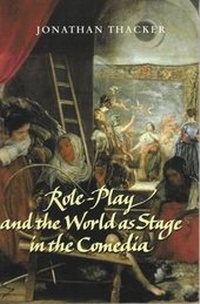
Role-Play and the World as Stage in the Comedia
Published on 1. April 2002
Book
Hardback
240 pages
978-0-85323-548-4 (ISBN)
Description
The theatrum mundi metaphor was well-known in the Golden Age, and was often employed, notably by Calderon in his religious theatre. However, little account has been given of the everyday exploitation of the idea of the world as stage in the mainstream drama of the Golden Age. This study examines how and why playwrights of the period time and again created characters who dramatise themselves, who re-invent themselves by performing new roles and inventing new plots within the larger frame of the play. The prevalence of metatheatrical techniques among Golden Age dramatists, including Lope de Vega, Tirso de Molina, Calderon de la Barca and Guillen de Castro, reveals a fascination with role-playing and its implications. Thacker argues that in comedy, these playwrights saw role-playing as a means by which they could comment on and criticise the society in which they lived, and he reveals a drama far less supportive of the social status quo in Golden Age Spain than has been traditionally thought to be the case.
More details
Language
English
Place of publication
Liverpool
United Kingdom
Dimensions
Height: 239 mm
Width: 163 mm
ISBN-13
978-0-85323-548-4 (9780853235484)
Copyright in bibliographic data and cover images is held by Nielsen Book Services Limited or by the publishers or by their respective licensors: all rights reserved.
Schweitzer Classification
Person
Jonathan Thacker is King Alfonso XIII Professor of Spanish Studies at the University of Oxford.
Content
Acknowledgements
List of Abbreviations
Foreword
Introduction Role-Theory, Metatheatre, and the Reception of Drama
I A Sense of Theatre
1. Patriarchy in Action: Gullien de Castro's La fuerza de la costumbre and the Distribution of Roles
2. Patriarchal Excess and the Emergence of the Desiring Self
3. Role-Play and the World as Stage in the comedia
II Hiding at the Margins: Social Pressures and Escapist Role-Play
1. Marta la piadosa
2. Los locos de Valenica
III A Strategy of Self-Expression: The Puppet-Mistress
1. La dama duende
2. La discrete enamorada
IV Exemplary Tragedy: The Social Riposte to Self-Expression
El duque de Viseo and La Estrella de Sevilla
Conclusions
Bibliography
Index
List of Abbreviations
Foreword
Introduction Role-Theory, Metatheatre, and the Reception of Drama
I A Sense of Theatre
1. Patriarchy in Action: Gullien de Castro's La fuerza de la costumbre and the Distribution of Roles
2. Patriarchal Excess and the Emergence of the Desiring Self
3. Role-Play and the World as Stage in the comedia
II Hiding at the Margins: Social Pressures and Escapist Role-Play
1. Marta la piadosa
2. Los locos de Valenica
III A Strategy of Self-Expression: The Puppet-Mistress
1. La dama duende
2. La discrete enamorada
IV Exemplary Tragedy: The Social Riposte to Self-Expression
El duque de Viseo and La Estrella de Sevilla
Conclusions
Bibliography
Index