

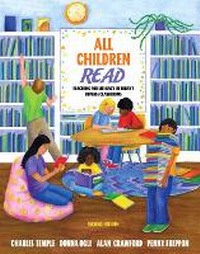
All Children Read
Teaching for Literacy in Today's Diverse Classrooms (with Teach It! booklet)
2nd Edition
Published on 24. May 2007
Book
Paperback/Softback
592 pages
978-0-205-57170-3 (ISBN)
Description
Written by one of the most dynamic author teams in the field of Reading and Literacy, the second edition of All Children Read continues to offer K-8 teachers the best practices for nurturing emergent literacy, teaching early literacy concepts, and developing reading and writing in all students - those of varying reading levels and abilities, as well as those who are English language learners. The new edition increases its emphasis on the professional aspects of literacy instruction, and also includes significant new coverage of fluency and vocabulary, differentiated instruction (and connections to the SIOP), and the all-important topics of literacy assessment. Central to the text are the six overriding themes--the troubled reader, family/community literacy, technology, writing and reading connections, language diversity, and phonics/phonetic awareness---interwoven throughout, making this book the most contemporary and critical learning aid to come out in the field in years.
A Letter to Students from the Authors
Dear Reader:
The courses you take in literacy education should give you a timely preparation to teach. They should also give you a deep understanding of how literacy works, so you can keep growing in your understanding of teaching after your initial preparation is behind you.
To keep it timely we have updated this new edition of All Children Read with whole new chapters on fluency and vocabulary , and on assessment. We have included the latest information on new legislation that is being felt in the classroom-- not just No Child Left Behind, but also Reading First, and the revised Individuals with Disabilities Education Act. New boxed features in each chapter update the topics of Differentiated Instruction and Assessment. Increased attention to teaching English language learners has been provided with Sheltered Instruction Observation Protocol (SIOP) activities.
"This is not a place for rookies anymore," said one principal to a job candidate. Students just coming out of training must be equipped with current best practices so they can step right in and make a difference. But just as important, teachers who are years beyond their initial training are grateful for a deeper understanding of the processes of literacy. Because they must continue to educate themselves, and rise to new challenges in the classroom.
Ideas and methods that are current, but also understanding that is deep and durable-these have been our aims as we prepared this new edition of All Children Read. We trust you will find in this book, and in your literacy classes and preparatory experiences, the background you need to become the teacher you aspire to be.
Sincerely,
Charles A. Temple
Donna Ogle
Alan N. Crawford
Penny Freppon
A Letter to Students from the Authors
Dear Reader:
The courses you take in literacy education should give you a timely preparation to teach. They should also give you a deep understanding of how literacy works, so you can keep growing in your understanding of teaching after your initial preparation is behind you.
To keep it timely we have updated this new edition of All Children Read with whole new chapters on fluency and vocabulary , and on assessment. We have included the latest information on new legislation that is being felt in the classroom-- not just No Child Left Behind, but also Reading First, and the revised Individuals with Disabilities Education Act. New boxed features in each chapter update the topics of Differentiated Instruction and Assessment. Increased attention to teaching English language learners has been provided with Sheltered Instruction Observation Protocol (SIOP) activities.
"This is not a place for rookies anymore," said one principal to a job candidate. Students just coming out of training must be equipped with current best practices so they can step right in and make a difference. But just as important, teachers who are years beyond their initial training are grateful for a deeper understanding of the processes of literacy. Because they must continue to educate themselves, and rise to new challenges in the classroom.
Ideas and methods that are current, but also understanding that is deep and durable-these have been our aims as we prepared this new edition of All Children Read. We trust you will find in this book, and in your literacy classes and preparatory experiences, the background you need to become the teacher you aspire to be.
Sincerely,
Charles A. Temple
Donna Ogle
Alan N. Crawford
Penny Freppon
More details
Edition
2nd edition
Language
English
Place of publication
United States
Publishing group
Pearson Education (US)
Target group
Professional and scholarly
Dimensions
Height: 276 mm
Width: 216 mm
Weight
1311 gr
ISBN-13
978-0-205-57170-3 (9780205571703)
Copyright in bibliographic data and cover images is held by Nielsen Book Services Limited or by the publishers or by their respective licensors: all rights reserved.
Schweitzer Classification
Other editions
New editions
Charles A. Temple | Donna Ogle | Alan N. Crawford
All Children Read
Teaching for Literacy in Today's Diverse Classrooms
Book
05/2010
3rd Edition
Pearson
€118.83
Article exhausted; check for reprint
Previous edition
Charles A. Temple | Donna Ogle | Alan N. Crawford
All Children Read
Teaching for Literacy in Today's Diverse Classrooms (Book Alone)
Book
11/2004
Pearson
€71.79
Article exhausted; check for reprint
Content
Part I: The Literary Process
Chapter 1. The Reading Process
Chapter 2. The Social Contexts for Teaching All Children to Read
Chapter 3. What Teachers Need to Know about Language
Part II: Aspects of Reading
Chapter 4. Emergent Literacy
Chapter 5. Building Word Knowledge
Chapter 6. Fluency and Vocabulary
Chapter 7. Comprehension: Using and Responding to Narrative Texts
Chapter 8. Comprehension: Understanding and Learning from Informational Texts
Chapter 9. The Writing Process
PART III: Organizing and Managing the Literacy Program
Chapter 10: Assessment Chapter 11. Putting Effective Literacy Instruction into Practice ( Grades K to 2)
Chapter 12. Putting Effective Literacy Instruction into Practice: Grades Three to Five
Chapter 13. Reading in the Middle Grades: Grades Six to Eight
Chapter 14. Models and Strategies for Teaching Reading in the Mother Tongue
Chapter 1. The Reading Process
Chapter 2. The Social Contexts for Teaching All Children to Read
Chapter 3. What Teachers Need to Know about Language
Part II: Aspects of Reading
Chapter 4. Emergent Literacy
Chapter 5. Building Word Knowledge
Chapter 6. Fluency and Vocabulary
Chapter 7. Comprehension: Using and Responding to Narrative Texts
Chapter 8. Comprehension: Understanding and Learning from Informational Texts
Chapter 9. The Writing Process
PART III: Organizing and Managing the Literacy Program
Chapter 10: Assessment Chapter 11. Putting Effective Literacy Instruction into Practice ( Grades K to 2)
Chapter 12. Putting Effective Literacy Instruction into Practice: Grades Three to Five
Chapter 13. Reading in the Middle Grades: Grades Six to Eight
Chapter 14. Models and Strategies for Teaching Reading in the Mother Tongue