

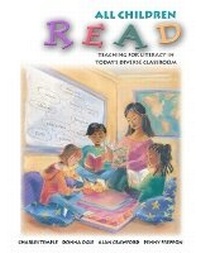
All Children Read
Teaching for Literacy in Today's Diverse Classrooms, MyLabSchool Edition
Published on 28. January 2005
Book
Mixed media product
608 pages
978-0-205-45123-4 (ISBN)
Description
Written by one of the most prestigious author teams in the field of Reading and Literacy, All Children Read offers future K-8 teachers the best practices for nurturing emergent literacy, teaching early literacy concepts, and developing reading and writing in all students-those of varying reading levels and abilities, as well as those who are English language learners.
More details
Language
English
Place of publication
United States
Publishing group
Pearson Education (US)
Target group
College/higher education
Dimensions
Height: 254 mm
Width: 202 mm
ISBN-13
978-0-205-45123-4 (9780205451234)
Copyright in bibliographic data and cover images is held by Nielsen Book Services Limited or by the publishers or by their respective licensors: all rights reserved.
Schweitzer Classification
Content
*This tentative table of contents is for review purposes only and may not reflect final selections of the text. I. THE PROCESSES OF LITERACY.
1. Teaching Reading.
2. The Social and Cultural Contexts for Teaching Diverse Learners.
3. What Teachers Need to Know about Language.
II. ASPECTS OF READING.
4. Emergent Literacy.
5. Word Recognition and Vocabulary.
6. Comprehension and Response to Literature.
7. Reading to LearnnContent and Study Reading.
8. The Writing Process.
III. ORGANIZING AND MANAGING THE LITERACY PROGRAM.
9. Putting Effective Literacy Instruction into Practice (Grades K to 2).
10. Putting Effective Literacy Instruction into Practice in Grades Three to Five.
11. Reading in the Middle Grades: Grades Six to Eight.
12. Models and Strategies for Teaching ESL and for Teaching Reading in the Mother Tongue: A Focus on Spanish.
1. Teaching Reading.
2. The Social and Cultural Contexts for Teaching Diverse Learners.
3. What Teachers Need to Know about Language.
II. ASPECTS OF READING.
4. Emergent Literacy.
5. Word Recognition and Vocabulary.
6. Comprehension and Response to Literature.
7. Reading to LearnnContent and Study Reading.
8. The Writing Process.
III. ORGANIZING AND MANAGING THE LITERACY PROGRAM.
9. Putting Effective Literacy Instruction into Practice (Grades K to 2).
10. Putting Effective Literacy Instruction into Practice in Grades Three to Five.
11. Reading in the Middle Grades: Grades Six to Eight.
12. Models and Strategies for Teaching ESL and for Teaching Reading in the Mother Tongue: A Focus on Spanish.