

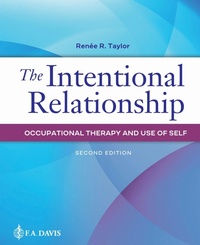
The Intentional Relationship
Occupational Therapy and Use of Self
2nd Edition
Published on 15. January 2020
Book
Paperback/Softback
402 pages
978-0-8036-6977-2 (ISBN)
Description
Right on target. Innovative, nothing comes near it in occupational therapy. A sophisticated meld of occupational therapy and psychology. It is very innovative for occupational therapy and other fields. I am thoroughly impressed."
"I have found no occupational therapy book more interesting to me than this one. I always have to go outside of the field to find such rich and interesting material." -Sharan Schwartzberg, EdD, OTR, FAOTA, Tufts University, Boston, MA., review of the 1st Edition
This groundbreaking book addresses a critical aspect of the occupational therapy practice--the art and science of building effective therapeutic relationships with clients. A distinguished clinician, scientist, and educator, Renee Taylor, PhD, has defined a conceptual practice model, the Intentional Relationship Model, to identify how the client and the therapist each contribute to the unique interpersonal dynamic that becomes the therapeutic relationship. She emphasizes how therapists must act deliberately, thoughtfully, and with vigilant anticipation of the challenges and breakthroughs that have the potential to influence the course of the relationship.
In the 2nd Edition, Dr. Taylor adds extensively to the case content with examples ranging across the age and practice setting continuum. She introduces these clients in Chapter 1 and revisits them throughout the book to illustrate the application of the Intentional Relationship Model to a variegated mixture of common interpersonal challenges in occupational therapy practice. She also includes expanded coverage of how to conduct a client interview and to effectively manage difficult client behaviors, conflicts, and other rifts with clients and their caregivers.
"I have found no occupational therapy book more interesting to me than this one. I always have to go outside of the field to find such rich and interesting material." -Sharan Schwartzberg, EdD, OTR, FAOTA, Tufts University, Boston, MA., review of the 1st Edition
This groundbreaking book addresses a critical aspect of the occupational therapy practice--the art and science of building effective therapeutic relationships with clients. A distinguished clinician, scientist, and educator, Renee Taylor, PhD, has defined a conceptual practice model, the Intentional Relationship Model, to identify how the client and the therapist each contribute to the unique interpersonal dynamic that becomes the therapeutic relationship. She emphasizes how therapists must act deliberately, thoughtfully, and with vigilant anticipation of the challenges and breakthroughs that have the potential to influence the course of the relationship.
In the 2nd Edition, Dr. Taylor adds extensively to the case content with examples ranging across the age and practice setting continuum. She introduces these clients in Chapter 1 and revisits them throughout the book to illustrate the application of the Intentional Relationship Model to a variegated mixture of common interpersonal challenges in occupational therapy practice. She also includes expanded coverage of how to conduct a client interview and to effectively manage difficult client behaviors, conflicts, and other rifts with clients and their caregivers.
More details
Edition
Second Edition
Language
English
Place of publication
Pennsylvania
United States
Target group
Professional and scholarly
Edition type
New edition
Illustrations
138 illustrations
Dimensions
Height: 232 mm
Width: 194 mm
Thickness: 22 mm
Weight
713 gr
ISBN-13
978-0-8036-6977-2 (9780803669772)
Copyright in bibliographic data and cover images is held by Nielsen Book Services Limited or by the publishers or by their respective licensors: all rights reserved.
Schweitzer Classification
Person
Professor, Department of Occupational Therapy, University of Illinois at Chicago, Chicago, Illinois
Content
PART I. Theoretical Foundations and Guidelines for Practice
1. Therapeutic Use of Self in Occupational Therapy: The Importance of Empathy and Intentionality
2. What Defines a Good Therapist?
3. A Model of the Intentional Relationship
4. Knowing Ourselves as Therapists: Introducing the Therapeutic Modes
5. Being Client-Centered: Understanding Interpersonal Characteristics and Mode Preferences
6. Complexities within Client-Therapist Relationships: Inevitable Interpersonal Events of Therapy
7. Uncomplicating the Complicated: The Interpersonal Reasoning Process
PART II. Building an Interpersonal Skill Base
8. Therapeutic Communication
9. Establishing Intentional Relationships
10. The Intentional Interview and Strategic Questioning
11. Understanding Families, Social Systems, and Group Dynamics in Occupational Therapy
12. Understanding and Managing Difficult Behavior
13. Resolving Empathic Breaks and Conflicts
14. Professional Behavior, Values, and Ethics
15. On Being Intentional on Fieldwork and in Interprofessional Practice Settings
16. On Becoming a Better Therapist: Self-Care and Developing your Therapeutic Use of Self
Glossary
Index
1. Therapeutic Use of Self in Occupational Therapy: The Importance of Empathy and Intentionality
2. What Defines a Good Therapist?
3. A Model of the Intentional Relationship
4. Knowing Ourselves as Therapists: Introducing the Therapeutic Modes
5. Being Client-Centered: Understanding Interpersonal Characteristics and Mode Preferences
6. Complexities within Client-Therapist Relationships: Inevitable Interpersonal Events of Therapy
7. Uncomplicating the Complicated: The Interpersonal Reasoning Process
PART II. Building an Interpersonal Skill Base
8. Therapeutic Communication
9. Establishing Intentional Relationships
10. The Intentional Interview and Strategic Questioning
11. Understanding Families, Social Systems, and Group Dynamics in Occupational Therapy
12. Understanding and Managing Difficult Behavior
13. Resolving Empathic Breaks and Conflicts
14. Professional Behavior, Values, and Ethics
15. On Being Intentional on Fieldwork and in Interprofessional Practice Settings
16. On Becoming a Better Therapist: Self-Care and Developing your Therapeutic Use of Self
Glossary
Index