

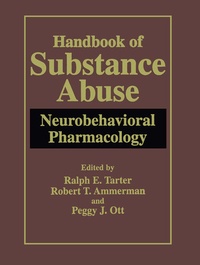
Handbook of Substance Abuse
Neurobehavioral Pharmacology
Published on 30. September 1998
Book
Hardback
XIV, 602 pages
978-0-306-45884-2 (ISBN)
Description
A review of the literature pertaining to the neurobehavioral pharmacology of abusable drugs, this is the only book to survey each of the eleven classes of addictive drugs from the perspectives of neurological, behavioral, and clinical pharmacology.
Designed to serve as a companion text to the DSM-IV manual, the Handbook provides comprehensive information about each drug and drug class having abuse potential with respect to their pharmaceutical mechanisms and actions.
Designed to serve as a companion text to the DSM-IV manual, the Handbook provides comprehensive information about each drug and drug class having abuse potential with respect to their pharmaceutical mechanisms and actions.
More details
Edition
1998 ed.
Language
English
Place of publication
New York
United States
Publishing group
Springer Science+Business Media
Target group
College/higher education
Professional and scholarly
Research
Illustrations
XIV, 602 p.
Dimensions
Height: 260 mm
Width: 183 mm
Thickness: 38 mm
Weight
1346 gr
ISBN-13
978-0-306-45884-2 (9780306458842)
DOI
10.1007/978-1-4757-2913-9
Schweitzer Classification
Other editions
Additional editions
Ralph E. Tarter | Robert T. Ammerman | Peggy J. Ott
Handbook of Substance Abuse
Neurobehavioral Pharmacology
E-Book
03/2013
Springer
€149.79
Available for download
Ralph E. Tarter | Robert T. Ammerman | Peggy J. Ott
Handbook of Substance Abuse
Neurobehavioral Pharmacology
Book
12/2010
Springer
€160.49
Shipment within 15-20 days
Content
Introduction: Defining Drugs of Abuse.- I. Alcohol.- 1. Pharmacology of Alcohol.- 2. Behavioral Pharmacology of Alcohol.- 3. Psychological and Psychiatric Consequences of Alcohol.- II. Caffeine.- 4. Pharmacology of Caffeine.- 5. Behavioral Pharmacology of Caffeine.- 6. Psychological and Psychiatric Consequences of Caffeine.- III. Cannabis.- 7. Pharmacology of Cannabis.- 8. Behavioral Pharmacology of Cannabinoids.- 9. Psychological and Psychiatric Consequences of Cannabis.- IV Cocaine.- 10. Pharmacology of Cocaine.- 11. Behavioral Pharmacology of Cocaine.- 12. Psychological and Psychiatric Consequences of Cocaine.- V. Hallucinogens.- 13. Pharmacology of Hallucinogens.- 14. Behavioral Pharmacology of Hallucinogens.- 15. Psychological and Psychiatric Consequences of Hallucinogens.- VI. Inhalants.- 16. Pharmacology of Inhalants.- 17. Behavioral Pharmacology of Inhalants.- 18. Psychological and Psychiatric Consequences of Inhalants.- VII. Nicotine.- 19. Pharmacology of Nicotine.- 20. Behavioral Pharmacology of Nicotine.- 21. Psychological and Psychiatric Consequences of Nicotine.- VIII. Opiates.- 22. Pharmacology of Opiates.- 23. Behavioral Pharmacology of Opiates.- 24. Psychological and Psychiatric Consequences of Opiates.- 25. Medications of Abuse: Opioids.- IX. Sedatives, Hypnotics, and Anxiolytics.- 26. Pharmacology of Sedatives, Hypnotics, and Anxiolytics.- 27. Behavioral Pharmacology of Sedatives, Hypnotics, and Anxiolytics.- 28. Psychological and Psychiatric Consequences of Sedatives, Hypnotics, and Anxiolytics.- 29. Medications of Abuse and Addiction: Benzodiazepines and Other Sedatives/Hypnotics.- X. Amphetamines.- 30. Pharmacology of Amphetamines.- 31. Behavioral Pharmacology of Amphetamines.- 32. Psychological and Psychiatric Consequences of Amphetamines.- XI. Other Substances of Abuse.- 33. Anabolic Steroids.- 34. Ecstasy.- 35. Phencyclidine.