

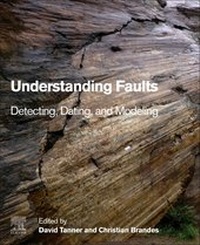
Understanding Faults
Detecting, Dating, and Modeling
Published on 9. October 2019
Book
Paperback/Softback
380 pages
978-0-12-815985-9 (ISBN)
Description
Understanding Faults: Detecting, Dating, and Modeling offers a single resource for analyzing faults for a variety of applications, from hazard detection and earthquake processes, to geophysical exploration. The book presents the latest research, including fault dating using new mineral growth, fault reactivation, and fault modeling, and also helps bridge the gap between geologists and geophysicists working across fault-related disciplines. Using diagrams, formulae, and worldwide case studies to illustrate concepts, the book provides geoscientists and industry experts in oil and gas with a valuable reference for detecting, modeling, analyzing and dating faults.
More details
Language
English
Place of publication
United States
Target group
Professional and scholarly
Researchers and graduate students in geology, geophysics, exploration geology, and seismology; industry experts in oil and gas exploration
Dimensions
Height: 229 mm
Width: 152 mm
Weight
590 gr
ISBN-13
978-0-12-815985-9 (9780128159859)
Copyright in bibliographic data and cover images is held by Nielsen Book Services Limited or by the publishers or by their respective licensors: all rights reserved.
Schweitzer Classification
Other editions
New editions
Book
approx. 11/2026
2nd Edition
Elsevier
€161.50
Not yet published
Additional editions
E-Book
10/2019
Elsevier
€140.00
Available for download
Persons
David Colin Tanner is a researcher at the LIAG Institute for Applied Geophysics, where his research focuses on structural modeling and seismic interpretation. He has given lectures on 3D geological modelling and tectonics at many universities. His interests lie in understanding the geological processes in the Earth's crust, especially faults and their geological history.
Christian Brandes is a researcher and lecturer at the Institute of Geology at the University of Hannover. His research interests include interaction of tectonics and sedimentation, geodynamics of island-arcs, burial history and temperature evolution of sedimentary basins, paleoseismology, and evolution of fold-and-thrust belts. He lectures on tectonics, modeling, Earth history, mapping, and regional geology.
Christian Brandes is a researcher and lecturer at the Institute of Geology at the University of Hannover. His research interests include interaction of tectonics and sedimentation, geodynamics of island-arcs, burial history and temperature evolution of sedimentary basins, paleoseismology, and evolution of fold-and-thrust belts. He lectures on tectonics, modeling, Earth history, mapping, and regional geology.
Content
1. Introduction
2. Fault Mechanics and Earthquakes
3. Fault Detection
4. Numerical Modelling of Faults
5. Faults in the Laboratory
6. The Growth of Faults
7. Direct dating of Fault Movement
8. Fault Seal
9. Conclusions
2. Fault Mechanics and Earthquakes
3. Fault Detection
4. Numerical Modelling of Faults
5. Faults in the Laboratory
6. The Growth of Faults
7. Direct dating of Fault Movement
8. Fault Seal
9. Conclusions