

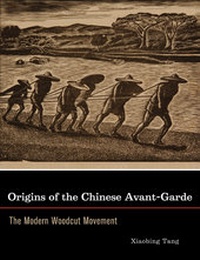
Origins of the Chinese Avant-Garde
The Modern Woodcut Movement
1st Edition
Published on 20. November 2007
Book
Hardback
318 pages
978-0-520-24909-7 (ISBN)
Description
In "Origins of the Chinese Avant-Garde", Xiaobing Tang studies the art and art theories of the first half of the twentieth century, when modern Chinese art and literature emerged. He argues that the most consequential expression of the avant-garde was the modern woodcut movement that thrived in China in the 1930s. In this innovative study - also the first comprehensive account of this Chinese movement available in English - Tang examines the aesthetic, intellectual, and social appeal of the modern woodcut and places the movement at the intersection of historical events, individual efforts, and competing discourses on art. He also shows how the woodcut movement drew upon international inspiration - from German Expressionism, Soviet wood engravings, and Japanese creative prints.
More details
Edition
First Edition
Language
English
Place of publication
Berkerley
United States
Target group
Professional and scholarly
Product notice
Cloth over boards
Illustrations
10 color illustrations, 75 b-w photographs
Dimensions
Height: 254 mm
Width: 178 mm
Thickness: 28 mm
Weight
998 gr
ISBN-13
978-0-520-24909-7 (9780520249097)
Copyright in bibliographic data and cover images is held by Nielsen Book Services Limited or by the publishers or by their respective licensors: all rights reserved.
Schweitzer Classification
Person
Xiaobing Tang is Professor of Chinese at the University of Southern California. He is the author of Chinese Modern: The Heroic and the Quotidian (2000) and Global Space and the National Discourse of Modernity: The Historical Thinking of Liang Qichao (1996).
Content
Acknowledgments Introduction 1 The Beautiful Object of Art For an Aesthetic Education Echoes of a New Calling In Pursuit of an Art Movement 2 Art Theory as Passionate Discourse on Subjectivity The Expressionist Imperative In the Whirlpool of Revolution To Represent an Epoch 3 The New Art Movement and Its Field of Vision An Aesthetic of Vigor Art and Its Discontent Seeing in Black and White 4 The Making of the Avant-Garde From the Ashes of the First Shanghai War 1933: Hangzhou and Beiping A Visual Esperanto 5 The Avant-Garde and the National Imaginary For a Public Art of the Nation Guangzhou as Epicenter Farewell, Shanghai Conclusion: The Origins of Roar, China! On Vision and Voice in Modern Chinese Art Notes Glossary Select Bibliography Illustrations Index