

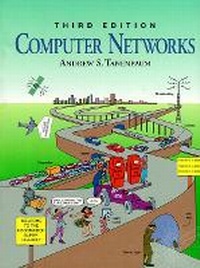
Computer Networks
United States Edition
3rd Edition
Published on 30. March 1996
Book
Hardback
848 pages
978-0-13-349945-2 (ISBN)
Description
Primarily intended for junior/senior or graduate level courses in computer networks, data networks, or distributed processing in CS or EE departments. Also useful (with selective omission of sections or chapters) for less advanced students.
This is the first book that explains how computer networks work inside, from the hardware technology up to and including the most popular Internet application protocols. While students are not expected to have a background in computer networks or advanced mathematics, a general background in computer systems and programming is assumed.
This is the first book that explains how computer networks work inside, from the hardware technology up to and including the most popular Internet application protocols. While students are not expected to have a background in computer networks or advanced mathematics, a general background in computer systems and programming is assumed.
More details
Edition
3rd edition
Language
English
Place of publication
Upper Saddle River
United States
Publishing group
Pearson Education (US)
Target group
College/higher education
Dimensions
Height: 242 mm
Width: 185 mm
Thickness: 34 mm
Weight
1284 gr
ISBN-13
978-0-13-349945-2 (9780133499452)
Copyright in bibliographic data and cover images is held by Nielsen Book Services Limited or by the publishers or by their respective licensors: all rights reserved.
Schweitzer Classification
Other editions
New editions
Book
08/2002
4th Edition
Pearson
€92.84
Article exhausted; check for reprint
Content
1. Introduction.
Uses of Computer Networks. Network Hardware. Network Software. Reference Models. Example Networks. Example Data Communication Services. Network Standardization. Outline of the Rest of the Book. Summary.
2. The Physical Layer.
The Theoretical Basis for Data Communication. Transmission Media. Wireless Transmission. The Telephone System. Narrowband ISDN. Broadband ISDN and ATM. Cellular Radio. Communication Satellites. Summary.
3. The Data Link Layer.
Data Link Layer Design Issues. Error Detection and Correction. Elementary Data Link Protocols. Sliding Window Protocols. Protocol Specification and Verification. Example Data Link Protocols. Summary.
4. The Medium Access Sublayer.
The Channel Allocation Problem. Multiple Access Protocols. IEEE Standard 802 for LANS and MANS. Bridges. High-Speed LANS. Satellite Networks. Summary.
5. The Network Layer.
Network Layer Design Issues. Routing Algorithms. Congestion Control Algorithms. Internetworking. The Network Layer in the Internet. The Network Layer in ATM Networks. Summary.
6. The Transport Layer.
The Transport Service. Elements of Transport Protocols. A Simple Transport Protocol. The Internet Transport Protocols (TCP and UDP). The ATM AAL Layer Protocols. Performance Issues. Summary.
7. The Application Layer.
Network Security. DNS-Domain Name System. SNMP-Simple Network Management Protocol. Electronic Mail. Usenet News. The World Wide Web. Multimedia. Summary.
8. Reading List and Bibliography.
Suggestions for Further Reading. Alphabetical Bibliography.
Index.
Uses of Computer Networks. Network Hardware. Network Software. Reference Models. Example Networks. Example Data Communication Services. Network Standardization. Outline of the Rest of the Book. Summary.
2. The Physical Layer.
The Theoretical Basis for Data Communication. Transmission Media. Wireless Transmission. The Telephone System. Narrowband ISDN. Broadband ISDN and ATM. Cellular Radio. Communication Satellites. Summary.
3. The Data Link Layer.
Data Link Layer Design Issues. Error Detection and Correction. Elementary Data Link Protocols. Sliding Window Protocols. Protocol Specification and Verification. Example Data Link Protocols. Summary.
4. The Medium Access Sublayer.
The Channel Allocation Problem. Multiple Access Protocols. IEEE Standard 802 for LANS and MANS. Bridges. High-Speed LANS. Satellite Networks. Summary.
5. The Network Layer.
Network Layer Design Issues. Routing Algorithms. Congestion Control Algorithms. Internetworking. The Network Layer in the Internet. The Network Layer in ATM Networks. Summary.
6. The Transport Layer.
The Transport Service. Elements of Transport Protocols. A Simple Transport Protocol. The Internet Transport Protocols (TCP and UDP). The ATM AAL Layer Protocols. Performance Issues. Summary.
7. The Application Layer.
Network Security. DNS-Domain Name System. SNMP-Simple Network Management Protocol. Electronic Mail. Usenet News. The World Wide Web. Multimedia. Summary.
8. Reading List and Bibliography.
Suggestions for Further Reading. Alphabetical Bibliography.
Index.