

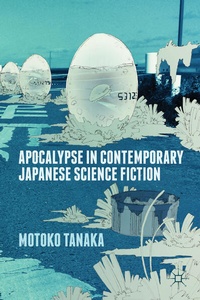
Apocalypse in Contemporary Japanese Science Fiction
Published on 29. January 2014
Book
Hardback
XV, 189 pages
978-1-137-37354-0 (ISBN)
Description
Starting with the history of apocalyptic tradition in the West and focusing on modern Japanese apocalyptic science fiction in manga, anime, and novels, Motoko Tanaka shows how science fiction reflected and coped with the devastation in Japanese national identity after 1945.
Reviews / Votes
"Apocalyptic scenarios occupy a critical place in Japanese science fiction, and since the disasters of 2011, it has become even clearer that such fictions represent an important conceptual tool for trying to think through these unthinkable events. Motoko Tanaka moves us beyond facile generalizations about Japan's preoccupation with disaster, by examining the changing ways that Japanese literature has conceived of the apocalyptic and tracing these ideas through a fascinating array of texts and media." - Christopher Bolton, Associate Professor of Comparative and Japanese Literature, Williams College, USA and co-editor of Robot Ghosts and Wired Dreams: Japanese Science Fiction from Origins to AnimeMore details
Edition
2014 edition
Language
English
Place of publication
New York
United States
Target group
Professional and scholarly
Product notice
sewn/stitched
Paper over boards
Illustrations
XV, 189 p.
Dimensions
Height: 218 mm
Width: 145 mm
Thickness: 15 mm
Weight
363 gr
ISBN-13
978-1-137-37354-0 (9781137373540)
DOI
10.1057/9781137373557
Schweitzer Classification
Other editions
Additional editions
Book
01/2014
Palgrave MacMillan
€106.99
Shipment within 15-20 days
E-Book
01/2014
1st Edition
Palgrave MacMillan
€96.29
Available for download
Person
Motoko Tanaka is an Associate Professor at Tamagawa University, Tokyo, Japan
Content
1. The Trajectory of Apocalyptic Discourse 2. Apocalypse in Japan 3. Apocalyptic Fiction from 1945 to the 1970s 4. Apocalyptic Fiction in 1980s Japan 5. Apocalyptic Fiction after 1995 - Sekaikei Works 6. Apocalyptic Imagination after 2011