


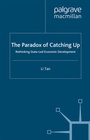
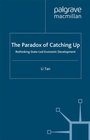
The Paradox of Catching Up
Rethinking State-Led Economic Development
Published on 2. August 2005
Book
Hardback
XI, 188 pages
978-1-4039-4954-7 (ISBN)
Description
The phenomenon of state-led development has been persistent throughout modern history and remains significant today. Latecomers in the world's development, from Russia in the 19th century to contemporary China, persistently resorted to the state as a developmental instrument in economic catch-up. Why did relatively 'backward' economies tend to take the state-led approach rather than following the free market model? Why did those latecomers that used the state as the main coordinator and had the bureaucratic capacity to do so modernize faster than other 'backward' economies? Finally, do the successful state-led developers have the potentials to take the lead in world's developments? Or under what conditions could they do so? These are the questions the book intends to answer. This book looks into the state-led development in the post-war period, offering a new perspective for interpreting the choice of the state-led approach by latecomers and the consequences of such choices.
More details
Edition
2005 edition
Language
English
Place of publication
London
United Kingdom
Publishing group
Palgrave USA
Target group
Professional and scholarly
Product notice
sewn/stitched
Cloth over boards
With dust jacket
Illustrations
XI, 188 p.
Dimensions
Height: 224 mm
Width: 148 mm
Thickness: 23 mm
Weight
397 gr
ISBN-13
978-1-4039-4954-7 (9781403949547)
DOI
10.1057/9780230598072
Schweitzer Classification
Other editions
Additional editions
E-Book
08/2005
1st Edition
Palgrave Macmillan
€96.29
Available for download
Book
08/2005
Palgrave Macmillan
€106.99
Shipment within 15-20 days
Person
LI TAN is a senior research analyst at a financial firm in New York, USA and holds a Ph.D. in Economics. She has worked at various institutions in the United States and China, and published articles in both academic and business fields. Her research areas include economic developments and international economics.
Content
Introduction Markets and Costs of Using Markets A Revisit to the Soviet System The East Asian Miracle China's Transition to a Market Economy The Paradox of Catching up