


Data Dissemination in Wireless Computing Environments
Published on 30. June 2000
Book
Hardback
X, 169 pages
978-0-7923-7866-2 (ISBN)
Description
In our increasingly mobile world the ability to access information on demand at any time and place can satisfy people's information needs as well as confer on them a competitive advantage. The emergence of battery-operated, low-cost and portable computers such as palmtops and PDAs, coupled with the availability and exploitation of wireless networks, have made possible the potential for ubiquitous computing. Through the wireless networks, portable equipments will become an integrated part of existing distributed computing environments, and mobile users can have access to data stored at information servers located at the static portion of the network even while they are on the move.
Traditionally, information is retrieved following a request-response model. However, this model is no longer adequate in a wireless computing environment. First, the wireless channel is unreliable and the bandwidth is low compared to the wired counterpart. Second, the environment is essentially asymmetric with a large number of mobile users accessing a small number of servers. Third, battery-operated portable devices can typically operate only for a short time because of the short battery lifespan. Thus, clients are expected to be disconnected most of the time.
To overcome these limitations, there has been a proliferation of research efforts on designing data delivery mechanisms to support wireless computing more effectively. Data Dissemination in Wireless Computing Environments focuses on such mechanisms. The purpose is to provide a thorough and comprehensive review of recent advances on energy-efficient data delivery protocols, efficient wireless channel bandwidth utilization, reliable broadcasting and cache invalidation strategies for clients with long disconnection time. Besides surveying existing methods, this book also compares and evaluates some of the more promising schemes.
Traditionally, information is retrieved following a request-response model. However, this model is no longer adequate in a wireless computing environment. First, the wireless channel is unreliable and the bandwidth is low compared to the wired counterpart. Second, the environment is essentially asymmetric with a large number of mobile users accessing a small number of servers. Third, battery-operated portable devices can typically operate only for a short time because of the short battery lifespan. Thus, clients are expected to be disconnected most of the time.
To overcome these limitations, there has been a proliferation of research efforts on designing data delivery mechanisms to support wireless computing more effectively. Data Dissemination in Wireless Computing Environments focuses on such mechanisms. The purpose is to provide a thorough and comprehensive review of recent advances on energy-efficient data delivery protocols, efficient wireless channel bandwidth utilization, reliable broadcasting and cache invalidation strategies for clients with long disconnection time. Besides surveying existing methods, this book also compares and evaluates some of the more promising schemes.
More details
Series
Edition
2000 ed.
Language
English
Place of publication
New York
United States
Target group
Professional and scholarly
Research
Illustrations
X, 169 p.
Dimensions
Height: 241 mm
Width: 160 mm
Thickness: 15 mm
Weight
453 gr
ISBN-13
978-0-7923-7866-2 (9780792378662)
DOI
10.1007/b116620
Schweitzer Classification
Other editions
Additional editions
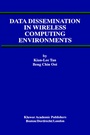
Kian-Lee Tan | Beng Chin Ooi
Data Dissemination in Wireless Computing Environments
Book
03/2013
Springer
€160.49
Shipment within 15-20 days
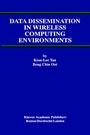
Kian-Lee Tan | Beng Chin Ooi
Data Dissemination in Wireless Computing Environments
E-Book
12/2005
Plenum Publishing Corporation
€149.79
Available for download
Content
Models for Information Dissemination.- Data Broadcast Scheduling.- Indexing on Air.- Fault-tolerant Broadcast Organization.- Cache Invalidation Mechanisms.- Balancing Push and Pull.- Supporting Relational Operations.- Conclusions.