

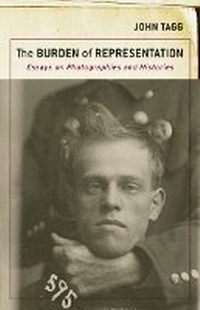
The Burden of Representation
Essays on Photographies and Histories
Published on 28. December 2021
Book
Paperback/Softback
272 pages
978-1-5179-1223-9 (ISBN)
Description
A powerhouse in photographic theory-updated and with a new essay
Every day, photographic images are relied upon as documents, evidence, and records in courtrooms, hospitals, and police work. But how did such usages come to be established, and when? What agencies and institutions had the power to give them this status? And what are the consequences of photographic representation? Drawing on semiotics, cultural theory, and the work of Foucault and Althusser, John Tagg rejects the idea of photography as a record of reality and traces a history that has profound implications not only for the theory of photography but also for understanding the role of new means of representation in modern social regulation. Now with a new essay situating this volume in the changed horizon of cultural politics, The Burden of Representation argues for a rigorous analysis of the meaning, status, and effects of photographs, rooted in a historical grasp of the growth of the modern state.
Every day, photographic images are relied upon as documents, evidence, and records in courtrooms, hospitals, and police work. But how did such usages come to be established, and when? What agencies and institutions had the power to give them this status? And what are the consequences of photographic representation? Drawing on semiotics, cultural theory, and the work of Foucault and Althusser, John Tagg rejects the idea of photography as a record of reality and traces a history that has profound implications not only for the theory of photography but also for understanding the role of new means of representation in modern social regulation. Now with a new essay situating this volume in the changed horizon of cultural politics, The Burden of Representation argues for a rigorous analysis of the meaning, status, and effects of photographs, rooted in a historical grasp of the growth of the modern state.
Reviews / Votes
"A probing, compassionate, and lucid account of the institutionalization of the photographic process and its social and political consequences."-Albert Boime"An important and impressive collection of essays."-Art History
"An exemplary piece of counterhegemonic history writing."-Media, Culture, and Society
More details
Language
English
Place of publication
Minnesota
United States
Target group
Professional and scholarly
Illustrations
40 black & whilte illustrations
Dimensions
Height: 216 mm
Width: 140 mm
Thickness: 38 mm
ISBN-13
978-1-5179-1223-9 (9781517912239)
Copyright in bibliographic data and cover images is held by Nielsen Book Services Limited or by the publishers or by their respective licensors: all rights reserved.
Schweitzer Classification
Other editions
Previous edition

Book
08/1993
University of Minnesota Press
€43.51
Article exhausted; check for reprint
Person
John Tagg is SUNY Distinguished Professor of art history at Binghamton University, State University of New York. He is author of Grounds of Dispute (Minnesota, 1992) and The Disciplinary Frame (Minnesota, 2008) and has published widely on photography and contemporary critical theory.
Content
Contents
The Burden of Recollection: Thinking Photography after Foucault
Acknowledgments
Introduction
1. A Democracy of the Image: Photographic Portraiture and Commodity Production
2. Evidence, Truth and Order: Photographic Records and the Growth of the State
3. A Means of Surveillance: The Photograph as Evidence in Law
4. A Legal Reality: The Photograph as Property in Law
5. God's Sanitary Law: Slum Clearance and Photography in Late Nineteenth-Century Leeds
6. The Currency of the Photograph: New Deal Reformism and Documentary Rhetoric
7. Contacts/Worksheets: Notes on Photography, History and Representation
Notes and References
Bibliography
Index
The Burden of Recollection: Thinking Photography after Foucault
Acknowledgments
Introduction
1. A Democracy of the Image: Photographic Portraiture and Commodity Production
2. Evidence, Truth and Order: Photographic Records and the Growth of the State
3. A Means of Surveillance: The Photograph as Evidence in Law
4. A Legal Reality: The Photograph as Property in Law
5. God's Sanitary Law: Slum Clearance and Photography in Late Nineteenth-Century Leeds
6. The Currency of the Photograph: New Deal Reformism and Documentary Rhetoric
7. Contacts/Worksheets: Notes on Photography, History and Representation
Notes and References
Bibliography
Index