

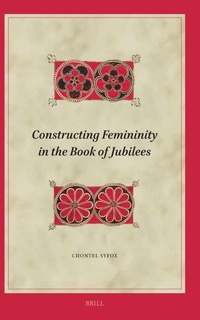
Constructing Femininity in the Book of Jubilees
Published on 31. July 2025
Book
Hardback
206 pages
978-90-04-73482-1 (ISBN)
Description
A striking feature of the book of Jubilees is the visibility it gives to women in comparison to Genesis, with the matriarchs especially seeming to play an outsized role in the rewriting. Utilising approaches drawn from the fields of gender and feminist studies, Constructing Femininity in the Book of Jubilees interrogates the motives and priorities that guided the rewriter in his re-presentation of the matriarchs, asking to what extent the treatment of these characters was unique to this text and its author's attitude towards women or typical of the then literary Zeitgeist.
More details
Series
Language
English
Place of publication
Leiden
Netherlands
Target group
Professional and scholarly
College/higher education
Product notice
sewn/stitched
Cloth over boards
Dimensions
Height: 241 mm
Width: 161 mm
Thickness: 19 mm
Weight
445 gr
ISBN-13
978-90-04-73482-1 (9789004734821)
Copyright in bibliographic data and cover images is held by Nielsen Book Services Limited or by the publishers or by their respective licensors: all rights reserved.
Schweitzer Classification
Person
Dr. Chontel Syfox is an Assistant Professor in the department of Classical and Ancient Near Eastern Studies at the University of Wisconsin-Madison. Her work focuses on the early reception and interpretation of the Hebrew Bible in Second Temple Jewish literature, with a particular focus on gender-nuanced interpretative methods. She holds a Ph.D. in Christianity and Judaism in Antiquity from the University of Notre Dame.
Content
Contents
Acknowledgments
1 Introduction
?1?History of Scholarship on Jubilees, Sex, and Gender
?2?Methodological Considerations
?3?Scope of the Study and Summary of Chapters
Part 1: Jubilees
2 Leah
?1?Constructing Hegemonic Masculinities and Idealised Femininities
?2?Jacob's Hegemonic Masculinity
?3?Leah's Idealised Femininity
?4?Neutralising Gender Trouble
?5?Conclusion
3 Judith, Basemath, and Bedsuel
?1?Constructing Pariah Femininities
?2?Judith's and Basemath's Pariah Femininities
?3?Bedsuel's Pariah Femininity
?4?Conclusion
4 Sarah and Rachel
?1?Sarah's Subordinate Femininity
?2?Rachel's Subordinate Femininity
?3?Conclusion
5 Rebekah
?1?Constructing Complicit Masculinity
?2?Neutralising Deception
?3?Gender Trouble: Doubling Down
?4?Gender Trouble: the Intergenerational Consequences
?5?Conclusion
Part 2: Jewish Novellas and Greek Novel
6 Esther
?1?The Traditions
?2?Gender Trouble in the Masoretic Text
?3?Neutralising Gender Trouble in the Greek Rewriting
?4?Conclusion
7 Judith
?1?The Tradition
?2?Judith's Gender Trouble
?3?The Complicit Masculinity of the Elders
?4?Assyrian Masculinity vs. Judith's Femininity
?5?Neutralising Judith's Gender Trouble
?6?Conclusion
8 Callirhoe
?1?The Tradition
?2?Constructing Hegemonic Masculinity
?3?Chaereas: from Subordinate to Hegemonic Masculinity
?4?Constructing Idealised Femininity
?5?Callirhoe: from Virgin to Mother and Wife
?6?Pariah Femininities
?7?Conclusion
9 Conclusions
Bibliography
Acknowledgments
1 Introduction
?1?History of Scholarship on Jubilees, Sex, and Gender
?2?Methodological Considerations
?3?Scope of the Study and Summary of Chapters
Part 1: Jubilees
2 Leah
?1?Constructing Hegemonic Masculinities and Idealised Femininities
?2?Jacob's Hegemonic Masculinity
?3?Leah's Idealised Femininity
?4?Neutralising Gender Trouble
?5?Conclusion
3 Judith, Basemath, and Bedsuel
?1?Constructing Pariah Femininities
?2?Judith's and Basemath's Pariah Femininities
?3?Bedsuel's Pariah Femininity
?4?Conclusion
4 Sarah and Rachel
?1?Sarah's Subordinate Femininity
?2?Rachel's Subordinate Femininity
?3?Conclusion
5 Rebekah
?1?Constructing Complicit Masculinity
?2?Neutralising Deception
?3?Gender Trouble: Doubling Down
?4?Gender Trouble: the Intergenerational Consequences
?5?Conclusion
Part 2: Jewish Novellas and Greek Novel
6 Esther
?1?The Traditions
?2?Gender Trouble in the Masoretic Text
?3?Neutralising Gender Trouble in the Greek Rewriting
?4?Conclusion
7 Judith
?1?The Tradition
?2?Judith's Gender Trouble
?3?The Complicit Masculinity of the Elders
?4?Assyrian Masculinity vs. Judith's Femininity
?5?Neutralising Judith's Gender Trouble
?6?Conclusion
8 Callirhoe
?1?The Tradition
?2?Constructing Hegemonic Masculinity
?3?Chaereas: from Subordinate to Hegemonic Masculinity
?4?Constructing Idealised Femininity
?5?Callirhoe: from Virgin to Mother and Wife
?6?Pariah Femininities
?7?Conclusion
9 Conclusions
Bibliography