

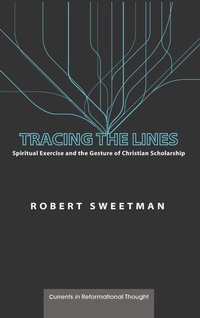
Tracing the Lines
Spiritual Exercise and the Gesture of Christian Scholarship
Published on 23. August 2016
Book
Hardback
188 pages
978-1-4982-9683-0 (ISBN)
Description
Tracing the Lines takes on the project of what Christian scholarship is, and should be, today. It does so, however, with an eye to locating similarities in the rich tradition the last nearly two thousand years of Christian scholarship has given birth to. With humility and a sympathetic ear, Sweetman traces the way certain lines of thought have developed over time, showing their strengths, their weaknesses, and their motivation for shaping Christian scholarship in particular ways. Though he locates his own thought within a particular one of these streams, he shows how all of them have contributed in different ways to the formation of the work of Christian scholarship. Offering in the end an understanding of Christian scholarship as scholarship attuned to the shape of our Christian hearts, this book reaches across disciplines to connect Christians engaged in scholarship in all areas of the academy, whether at public or private institutions.
More details
Series
Language
English
Place of publication
Eugene
United States
Product notice
sewn/stitched
Cloth over boards
With dust jacket
Dimensions
Height: 235 mm
Width: 157 mm
Thickness: 15 mm
Weight
431 gr
ISBN-13
978-1-4982-9683-0 (9781498296830)
Copyright in bibliographic data and cover images is held by Nielsen Book Services Limited or by the publishers or by their respective licensors: all rights reserved.
Schweitzer Classification
Other editions
Additional editions
E-Book
08/2016
Wipf and Stock Publishers
€23.49
Available for download
Person
Dr. Robert Sweetman is the H. Evan Runner Chair in the History of Philosophy at the Institute for Christian Studies. He is a trained medievalist specializing in Dominican Thought--in particular, Aquinas, Meister Eckhart, and the florescence of women's contemplative thought supported by Dominicans in the thirteenth century. He brings these interests and competencies into contact with the Reformational tradition by using them to examine D.H.Th. Vollenhoven's "problem-historical" historiography of the history of philosophy.