

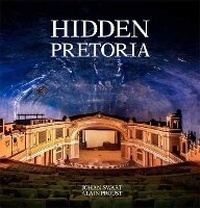
Hidden Pretoria
Published on 26. September 2019
Book
Hardback
240 pages
978-1-4323-0465-2 (ISBN)
Description
Despite being South Africa's capital city, Pretoria has often played a supporting role to bold and brash Johannesburg and Cape Town's cosmopolitan charms. However, when it comes to architectural heritage, the Jacaranda City is well-endowed. From the skyline-dominating Union Buildings and Voortrekker Monument, to the imposing edifices of its administrative precincts, Pretoria might be deserving of a second moniker: the city of sandstone, brick and granite. But when you look beyond the impressive facades, soaring columns and linear planes of buildings that were intended to convey power and authority, you'll find light-filled interiors embellished with decorative touches that are only hinted at from the outside. Murals, mosaics, domes, galleries, stained-glass windows, gleaming brass and impressive woodwork are often hidden from view behind doors that are closed to the public. And even those museums, buildings and places of worship that are open to all have noteworthy architectural and design features that are easily overlooked. The history of the city, and of the country, has been played out in many of the buildings featured in Hidden Pretoria. This book captures facets of our diverse heritage, historic and contemporary, so that a new generation might recognise the need to embrace the past in order to build our common future.
More details
Language
English
Place of publication
South Africa
Publishing group
Penguin Random House South Africa
Illustrations
200 photographs
Dimensions
Height: 249 mm
Width: 259 mm
ISBN-13
978-1-4323-0465-2 (9781432304652)
Copyright in bibliographic data and cover images is held by Nielsen Book Services Limited or by the publishers or by their respective licensors: all rights reserved.
Schweitzer Classification
Other editions
Additional editions

Persons
Johan Swart holds a master's degree in architecture and heritage studies. At the University of Pretoria, he teaches architectural history and leads a heritage-focused design studio for post-graduate students. As curator of the architecture archives at the university, he is responsible for the safeguarding and interpretation of significant historical drawing collections. Johan writes about architectural history with a specific interest in the interpretation of archives. His academic interests include the history of design, archival practice, cultural landscapes and adaptive re-use.