

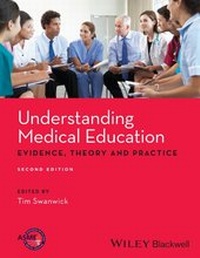
Understanding Medical Education
Evidence,Theory and Practice
2nd Edition
Published on 31. December 2013
Book
Paperback/Softback
526 pages
978-1-118-47240-8 (ISBN)
Description
In this new and extensively updated second edition, the Association for the Study of Medical Education presents a complete and authoritative guide to medical education. Written by leading experts in the field, Understanding Medical Education provides a comprehensive resource of the theoretical and academic bases to modern medical education practice.
This authoritative and accessible reference is designed to meet the needs of all those working in medical education from undergraduate education through postgraduate training to continuing professional development. As well as providing practical guidance for clinicians, teachers and researchers, Understanding Medical Education will prove an invaluable resource to those studying at certificate, diploma or masters level and a first 'port-of-call' for anyone engaged in medical education as an academic discipline.
Exploring medical education in all its diversity and containing all you need in one place, Understanding Medical Education is the ideal reference not only for medical educators, but for anyone involved in the development of healthcare professionals, in whatever discipline wherever they are in the world.
This authoritative and accessible reference is designed to meet the needs of all those working in medical education from undergraduate education through postgraduate training to continuing professional development. As well as providing practical guidance for clinicians, teachers and researchers, Understanding Medical Education will prove an invaluable resource to those studying at certificate, diploma or masters level and a first 'port-of-call' for anyone engaged in medical education as an academic discipline.
Exploring medical education in all its diversity and containing all you need in one place, Understanding Medical Education is the ideal reference not only for medical educators, but for anyone involved in the development of healthcare professionals, in whatever discipline wherever they are in the world.
Reviews / Votes
This is the second edition of the popular, well-read and well-recognised volume which aims to provide an introduction to the ever important business of medical education. Its brief is ambitious. It aims to be a synopsis of educational theory and practice, of use both to scholarly medical educators and educational scholars all within an acknowledged context of complexity, contestation and political dialogue. This ambitious brief is largely accomplished. For the reader wishing to access ready and organised ideas there are boxes with key messages and important principles, but there are also opportunities for the reader with more substantive concerns to access and engage in competing discourses. The latter is nowhere more evident than in the chapter on Quality in medical education by Alan Bleakley, Julie Browne and Kate Ellis where it is recognised that quality has competing managerial, economic, scientific, aesthetic, ethical, professional, social and political discourses. Familiar and traditional areas of study are seen through the lens of contemporary theory. Clare Morris and David Blaney s account of Work-based learning, the very nub of medical education, provides a re-interpretation of traditional concepts like the clinical apprenticeship through the application of theories drawn from the cognitive and social sciences. The coverage of the volume is comprehensive. The authors are a truly international group representing the best writers and thinkers in the discipline. All the major areas of medical education are covered through the five sections of the book: Foundations, Educational Strategies, Assessment, Research and Evaluation and Staff and Students. There are some omissions. The increasing adoption of longitudinal integrated clinical clerkships and the evidence about their efficacy probably deserves a chapter on its own. Similarly the current concern for medical education to drive the social accountability imperatives of medical schools deserves consideration. Fiona Patterson, Eamonn Ferguson and Alec Knight list political validity as one of the multiple validities to be considered in Selection into medical education and training. This required stakeholders and stakeholding groups to be decision-makers in selection. Antony Americano and Dinesh Bhugra give well-constructed account of Dealing with diversity. What is missing is the synthesing of ideas such as these and application to the responsibilities of medical schools to their communities in their selection processes, student population and educational programs. The coverage within each section is also comprehensive. The section on Assessment can serve as an example. It opens with a chapter on How to design a useful test: the principles of assessment by Lambert Schuwirth and Cess van der Vleuten. Chapters on Written assessment by Brian Jolly and Work-place assessment by John Norcini follow. Structured assessments of clinical competence are carefully explained by Katharine Boursicot, Trudie Roberts and William Burdick while Andre De Champlain takes up the important question of Standard setting methods in medical education. Diana Wood rounds off the section with a consideration of Formative assessment. Both the scholarly medical educators and the educational scholars have much to gain from reading this section. There is plenty of contemporary theory, lots of sound advice and practical tips, tables and examples. There is not much on assessment that has escaped the collective authors attention and those planning assessment programs would benefit from a close reading. The section could be improved by some conceptual and theoretical linking of the chapters. For example formative assessment, as discussed in the last chapter, has a particular function in programmatic approaches to assessment which is the basis of the first chapter on the principles of assessment. Some clearer linking would be of benefit. In sum this second edition of Understanding Medical Education will prove to be every bit as popular as it predecessor. It retains the coverage of the field but updates it expands it and gives it more contemporary justification. It does what its title claims; promote understanding of the major ideas in this important field. Such an understanding is essential for all those who work as medical educators whether they be practitioners, clinicians, theorists and academics or those with the good fortune to perform a combination of these roles. (David Prideaux, Emeritus Professor of Medical Education, School of Medicine, Flinders University, South Australia)More details
Other editions
New editions
Tim Swanwick | Kirsty Forrest | Bridget C. O'Brien
Understanding Medical Education
Evidence, Theory, and Practice
Book
12/2018
3rd Edition
Wiley
€66.00
Shipment within 15-20 days
Previous edition
Book
07/2010
1st Edition
Wiley-Blackwell
€57.90
Article exhausted; check for reprint
Person
Professor Tim Swanwick is Dean of Postgraduate Medical Education for Health Education North Central and East London, and Visiting Professor of Medical Education at the University of Bedfordshire
Content
Contributors, vii
Foreword, xi
Preface, xiii
Part 1: Foundations, 1
1 Understanding medical education, 3
Tim Swanwick
2 Teaching and learning in medical education: How theory can inform practice, 7
David M Kaufman and Karen V Mann
3 Principles of curriculum design, 31
Janet Grant
4 Quality in medical education, 47
Alan Bleakley, Julie Browne and Kate Ellis
Part 2: Educational Strategies, 61
5 Problem-based learning, 63
Mark A Albanese and Laura C Dast
6 Interprofessional education, 81
Della Freeth
7 Work-based learning, 97
Clare Morris and David Blaney
8 Supervision, mentoring and coaching, 111
John Launer
9 Teaching and leading small groups, 123
Peter McCrorie
10 Lectures and large groups, 137
Andrew Long and Bridget Lock
11 Technology-enhanced learning, 149
Alison Bullock and Peter GM de Jong
12 e-Learning, 161
Scott Rice and Jean McKendree
13 Simulation in medical education, 175
Jean Ker and Paul Bradley
14 Portfolios in personal and professional development, 193
Erik Driessen and Jan van Tartwijk
15 Self-regulated learning in medical education, 201
Casey B White, Larry D Gruppen and Joseph C Fantone
16 Learning medicine from the humanities, 213
J Jill Gordon and H Martyn Evans
17 Patient involvement in medical education, 227
John Spencer and Judy McKimm
Part 3: Assessment, 241
18 How to design a useful test: The principles of assessment, 243
Lambert WT Schuwirth and Cees PM van der Vleuten
19 Written assessment, 255
Brian Jolly
20 Workplace assessment, 279
John J Norcini
21 Structured assessments of clinical competence, 293
Katharine AM Boursicot, Trudie E Roberts and William P Burdick
22 Standard setting methods in medical education, 305
André F De Champlain
23 Formative assessment, 317
Diana F Wood
Part 4: Research and Evaluation, 329
24 Thinking about research: Theoretical perspectives, ethics and scholarship, 331
Jan Illing
25 Quantitative research methods in medical education, 349
Geoff Norman and Kevin W Eva
26 Qualitative research in medical education: Methodologies and methods, 371
Stella Ng, Lorelei Lingard and Tara J Kennedy
27 Programme evaluation: Improving practice, influencing policy and decision-making, 385
Chris Lovato and David Wall
Part 5: Staff and Students, 401
28 Selection into medical education and training, 403
Fiona Patterson, Eamonn Ferguson and Alec L Knight
29 Career progression and support, 421
Caroline Elton and Nicole J Borges
30 Managing remediation, 433
Deborah Cohen, Melody Rhydderch and Ian Cooper
31 Dealing with diversity, 445
Antony Americano and Dinesh Bhugra
32 Developing medical educators: A journey, not a destination, 455
Yvonne Steinert
33 Educational leadership, 473
Judy McKimm and Tim Swanwick
Index, 493
Foreword, xi
Preface, xiii
Part 1: Foundations, 1
1 Understanding medical education, 3
Tim Swanwick
2 Teaching and learning in medical education: How theory can inform practice, 7
David M Kaufman and Karen V Mann
3 Principles of curriculum design, 31
Janet Grant
4 Quality in medical education, 47
Alan Bleakley, Julie Browne and Kate Ellis
Part 2: Educational Strategies, 61
5 Problem-based learning, 63
Mark A Albanese and Laura C Dast
6 Interprofessional education, 81
Della Freeth
7 Work-based learning, 97
Clare Morris and David Blaney
8 Supervision, mentoring and coaching, 111
John Launer
9 Teaching and leading small groups, 123
Peter McCrorie
10 Lectures and large groups, 137
Andrew Long and Bridget Lock
11 Technology-enhanced learning, 149
Alison Bullock and Peter GM de Jong
12 e-Learning, 161
Scott Rice and Jean McKendree
13 Simulation in medical education, 175
Jean Ker and Paul Bradley
14 Portfolios in personal and professional development, 193
Erik Driessen and Jan van Tartwijk
15 Self-regulated learning in medical education, 201
Casey B White, Larry D Gruppen and Joseph C Fantone
16 Learning medicine from the humanities, 213
J Jill Gordon and H Martyn Evans
17 Patient involvement in medical education, 227
John Spencer and Judy McKimm
Part 3: Assessment, 241
18 How to design a useful test: The principles of assessment, 243
Lambert WT Schuwirth and Cees PM van der Vleuten
19 Written assessment, 255
Brian Jolly
20 Workplace assessment, 279
John J Norcini
21 Structured assessments of clinical competence, 293
Katharine AM Boursicot, Trudie E Roberts and William P Burdick
22 Standard setting methods in medical education, 305
André F De Champlain
23 Formative assessment, 317
Diana F Wood
Part 4: Research and Evaluation, 329
24 Thinking about research: Theoretical perspectives, ethics and scholarship, 331
Jan Illing
25 Quantitative research methods in medical education, 349
Geoff Norman and Kevin W Eva
26 Qualitative research in medical education: Methodologies and methods, 371
Stella Ng, Lorelei Lingard and Tara J Kennedy
27 Programme evaluation: Improving practice, influencing policy and decision-making, 385
Chris Lovato and David Wall
Part 5: Staff and Students, 401
28 Selection into medical education and training, 403
Fiona Patterson, Eamonn Ferguson and Alec L Knight
29 Career progression and support, 421
Caroline Elton and Nicole J Borges
30 Managing remediation, 433
Deborah Cohen, Melody Rhydderch and Ian Cooper
31 Dealing with diversity, 445
Antony Americano and Dinesh Bhugra
32 Developing medical educators: A journey, not a destination, 455
Yvonne Steinert
33 Educational leadership, 473
Judy McKimm and Tim Swanwick
Index, 493