

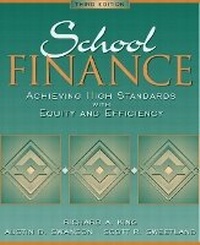
School Finance
Achieving High Standards with Equity and Efficiency
3rd Edition
Published on 16. May 2003
Book
Hardback
544 pages
978-0-205-35498-6 (ISBN)
Description
This text examines both the specifics of school finance policy and the impact of evolving economic and political forces on school finance.
School Finance: Achieving High Standards with Equity and Efficiency explores traditional economic and political models and contemporary issues within the current social, political, and economic context. It enables students to see the political and judicial forces at work in shaping school finance policy. It also provides students with tools drawn from economics to analyze the impacts of those policies in terms of equity, adequacy, efficiency, and liberty.
Readers examine the financial implications of systemic reform, including centralized goal setting and accountability via standards, curricula, and testing; decentralized reforms via school-site decision making; and family choice of schooling through charter schools and vouchers for low-income families.
School Finance: Achieving High Standards with Equity and Efficiency explores traditional economic and political models and contemporary issues within the current social, political, and economic context. It enables students to see the political and judicial forces at work in shaping school finance policy. It also provides students with tools drawn from economics to analyze the impacts of those policies in terms of equity, adequacy, efficiency, and liberty.
Readers examine the financial implications of systemic reform, including centralized goal setting and accountability via standards, curricula, and testing; decentralized reforms via school-site decision making; and family choice of schooling through charter schools and vouchers for low-income families.
More details
Edition
3rd edition
Language
English
Place of publication
United States
Publishing group
Pearson Education (US)
Target group
Professional and scholarly
Weight
912 gr
ISBN-13
978-0-205-35498-6 (9780205354986)
Copyright in bibliographic data and cover images is held by Nielsen Book Services Limited or by the publishers or by their respective licensors: all rights reserved.
Schweitzer Classification
Other editions
Previous edition

Book
07/2000
2nd Edition
Pearson
€69.32
Article exhausted; check for reprint
Content
I. ESTABLISHING A CONTEXT FOR STUDYING SCHOOL FINANCE POLICY.
1. Financing Schools to Achieve High Statndards For All: A Global Shift in Priorities
2. Education Decision Making in a Mixed Economy II. ACQUIRING RESOURCES FOR SCHOOLS.
3. Principles of Taxation.
4. Revenue Sources for Federal and State Governments.
5. The Property Tax in Support of Schools.
6. Expanding School Resources: Through User Fees, Cash Flow Management, Capital Outlay, and Partnerships.
III. ALLOCATING STATE AND FEDERAL FUNDS FOR SCHOOLS.
7. Intergovernmental Transfer Payments and Models for Distributing State Aid.
8. Adjusting State Aid Programs for Differences in Student and District Characteristics
9. The Federal Role in Financing Public Education
IV. RETHINKING SCHOOL FINANCE POLICY TO ATTAIN HIGH STANDARDS
10. Judicial Reviews of School Finance Policy
11. Viewing Equity From the Perspecitve of Adequacy
12. Promoting High Student Achievement Efficiently
V. CREATING INCENTIVES TO FOSTER HIGH PERFORMANCE
13. Linking Financial Rewards and Teacher Compensation to Performance Indicators
14. School-Based Decision Making: Provider Sovereignty
15. Privatization and Family Choice of Schooling: Consumer Sovereignty
VI. CHARTING NEW DIRECTIONS IN SCHOOL FINANCE POLICY.
16. Implications of Systemic Reform for School Finance Policy
1. Financing Schools to Achieve High Statndards For All: A Global Shift in Priorities
2. Education Decision Making in a Mixed Economy II. ACQUIRING RESOURCES FOR SCHOOLS.
3. Principles of Taxation.
4. Revenue Sources for Federal and State Governments.
5. The Property Tax in Support of Schools.
6. Expanding School Resources: Through User Fees, Cash Flow Management, Capital Outlay, and Partnerships.
III. ALLOCATING STATE AND FEDERAL FUNDS FOR SCHOOLS.
7. Intergovernmental Transfer Payments and Models for Distributing State Aid.
8. Adjusting State Aid Programs for Differences in Student and District Characteristics
9. The Federal Role in Financing Public Education
IV. RETHINKING SCHOOL FINANCE POLICY TO ATTAIN HIGH STANDARDS
10. Judicial Reviews of School Finance Policy
11. Viewing Equity From the Perspecitve of Adequacy
12. Promoting High Student Achievement Efficiently
V. CREATING INCENTIVES TO FOSTER HIGH PERFORMANCE
13. Linking Financial Rewards and Teacher Compensation to Performance Indicators
14. School-Based Decision Making: Provider Sovereignty
15. Privatization and Family Choice of Schooling: Consumer Sovereignty
VI. CHARTING NEW DIRECTIONS IN SCHOOL FINANCE POLICY.
16. Implications of Systemic Reform for School Finance Policy