

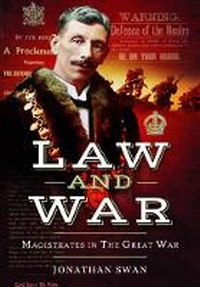
Law and War
Published on 1. June 2017
Book
Hardback
269 pages
978-1-4738-5337-9 (ISBN)
Description
The office of justice of the peace has existed since the twelfth century, when 'good and lawful men' were first appointed to sit in judgement of their peers. Unpaid and untrained, these lay magistrates were the backbone of the English judicial system, dealing with the vast majority of criminal cases in the police courts and the petty sessions. By the start of the twentieth century, social attitudes were changing and the magistrates, drawn from the wealthier classes, were seen as out of touch with the communities they served. The new Liberal Government of 1906 instituted reforms, which allowed the appointment of the working classes. Then came the Great War. Within days of the outbreak of hostilities, the government introduced the Defence of the Realm Act. With several amendments over the years, this all-encompassing legislation resulted in the creation of hundreds of subsidiary regulations, many of which affected the lives of ordinary people in a way they had never expected. Many, including magistrates themselves, fell foul of the myriad orders, covering billeting, licensing, lighting and rationing, which were enforced by the new special constables.At the same time, the conscription of the 'criminal classes' saw a huge fall in the normal workload of the courts, and the closure of many prisons.
The magistrates responded as best they could. Some magistrates went to war; some lost their lives. Others served in the many voluntary organisations and committees that appeared across the country, such as the Military Service Tribunals or the Volunteer Corps. The end of the war saw a further change to the old order when the first women magistrates were appointed, marking the birth of modern magistracy.
The magistrates responded as best they could. Some magistrates went to war; some lost their lives. Others served in the many voluntary organisations and committees that appeared across the country, such as the Military Service Tribunals or the Volunteer Corps. The end of the war saw a further change to the old order when the first women magistrates were appointed, marking the birth of modern magistracy.
More details
Language
English
Place of publication
South Yorkshire
United Kingdom
Publishing group
Pen & Sword Books Ltd
Illustrations
16 page plate section
Dimensions
Height: 234 mm
Width: 156 mm
ISBN-13
978-1-4738-5337-9 (9781473853379)
Copyright in bibliographic data and cover images is held by Nielsen Book Services Limited or by the publishers or by their respective licensors: all rights reserved.
Schweitzer Classification
Other editions
Additional editions
E-Book
03/2017
Pen and Sword Military
€21.99
Available for download

E-Book
03/2017
Pen and Sword
€21.99
Available for download
Person
Jonathan Swan has been a magistrate in East London for eighteen years, serving as chairman in the adult and youth courts. He is the author of Chelmsford in the Great War, published by Pen & Sword, and has written a number of articles on the history of the magistracy.