

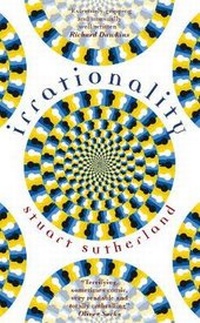
Irrationality
2nd Edition
Published on 10. January 2007
Book
Paperback/Softback
256 pages
978-1-905177-07-3 (ISBN)
Description
This is an iconoclastic volume on the causes and effects of irrational behaviour. Why do doctors, army generals, high-ranking government officials, and other people in positions of power make bad decisions that cause harm to others? On the other hand, why do people insist on sitting through an awful play or film just because the tickets were expensive? Irrational beliefs and behaviour are virtually universal. It is not only gamblers and parapsychologists that fall into simple statistical traps to do with sample sizes or simple assumptions, but experts of all types, selection committees, and everyday people. "Irrationality" is an iconoclastic volume that draws on a mass of intriguing research to examine why we are irrational, the different types of irrationality, the damage it does us, and the possible cures. It also argues that we could significantly reduce irrationality and its effects - but only if we first recognize just how irrational we really are.
Reviews / Votes
"* "Extremely gripping and unusually well written." -Richard Dawkin, author of the Selfish Gene"More details
Edition
2nd Revised edition
Language
English
Place of publication
United Kingdom
Publishing group
Montag & Martin Limited
Edition type
Revised edition
Dimensions
Height: 216 mm
Width: 135 mm
Thickness: 20 mm
Weight
286 gr
ISBN-13
978-1-905177-07-3 (9781905177073)
Copyright in bibliographic data and cover images is held by Nielsen Book Services Limited or by the publishers or by their respective licensors: all rights reserved.
Schweitzer Classification
Other editions
New editions
Book
07/2013
Pinter & Martin Ltd.
€20.30
Article not available at the moment
Previous edition

Book
03/1994
Penguin Books Ltd
€31.13
Article exhausted; check for reprint
Person
Stuart Sutherland was Professor of Psychology at the University of Sussex where he founded the Laboratory of Experimental Psychology. He was also a prolific columnist, with regular articles in the Observer, the New York Times, and the Daily Telegraph.