

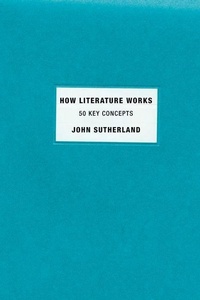
How Literature Works
50 Key Concepts
Published on 7. April 2011
Book
Paperback/Softback
224 pages
978-0-19-979420-1 (ISBN)
Description
How Literature Works is an indispensable book for any reader seeking a greater appreciation of their favorite novel, poem, or play. It offers a lively and straightforward guide to literary thinking. With a series of compact essays, the renowned literary critic John Sutherland--widely admired for his wit and clear reasoning--strips away the obscurity and pretension of literary study. His book offers concise definitions and clear examples of the fifty
concepts that all book lovers should know.It includes basic descriptive terms (ambiguity, epic), the core vocabulary of literary culture (genre, style), and devices employed by authors (irony,
defamiliarization). More broadly, How Literature Works explores the animating concepts behind literary theory (textuality, sexual politics), traces the forces that impact literature's role in the real world (obscenity, plagiarism), and grapples with the future of reading (fanfic, e-book). For any reader who wants to get the most out of the literature they read, Sutherland's short sharp book will both inform and delight.
concepts that all book lovers should know.It includes basic descriptive terms (ambiguity, epic), the core vocabulary of literary culture (genre, style), and devices employed by authors (irony,
defamiliarization). More broadly, How Literature Works explores the animating concepts behind literary theory (textuality, sexual politics), traces the forces that impact literature's role in the real world (obscenity, plagiarism), and grapples with the future of reading (fanfic, e-book). For any reader who wants to get the most out of the literature they read, Sutherland's short sharp book will both inform and delight.
Reviews / Votes
"I consider John Sutherland one of the finest English-speaking critics at work today. His truly encyclopedic knowledge of literature over the centuries is evident throughout this valuable new book, yet he exhibits his learning without pretension; that is, he really uses what he knows deftly. He opens up the world of literary thinking to the uninitiated in a refreshing way that is thoroughly sound without being intimidating. He's also a terrific writer--witty,succinct, and clear. In short, this is a brilliant book." --Jay Parini, author of Promised Land: Thirteen Books That Changed America
"How Literature Works is reader-friendly--the writing is personable, intelligent, and informed without being pedantic--and helpful. John Sutherland clearly has vast learning, but he wears it lightly. Both the large concept and the selection of individual ideas that he covers are quite appealing. The book passes what Seamus Heaney calls the 'jealousy test.' Again and again, I found myself thinking, now why didn't I think of this?" --Thomas C. Foster,
author of How to Read Novels Like a Professor
"Superb! You'll never again feel paralyzed over paradigm shifts--in fact, you'll read everything with new enlightenment. Who knew that your beach novel was metafiction!" --Library Journal (Starred Review)
More details
Language
English
Place of publication
New York
United States
Target group
Professional and scholarly
Product notice
Paperback (trade)
Unsewn / adhesive bound
Dimensions
Height: 236 mm
Width: 156 mm
Thickness: 17 mm
Weight
305 gr
ISBN-13
978-0-19-979420-1 (9780199794201)
Copyright in bibliographic data and cover images is held by Nielsen Book Services Limited or by the publishers or by their respective licensors: all rights reserved.
Schweitzer Classification
Person
John Sutherland, who has been a book columnist for the Guardian and a chair of judges for the Man-Booker prize, is Emeritus Lord Northcliffe Professor of Modern English Literature at University College London.
Content
Introduction
SOME BASICS
1. Mimesis
2. Ambiguity
3. Hermeneutics
4. The Classic
5. Intentionalism
6. The Affective Fallacy
7. Narrative / Story
8. Epic
9. Lyric / Prosody
10. Gothic
11. The Translation Paradox
MACHINERY: HOW IT WORKS
12. Culture
13. Milieu
14. Base / Superstructure
15. The Canon
16. Genre
17. Closure
18. Paradigm Shift
19. Ownership
20. Critical Authority
21. Style
LITERATURE'S DEVICES
22. Allegory
23. Irony
24. Imagery
25. Allusion
26. Defamiliarization
27. Bricolage
28. Metafiction
29. Solidity of Specification
NEW IDEAS
30. Structuralism
31. Deconstruction
32. Textuality
33. Double Bind
34. Postmodernism
35. Heteroglossia
36. New Historicism
37. Post-Colonialism
38. Semiology
39. Reception Theory
40. Sexual Politics
WORD CRIMES
41. Plagiarism
42. Obscenity
43. Libel
44. Blasphemy
45. Permissiveness
46. Literary Lies
47. Ghost-Writers
LITERARY FUTURES
48. Fanfic
49. The e-book
50. Literary Inundation
Answers to Quizzes
Glossary
SOME BASICS
1. Mimesis
2. Ambiguity
3. Hermeneutics
4. The Classic
5. Intentionalism
6. The Affective Fallacy
7. Narrative / Story
8. Epic
9. Lyric / Prosody
10. Gothic
11. The Translation Paradox
MACHINERY: HOW IT WORKS
12. Culture
13. Milieu
14. Base / Superstructure
15. The Canon
16. Genre
17. Closure
18. Paradigm Shift
19. Ownership
20. Critical Authority
21. Style
LITERATURE'S DEVICES
22. Allegory
23. Irony
24. Imagery
25. Allusion
26. Defamiliarization
27. Bricolage
28. Metafiction
29. Solidity of Specification
NEW IDEAS
30. Structuralism
31. Deconstruction
32. Textuality
33. Double Bind
34. Postmodernism
35. Heteroglossia
36. New Historicism
37. Post-Colonialism
38. Semiology
39. Reception Theory
40. Sexual Politics
WORD CRIMES
41. Plagiarism
42. Obscenity
43. Libel
44. Blasphemy
45. Permissiveness
46. Literary Lies
47. Ghost-Writers
LITERARY FUTURES
48. Fanfic
49. The e-book
50. Literary Inundation
Answers to Quizzes
Glossary