

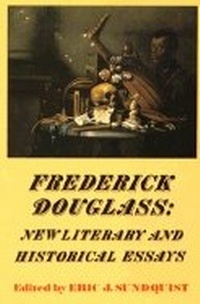
Frederick Douglass
New Literary and Historical Essays
Published on 26. October 1990
Book
Hardback
301 pages
978-0-521-38040-9 (ISBN)
Description
This is a 1993 collection of fourteen essays by America's leading historians and literary critics which evaluates the importance of Frederick Douglass in his own day and on into the twentieth century. As a result of the research and interpretation in both literary and historical studies, Frederick Douglass has assumed a central place in the revival of interest in the multicultural study of American literature. His autobiographies are fundamental case studies of the slave narratives that form the basis of African-American culture. His remarkable achievements as abolitionist orator, journalist, and writer of fiction and historical essays have made him a pivotal figure in a variety of disciplines. The essays examine Douglass' own views on gender and class, as well as racial issues, and place his thought and writings in the context of debates about slavery and freedom that dominated the intellectual landscape of nineteenth-century America.
More details
Series
Language
English
Place of publication
Cambridge
United Kingdom
Target group
Professional and scholarly
Dimensions
Height: 239 mm
Width: 160 mm
Thickness: 27 mm
Weight
556 gr
ISBN-13
978-0-521-38040-9 (9780521380409)
Copyright in bibliographic data and cover images is held by Nielsen Book Services Limited or by the publishers or by their respective licensors: all rights reserved.
Schweitzer Classification
Other editions
New editions
Book
02/1993
Cambridge University Press
€57.70
Shipment within 15-20 days
Additional editions
Book
02/1993
Cambridge University Press
€57.70
Shipment within 15-20 days
Content
Introduction; 1. 'Ironic tenacity': Frederick Douglass' seizure of the dialectic Sterling Stuckey; 2. From Wheatley to Douglass: the politics of displacement Henry Louis Gates, Jr; 3. Writing freely? Frederick Douglass and the constraints of racialized writing Wilson J. Moses; 4. Faith, doubt, and apostasy: evidence of things unseen in Frederick Douglass' narrative Donald B. Gibson; 5. Franklinian Douglass: the Afro-American as representative man Rafia Zafar; 6. Reading slavery: the anxiety of ethnicity in Douglass' narrative David Van Leer; 7. The punishment of Esther: Frederick Douglass and the construction of the feminine Jenny Franchot; 8. Race, violence, and manhood: the masculine ideal in Frederick Douglass' 'The Heroic Slave' Richard Yarborough; 9. 'We hold these truths to be self-evident': the rhetoric of Frederick Douglass' journalism Shelley Fisher and Carla L. Peterson; 10. The Frederick Douglass-Gerrit Smith friendship and political abolitionism in the 1850s John R. McKivigan; 11. The shadow of slavery: Frederick Douglass, the savage South, and the next generation Wayne Mixon; 12. Frederick Douglass' life and times: progressive rhetoric and the problem of constituency Kenneth W. Warren; 13. Images of Frederick Douglass in the Afro-American mind: the recent Black freedom struggle Waldo E. Martin, Jr.; Selected bibliography; Notes on contributors; Index.