

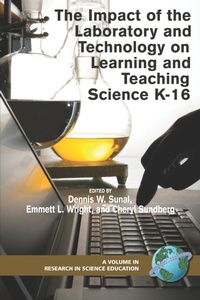
The Impact of the Laboratory and Technology on Learning and Teaching Science K-16
Will be published approx. on 21. December 2007
Book
Paperback/Softback
308 pages
978-1-59311-744-3 (ISBN)
Description
The Impact of the Laboratory and Technology on K-12 Science Learning and Teaching examines the development, use, and influence of active laboratory experiences and the integration of technology in science teaching. This examination involves the viewpoints of policymakers, researchers, and teachers that are expressed through research involving original documents, interviews, analysis and synthesis of the literature, case studies, narrative studies, observations of teachers and students, and assessment of student learning outcomes. Volume 3 of the series, Research in Science Education, addresses the needs of various constituencies including teachers, administrators, higher education science and science education faculty, policymakers, governmental and professional agencies, and the business community.
The guiding theme of this volume is the role of practical laboratory work and the use of technology in science learning and teaching, K-16. The volume investigates issues and concerns related to this theme through various perspectives addressing design, research, professional practice, and evaluation. Beginning with definitions, the historical evolution and policy guiding these learning experiences are explored from several viewpoints. Effective design and implementation of laboratory work and technology experiences is examined for elementary and high school classrooms as well as for undergraduate science laboratories, informal settings, and science education courses and programs. In general, recent research provides evidence that students do benefit from inquirybased laboratory and technology experiences that are integrated with classroom science curricula. The impact and status of laboratory and technology experiences is addressed by exploring specific strategies in a variety of scientific fields and courses. The chapters outline and describe in detail researchbased best practices for a variety of settings.
The guiding theme of this volume is the role of practical laboratory work and the use of technology in science learning and teaching, K-16. The volume investigates issues and concerns related to this theme through various perspectives addressing design, research, professional practice, and evaluation. Beginning with definitions, the historical evolution and policy guiding these learning experiences are explored from several viewpoints. Effective design and implementation of laboratory work and technology experiences is examined for elementary and high school classrooms as well as for undergraduate science laboratories, informal settings, and science education courses and programs. In general, recent research provides evidence that students do benefit from inquirybased laboratory and technology experiences that are integrated with classroom science curricula. The impact and status of laboratory and technology experiences is addressed by exploring specific strategies in a variety of scientific fields and courses. The chapters outline and describe in detail researchbased best practices for a variety of settings.
More details
Series
Language
English
Place of publication
Charlotte
United States
Publishing group
Emerald Publishing Inc
Target group
Professional and scholarly
Illustrations
illustrations
Dimensions
Height: 234 mm
Width: 156 mm
Thickness: 17 mm
Weight
471 gr
ISBN-13
978-1-59311-744-3 (9781593117443)
Copyright in bibliographic data and cover images is held by Nielsen Book Services Limited or by the publishers or by their respective licensors: all rights reserved.
Schweitzer Classification
Other editions
Additional editions
Dennis W. Sunal | Emmett L. Wright
The Impact of the Laboratory and Technology on Learning and Teaching Science K-16
E-Book
02/2008
1st Edition
Information Age Publishing
from
€62.33
Available for download
Content
Preface to the Series.
Preface.
Acknowledgements.
Chapter 1. The Importance of the Laboratory and Technology in Science Teaching; Dennis W. Sunal, Cynthia Szymanski Sunal, Cheryl Sundberg, and Emmett L. Wright.
Part I. Development and Use of the Science Laboratory Experience.
Chapter 2. Design Principles for Effective Laboratory Instruction; William A. Sandoval.
Chapter 3. The Use of Science Laboratories in Elementary Schools; Deborah L. Hanuscin.
Part II. The Status and Impact of the Laboratory in Teaching and Learning Science.
Chapter 4. Long-Term Laboratory Inquiry: Promoting Understanding of Ecology; Billie Eilam.
Chapter 5. Students' Perceptions of the Science Laboratory Learning Environment; Sule Ozkan, Jale Cakiroglu, and Ceren Tekkaya.
Chapter 6. Investigating Process-Based Writing in an Organic Chemistry Laboratory Course; Andrea Gay.
Chapter 7. The Effect of the Vee Heuristic on Students' Meaningful Learning in Physics Laboratories; Tarek Daoud and Saouma BouJaoude.
Part III. Status and Impact of Technology in Teaching and Learning Science.
Chapter 8. Integrating Technology into a Science Classroom: An Evaluation of Inquiry-Based Technology Integration; Randall S. Davies, Constance R. Sprague, and Colleen M. New.
Chapter 9. Impact of Technology on Informal Science Learning; David A. Ucko and Kirsten M. Ellenbogen.
Chapter 10. The Impact of Technology on Science Preservice Preparation and In-service Professional Development; Craig A. Wilson.
About the Authors.
Preface.
Acknowledgements.
Chapter 1. The Importance of the Laboratory and Technology in Science Teaching; Dennis W. Sunal, Cynthia Szymanski Sunal, Cheryl Sundberg, and Emmett L. Wright.
Part I. Development and Use of the Science Laboratory Experience.
Chapter 2. Design Principles for Effective Laboratory Instruction; William A. Sandoval.
Chapter 3. The Use of Science Laboratories in Elementary Schools; Deborah L. Hanuscin.
Part II. The Status and Impact of the Laboratory in Teaching and Learning Science.
Chapter 4. Long-Term Laboratory Inquiry: Promoting Understanding of Ecology; Billie Eilam.
Chapter 5. Students' Perceptions of the Science Laboratory Learning Environment; Sule Ozkan, Jale Cakiroglu, and Ceren Tekkaya.
Chapter 6. Investigating Process-Based Writing in an Organic Chemistry Laboratory Course; Andrea Gay.
Chapter 7. The Effect of the Vee Heuristic on Students' Meaningful Learning in Physics Laboratories; Tarek Daoud and Saouma BouJaoude.
Part III. Status and Impact of Technology in Teaching and Learning Science.
Chapter 8. Integrating Technology into a Science Classroom: An Evaluation of Inquiry-Based Technology Integration; Randall S. Davies, Constance R. Sprague, and Colleen M. New.
Chapter 9. Impact of Technology on Informal Science Learning; David A. Ucko and Kirsten M. Ellenbogen.
Chapter 10. The Impact of Technology on Science Preservice Preparation and In-service Professional Development; Craig A. Wilson.
About the Authors.