

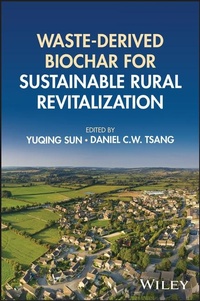
Waste-derived Biochar for Sustainable Rural Revitalization
1st Edition
Will be published approx. on 23. March 2026
Book
Hardback
544 pages
978-1-394-25027-1 (ISBN)
Description
Comprehensive reference summarizing different technologies for application-oriented biochar production from waste biomass resources in rural areas
Waste-derived Biochar for Sustainable Rural Revitalization summarizes recent research developments, introduces state-of-the-art knowledge, incorporates case studies, offers scientific insights, highlights current challenges, and shows the way forward for biochar technologies as a novel, cost-effective, and environmentally friendly solution for sustainable rural revitalization. This book succinctly summarizes different technologies for application-oriented biochar production from waste biomass resources (e.g., crop residues, pruning of fruit trees, animal waste, food waste, and domestic sludge) in rural areas, with an emphasis on tailored selection of pyrolytic and pre/post-treatment conditions.
Readers will find information on renewable biofuels, clean compost conditioner, organic seeding substrate, slow-release fertilizers, green pesticides, targeting plant disease suppressors, farmland soil conditioner/amendment, adsorbent/catalyst for agriculture wastewater treatment, farmland carbon sequestration, and low-carbon construction materials. This book also evaluates these technologies through Technical and Economic Analysis (TEA) and Environmental, Social, and Governance (ESG) frameworks and discusses potential environmental risks.
Written by a team of highly qualified authors, Waste-derived Biochar for Sustainable Rural Revitalization explores sample topics including:
Slow, fast, microwave, and flash pyrolysis, physical and chemical modification of biochars, and commonly used biochar raw materials
Technologies and key influencing factors in biochar preparation, types and characteristics of carbonation reactors, and migration of alkali metals during biochar combustion
Waste-derived biochar as organic seeding substrate, discussing the growing media of compost, humic acid, and activated carbon
Improvement of soil physical, chemical, and biological properties by waste-derived biochar, covering effects on soil pH, organic matter, and cation exchange quantity
Waste-derived Biochar for Sustainable Rural Revitalization serves as an invaluable reference for engineers, scientists, researchers, and graduate students in waste recycling and management, sustainable rural development, environmental engineering, civil engineering, chemical engineering, and related fields.
Waste-derived Biochar for Sustainable Rural Revitalization summarizes recent research developments, introduces state-of-the-art knowledge, incorporates case studies, offers scientific insights, highlights current challenges, and shows the way forward for biochar technologies as a novel, cost-effective, and environmentally friendly solution for sustainable rural revitalization. This book succinctly summarizes different technologies for application-oriented biochar production from waste biomass resources (e.g., crop residues, pruning of fruit trees, animal waste, food waste, and domestic sludge) in rural areas, with an emphasis on tailored selection of pyrolytic and pre/post-treatment conditions.
Readers will find information on renewable biofuels, clean compost conditioner, organic seeding substrate, slow-release fertilizers, green pesticides, targeting plant disease suppressors, farmland soil conditioner/amendment, adsorbent/catalyst for agriculture wastewater treatment, farmland carbon sequestration, and low-carbon construction materials. This book also evaluates these technologies through Technical and Economic Analysis (TEA) and Environmental, Social, and Governance (ESG) frameworks and discusses potential environmental risks.
Written by a team of highly qualified authors, Waste-derived Biochar for Sustainable Rural Revitalization explores sample topics including:
Slow, fast, microwave, and flash pyrolysis, physical and chemical modification of biochars, and commonly used biochar raw materials
Technologies and key influencing factors in biochar preparation, types and characteristics of carbonation reactors, and migration of alkali metals during biochar combustion
Waste-derived biochar as organic seeding substrate, discussing the growing media of compost, humic acid, and activated carbon
Improvement of soil physical, chemical, and biological properties by waste-derived biochar, covering effects on soil pH, organic matter, and cation exchange quantity
Waste-derived Biochar for Sustainable Rural Revitalization serves as an invaluable reference for engineers, scientists, researchers, and graduate students in waste recycling and management, sustainable rural development, environmental engineering, civil engineering, chemical engineering, and related fields.
More details
Language
English
Place of publication
New York
United States
Target group
Professional and scholarly
Product notice
Laminated cover
Dimensions
Height: 229 mm
Width: 152 mm
Thickness: 29 mm
Weight
874 gr
ISBN-13
978-1-394-25027-1 (9781394250271)
Copyright in bibliographic data and cover images is held by Nielsen Book Services Limited or by the publishers or by their respective licensors: all rights reserved.
Schweitzer Classification
Other editions
Additional editions
Yuqing Sun | Daniel C. W. Tsang
Waste-derived Biochar for Sustainable Rural Revitalization
E-Book
12/2025
1st Edition
Wiley
€194.99
Available for download
Yuqing Sun | Daniel C. W. Tsang
Waste-derived Biochar for Sustainable Rural Revitalization
E-Book
12/2025
1st Edition
Wiley
€199.99
Available for download
Persons
Yuqing Sun, PhD, is an Associate Professor in School of Agriculture and Biotechnology at Sun Yat-Sen University. She has published over 60 articles in top 10% journals and received over 7,900 citations. Her research covers the customized design and application of engineered biochar in green and sustainable agricultural applications.
Prof. Dan Tsang (ICE Fellow, RSC Fellow, HKIE Fellow) is a Professor in Department of Civil and Environmental Engineering and Director of Research Center on Decarbonization Technology at The Hong Kong University of Science and Technology. He has published over 600 articles in top 10% journals and received over 78,000 citations. His research team strives to develop green technologies to ensure sustainable development and long-term decarbonization.
Prof. Dan Tsang (ICE Fellow, RSC Fellow, HKIE Fellow) is a Professor in Department of Civil and Environmental Engineering and Director of Research Center on Decarbonization Technology at The Hong Kong University of Science and Technology. He has published over 600 articles in top 10% journals and received over 78,000 citations. His research team strives to develop green technologies to ensure sustainable development and long-term decarbonization.
Content
Chapter 1. Tailored biochar production from waste biomass resource in rural areas
1. Introduction
2. Overview of rural solid wastes
2.1 Rural solid wastes
2.2 Status of rural solid waste disposal
2.3 Commonly used biochar raw material
3. Biochar production methods
3.1 Slow pyrolysis
3.2 Fast pyrolysis
3.3 Microwave pyrolysis
3.4 Flash pyrolysis
3.5 Hydrothermal carbonization
4. Biochar modification methods
4.1 Physical modification
4.2 Chemical modification
5. Conclusion
Chapter 2. Waste-derived biochar as renewable bio-fuels
1. Feedstocks type of waste-derived biochar fuels
2. Preparation technologies of waste-derived biochar fuels
2.1 Typical technologies for biochar preparation
2.2 Key influencing factors for biochar preparation
3. Preparation of biochar fuel by carbonization
4. Types and characteristics of carbonation reactors
4.1 Types of carbonation reactors
4.2 Performance of carbonization reactors
4.3 Application prospects and challenges of carbonization reactors
5. Fuel properties of biochar
6. Combustion of biochar
6.1 Combustion process of biochar
6.2 Influencing factors of biochar combustion
6.3 Combustion technologies for biochar
7. Combustion characteristics of biochar
8. Combustion kinetics of biochar
8.1 Combustion reaction kinetics of biochar
8.2 Pyrolysis kinetics of biochar
8.3 Diffusion kinetics of biochar
9. Emission characteristics of biochar combustion
9.1 Emission characteristics of biochar during combustion processes
9.2 Factors affecting the emission of biochar combustion
10. Migration of alkali metals during biochar combustion
10.1 Alkali metal migration pattern in biochar combustion process
10.2 Effect of alkali metal migration on combustion characteristics of biochar
10.3 Control strategies for alkali metal migration
11. Prospects and challenges of biochar energy
Chapter 3. Agricultural waste derived biochar for energy recovery from waste fermentation
1. Introduction
2. Biochar preparation from agricultural waste
3. Energy recovery from waste biomass fermentation based on biochar treatment
4. A case for biochar in energy recovery
5. Conclusions
Chapter 4. Waste-derived biochar as organic seeding substrate
1. Peat-based growing media substituted by biochar
2. Coir-based growing media substituted by biochar
3. Growing media of compost, humic acid and activated carbon
Chapter 5. Waste-derived biochar as slow-release fertilizers
1. Introduction
2. Research progress of slow-release fertilizer
3. The preparation technologies of biochar-based SRFs
3.1 In-situ pyrolysis
3.2 Co-pyrolysis
3.3 Impregnation
3.4 Encapsulation
3.5 Granulation
3.6 The integrated approach
4. Mechanism of slow release of biochar
5. The specific applications of biochar SRF
6. Summary and outlook
Chapter 6. Waste-derived biochar as slow-release pesticides
1. Introduction
2. Research progress of biochar-based slow-release pesticides
3. The mechanisms of biochar loading and slow release of pesticide
3.1 Physical and chemical characteristics of biochar
3.2 The adsorption and slow-release mechanisms of biochar-based pesticides
4. Determinants influencing biochar loading efficiency and pesticidal release capacity
4.1 Surface area and porosity
4.2 Biochar pH
4.3 Surface functional groups
4.4 Carbon content and aromatic structure
4.5 Biochar feedstock
4.6 Types of pesticides
5. Modification of biochar for sustained release of pesticide
6. Summary and outlook
Chapter 7. Waste-derived biochar as targeting plant disease suppressors
1. Introduction
2. Methods
3. Using biochar for managing plant diseases
3.1 Effect of biochar feedstock on the plant disease control
3.2 Effect of pyrolysis temperature of biochar on the plant disease control
3.3 Effect of biochar pH on the plant disease control
3.4 Effect of the load ratio of biochar on the plant disease control
3.5 Optimal application methods of biochar for different plant diseases
4. Conclusions
Chapter 8 Improvement of soil physical, chemical and biological properties by waste-derived biochar
1. Biochar improves soil physical properties
1.1 Effect of biochar on soil bulk weight
1.2 Effect of biochar on soil pore structure
1.3 Effect of biochar on soil moisture
2. Biochar improves soil chemical properties
2.1 Effect of biochar on soil pH
2.2 Effect of biochar on soil cation exchange quantity
2.3 Effect of biochar on soil organic matter
3. Biochar improves soil biological properties
3.1 Effect of biochar on soil prokaryotic microorganisms
3.2 Effect of biochar on soil eukaryotic microorganisms
3.3 Effect of biochar on soil animal
Chapter 9. Impact of biochar on pesticides transportation, bioavailability, performance, and degradation in soil environment
1. Introduction to biochar and pesticides
1.1 Biochar properties and application in agriculture
1.2 Types of pesticides and their environmental impact
1.3 Interaction mechanisms between biochar and pesticides
2. Biochar application for pesticide control
2.1 Early studies on biochar and pesticide interaction
2.2 Adsorption capabilities of biochar for pesticides
2.3 Biochar influence the degradation of pesticides
2.4 Influencing factor for biochar application in pesticides control
3. Biochar's impact on pesticide transportation
3.1 Biochar's role in pesticide adsorption and mobility
3.2 Factors influencing pesticide transportation with biochar
3.3 Case studies on biochar application in different soil types
4. Bioavailability of pesticides in the presence of biochar
4.1 Mechanisms of biochar affecting pesticide bioavailability
4.2 Experimental studies on bioavailability changes
4.3 Implications for pesticide efficacy and environmental safety
5. Performance enhancement of pesticides with biochar
5.1 Synergistic effects of biochar on pesticide performance
5.2 Biochar as a carrier for controlled pesticide release
5.3 Field trials demonstrating enhanced pesticide efficiency
6. Degradation of pesticides influenced by biochar
6.1 Biochar's role in pesticide degradation pathways
6.2 Microbial interactions facilitated by biochar
6.3 Long-term effects of biochar on pesticide residues
7. Future prospects and challenges in biochar-pesticide research
7.1 Emerging technologies in biochar production for pesticide management
7.2 Potential environmental and regulatory challenges
7.3 Future research directions and innovations in biochar applications
Chapter 10. Waste-derived biochar as adsorbent for agriculture wastewater treatment
1. Introduction
2. Preparation of biochar-based agriculture wastewater adsorbent
2.1 Preparation methods of biochar
2.2 Influencing factors in the preparation of biochar
3. Efficacy of biochar-adsorption on agriculture wastewater treatment
3.1 Effect of adsorbent properties on adsorption
3.2 Effect of environmental conditions on biochar adsorption
4. Effects of modification methods on biochar-enhanced adsorption agriculture wastewater treatment
4.1 Physical activation
4.2 Chemical modification
4.3 Biological modification
5. Mechanisms of adsorption and future prospects
5.1 Mechanisms of biochar for adsorption of inorganic contaminants in agriculture wastewater
5.2 Mechanisms of biochar for adsorption of organic pollutants in agriculture wastewater
5.3 Future prospects
Chapter 11. Waste-derived biochar as catalyst for agriculture wastewater treatment
1. Photocatalysis
1.1 Organic pollutants removal
1.2 Inorganic pollutants removal
2. Hydrogen peroxide-based catalysis processes
3. Persulfate-based catalysis processes
4. Periodate-based catalysis processes
5. O3-based catalysis processes
5.1 Performance of biochar-catalyzed O3 oxidation technology
5.2 Mechanisms of O3 oxidation catalyzed by biochar
5.3 Outlook
6. Peracetic acid-based catalysis processes
6.1 Performance of biochar-catalyzed peracetic acid oxidation technology
6.2 Mechanisms of biochar-catalyzed peracetic acid oxidation technology
6.3 Outlook
Chapter 12. Waste-derived biochar for efficient CO2 capture
1. Introduction
2. Biomass-based carbon materials
2.1 Preparation techniques for biomass-based carbon materials
2.2 Factors influencing the performance of carbon materials
3. Activation methods for carbon materials
3.1 Physical treatments
3.2 Chemical treatments
4. The recent advances of functionalized biochar materials for CO2 capture
4.1 Mechanisms for carbon dioxide capture
4.2 Carbon materials for CO2 capture
5. Conclusion and Outlook
Chapter 13. Biomass waste derived biochar as graphitic carbon for agricultural applications
1. Literature statistics methodology
1.1 Graphitized carbon
1.2 Literature statistics
2. Biomass waste feedstocks suitable for the preparation of graphitic carbon
2.1 Plant biomass
2.2 Animal biomass
3. Graphitization and carbonization processes of waste biomass and characteristics of graphitic carbon
3.1 Hydrothermal carbonization
3.2 Pyrolysis carbonization
3.3 Laser-induced carbonization
3.4 Microwave - assisted carbonization
3.5 Plasma - assisted carbonization
3.6 Other graphitization conversion processes
4. Optimization methods for biomass waste-derived graphitic carbon
4.1 Physical activation
4.2 Chemical activation
4.3 Templating methods
4.4 Catalytic graphitization
5. Removal of organic pollutants from water and soil by waste-derived graphitic carbon
5.1 Adsorption and catalytic removal of water pollutants by waste - derived graphitic carbon
5.2 Stabilization and degradation of organic pollutants in soil by waste-derived graphitic carbon
6. Improvement of soil properties by waste-derived graphitic carbon
7. Improvement of fertilizer properties by waste-derived graphitic carbon
8. Immobilization of heavy metals by waste-derived graphitic carbon
9. Conclusions and prospects
Chapter 14. Waste-derived biochar for low-carbon construction materials in rural areas
1. Introduction
2. Properties of waste-derived biochar
2.1 Chemical properties
2.2 Physical and structural properties
3. Treatment and engineering of biochar
3.1 Feedstock selection and pyrolysis conditions
3.2 Functionalization or modification techniques
3.3 Stability and safety considerations
4. Applications in low-carbon construction
4.1 Biochar as a cement additive or alternative
4.2 Biochar as an aggregate or filler replacement
4.3 Specialty biochar-based construction materials
5. Environmental and economic benefits
5.1 Carbon sequestration and emissions reduction
5.2 Circular economy and rural waste valorization
5.3 Economic analysis and cost considerations
6. Conclusions
Chapter 15. Low-carbon soil remediation with biochar and GGBS
1. Introduction
2. Latest developments and applications of biochar in soil remediation
2.1 Biochar production
2.2 Stabilization/solidification of PTEs
2.3 Field-scale application of biochar in soil remediation
3. Biochar-enhanced cement for stabilization/solidification
3.1 The role of biochar in the cement system
3.2 Synergistic effect of biochar-cement on stabilization/solidification
3.3 Incorporation of biochar with SCMs in cement-based stabilization/solidification
4. Key parameters in biochar-enhanced soil stabilization/solidification
4.1 Soil properties
4.2 Biochar substitution amount
4.3 Ratio of binder to soil
4.4 Ratio of GGBS in binder
5. Supply availability of biochar
5.1 Feedstock procurement
5.2 Feedstock transportation
5.3 Feedstock preprocessing
5.4 Pyrolysis costs: Infrastructure and operations
5.5 Biochar industry overview
6. GGBS supply availability
6.1 Availability of GGBS
6.2 Cost reduction and economic benefits of GGBS
7. Environmental benefits
8. Conclusions
Chapter 16. Technical and economic analysis of biochar technologies
1. Introduction
2. Techno-economic analysis of biochar technologies in production process
2.1 Thermochemical conversion process analysis instruments and techniques
2.2 Techno-economic analysis models to simulate biochar production
2.3 Cost and energy consumption evaluation of biochar production
3. Techno-economic analysis of biochar application scenarios
3.1 Soil application
3.2 Use in wastewater treatment
3.3 Other application scenario
3.4 Economics of biochar application
4. Element circulation and sustainable development
4.1 Carbon and phosphorus cycle
4.2 Environmental impact assessment of biochar production
5. Current limitations and future perspectives
6. Summary
Chapter 17. ESG perspective and biodiversity impact of waste-derived biochar
1. Environmental (E) perspective
1.1 Promote waste reduction and recycling
1.2 Mitigation of climate change
1.3 Remediation of contaminated soil and water
1.4 Improvement of soil fertility and crop productivity
1.5 Renewable energy production
2. Social (S) perspective
2.1 Economic value and rural development
2.2 Community engagement and awareness
2.3 Public Health and food security
3. Governance (G) perspective
3.1 Country wise regulations and voluntary standards
3.2 Global policy frameworks & standards
3.3 Corporate support for biochar
4. Biodiversity
5. Challenges and opportunities
6. Conclusion
Chapter 18. Environmental stability of biochar in natural systems
1. Environmental reactivity of biochar
2. Aggregation and transport behaviors of biochar colloids
2.1 Colloidal stability and aggregation
2.2 Deposition and transport in porous media
3. Biochar carbon stability
3.1 Assessment methodologies for biochar stability
3.2 Intrinsic mechanisms of carbon stability of biochar
4. Perspectives
Chapter 19. Risk assessment of biochar in soil and aquatic ecosystem
1. Negative impacts of biochar on soil ecosystem
1.1 Terrestrial plants
1.2 Soil animals
1.3 Soil microorganisms
2. Negative impacts of biochar on aquatic ecosystem
2.1 Pyrolysis temperature
2.2 Biomass resource
2.3 Size effects
2.4 Contribution of different biochar fractions
3. Combined bio-effects of biochar and pollutants
4. Potential measures for risk avoidance
1. Introduction
2. Overview of rural solid wastes
2.1 Rural solid wastes
2.2 Status of rural solid waste disposal
2.3 Commonly used biochar raw material
3. Biochar production methods
3.1 Slow pyrolysis
3.2 Fast pyrolysis
3.3 Microwave pyrolysis
3.4 Flash pyrolysis
3.5 Hydrothermal carbonization
4. Biochar modification methods
4.1 Physical modification
4.2 Chemical modification
5. Conclusion
Chapter 2. Waste-derived biochar as renewable bio-fuels
1. Feedstocks type of waste-derived biochar fuels
2. Preparation technologies of waste-derived biochar fuels
2.1 Typical technologies for biochar preparation
2.2 Key influencing factors for biochar preparation
3. Preparation of biochar fuel by carbonization
4. Types and characteristics of carbonation reactors
4.1 Types of carbonation reactors
4.2 Performance of carbonization reactors
4.3 Application prospects and challenges of carbonization reactors
5. Fuel properties of biochar
6. Combustion of biochar
6.1 Combustion process of biochar
6.2 Influencing factors of biochar combustion
6.3 Combustion technologies for biochar
7. Combustion characteristics of biochar
8. Combustion kinetics of biochar
8.1 Combustion reaction kinetics of biochar
8.2 Pyrolysis kinetics of biochar
8.3 Diffusion kinetics of biochar
9. Emission characteristics of biochar combustion
9.1 Emission characteristics of biochar during combustion processes
9.2 Factors affecting the emission of biochar combustion
10. Migration of alkali metals during biochar combustion
10.1 Alkali metal migration pattern in biochar combustion process
10.2 Effect of alkali metal migration on combustion characteristics of biochar
10.3 Control strategies for alkali metal migration
11. Prospects and challenges of biochar energy
Chapter 3. Agricultural waste derived biochar for energy recovery from waste fermentation
1. Introduction
2. Biochar preparation from agricultural waste
3. Energy recovery from waste biomass fermentation based on biochar treatment
4. A case for biochar in energy recovery
5. Conclusions
Chapter 4. Waste-derived biochar as organic seeding substrate
1. Peat-based growing media substituted by biochar
2. Coir-based growing media substituted by biochar
3. Growing media of compost, humic acid and activated carbon
Chapter 5. Waste-derived biochar as slow-release fertilizers
1. Introduction
2. Research progress of slow-release fertilizer
3. The preparation technologies of biochar-based SRFs
3.1 In-situ pyrolysis
3.2 Co-pyrolysis
3.3 Impregnation
3.4 Encapsulation
3.5 Granulation
3.6 The integrated approach
4. Mechanism of slow release of biochar
5. The specific applications of biochar SRF
6. Summary and outlook
Chapter 6. Waste-derived biochar as slow-release pesticides
1. Introduction
2. Research progress of biochar-based slow-release pesticides
3. The mechanisms of biochar loading and slow release of pesticide
3.1 Physical and chemical characteristics of biochar
3.2 The adsorption and slow-release mechanisms of biochar-based pesticides
4. Determinants influencing biochar loading efficiency and pesticidal release capacity
4.1 Surface area and porosity
4.2 Biochar pH
4.3 Surface functional groups
4.4 Carbon content and aromatic structure
4.5 Biochar feedstock
4.6 Types of pesticides
5. Modification of biochar for sustained release of pesticide
6. Summary and outlook
Chapter 7. Waste-derived biochar as targeting plant disease suppressors
1. Introduction
2. Methods
3. Using biochar for managing plant diseases
3.1 Effect of biochar feedstock on the plant disease control
3.2 Effect of pyrolysis temperature of biochar on the plant disease control
3.3 Effect of biochar pH on the plant disease control
3.4 Effect of the load ratio of biochar on the plant disease control
3.5 Optimal application methods of biochar for different plant diseases
4. Conclusions
Chapter 8 Improvement of soil physical, chemical and biological properties by waste-derived biochar
1. Biochar improves soil physical properties
1.1 Effect of biochar on soil bulk weight
1.2 Effect of biochar on soil pore structure
1.3 Effect of biochar on soil moisture
2. Biochar improves soil chemical properties
2.1 Effect of biochar on soil pH
2.2 Effect of biochar on soil cation exchange quantity
2.3 Effect of biochar on soil organic matter
3. Biochar improves soil biological properties
3.1 Effect of biochar on soil prokaryotic microorganisms
3.2 Effect of biochar on soil eukaryotic microorganisms
3.3 Effect of biochar on soil animal
Chapter 9. Impact of biochar on pesticides transportation, bioavailability, performance, and degradation in soil environment
1. Introduction to biochar and pesticides
1.1 Biochar properties and application in agriculture
1.2 Types of pesticides and their environmental impact
1.3 Interaction mechanisms between biochar and pesticides
2. Biochar application for pesticide control
2.1 Early studies on biochar and pesticide interaction
2.2 Adsorption capabilities of biochar for pesticides
2.3 Biochar influence the degradation of pesticides
2.4 Influencing factor for biochar application in pesticides control
3. Biochar's impact on pesticide transportation
3.1 Biochar's role in pesticide adsorption and mobility
3.2 Factors influencing pesticide transportation with biochar
3.3 Case studies on biochar application in different soil types
4. Bioavailability of pesticides in the presence of biochar
4.1 Mechanisms of biochar affecting pesticide bioavailability
4.2 Experimental studies on bioavailability changes
4.3 Implications for pesticide efficacy and environmental safety
5. Performance enhancement of pesticides with biochar
5.1 Synergistic effects of biochar on pesticide performance
5.2 Biochar as a carrier for controlled pesticide release
5.3 Field trials demonstrating enhanced pesticide efficiency
6. Degradation of pesticides influenced by biochar
6.1 Biochar's role in pesticide degradation pathways
6.2 Microbial interactions facilitated by biochar
6.3 Long-term effects of biochar on pesticide residues
7. Future prospects and challenges in biochar-pesticide research
7.1 Emerging technologies in biochar production for pesticide management
7.2 Potential environmental and regulatory challenges
7.3 Future research directions and innovations in biochar applications
Chapter 10. Waste-derived biochar as adsorbent for agriculture wastewater treatment
1. Introduction
2. Preparation of biochar-based agriculture wastewater adsorbent
2.1 Preparation methods of biochar
2.2 Influencing factors in the preparation of biochar
3. Efficacy of biochar-adsorption on agriculture wastewater treatment
3.1 Effect of adsorbent properties on adsorption
3.2 Effect of environmental conditions on biochar adsorption
4. Effects of modification methods on biochar-enhanced adsorption agriculture wastewater treatment
4.1 Physical activation
4.2 Chemical modification
4.3 Biological modification
5. Mechanisms of adsorption and future prospects
5.1 Mechanisms of biochar for adsorption of inorganic contaminants in agriculture wastewater
5.2 Mechanisms of biochar for adsorption of organic pollutants in agriculture wastewater
5.3 Future prospects
Chapter 11. Waste-derived biochar as catalyst for agriculture wastewater treatment
1. Photocatalysis
1.1 Organic pollutants removal
1.2 Inorganic pollutants removal
2. Hydrogen peroxide-based catalysis processes
3. Persulfate-based catalysis processes
4. Periodate-based catalysis processes
5. O3-based catalysis processes
5.1 Performance of biochar-catalyzed O3 oxidation technology
5.2 Mechanisms of O3 oxidation catalyzed by biochar
5.3 Outlook
6. Peracetic acid-based catalysis processes
6.1 Performance of biochar-catalyzed peracetic acid oxidation technology
6.2 Mechanisms of biochar-catalyzed peracetic acid oxidation technology
6.3 Outlook
Chapter 12. Waste-derived biochar for efficient CO2 capture
1. Introduction
2. Biomass-based carbon materials
2.1 Preparation techniques for biomass-based carbon materials
2.2 Factors influencing the performance of carbon materials
3. Activation methods for carbon materials
3.1 Physical treatments
3.2 Chemical treatments
4. The recent advances of functionalized biochar materials for CO2 capture
4.1 Mechanisms for carbon dioxide capture
4.2 Carbon materials for CO2 capture
5. Conclusion and Outlook
Chapter 13. Biomass waste derived biochar as graphitic carbon for agricultural applications
1. Literature statistics methodology
1.1 Graphitized carbon
1.2 Literature statistics
2. Biomass waste feedstocks suitable for the preparation of graphitic carbon
2.1 Plant biomass
2.2 Animal biomass
3. Graphitization and carbonization processes of waste biomass and characteristics of graphitic carbon
3.1 Hydrothermal carbonization
3.2 Pyrolysis carbonization
3.3 Laser-induced carbonization
3.4 Microwave - assisted carbonization
3.5 Plasma - assisted carbonization
3.6 Other graphitization conversion processes
4. Optimization methods for biomass waste-derived graphitic carbon
4.1 Physical activation
4.2 Chemical activation
4.3 Templating methods
4.4 Catalytic graphitization
5. Removal of organic pollutants from water and soil by waste-derived graphitic carbon
5.1 Adsorption and catalytic removal of water pollutants by waste - derived graphitic carbon
5.2 Stabilization and degradation of organic pollutants in soil by waste-derived graphitic carbon
6. Improvement of soil properties by waste-derived graphitic carbon
7. Improvement of fertilizer properties by waste-derived graphitic carbon
8. Immobilization of heavy metals by waste-derived graphitic carbon
9. Conclusions and prospects
Chapter 14. Waste-derived biochar for low-carbon construction materials in rural areas
1. Introduction
2. Properties of waste-derived biochar
2.1 Chemical properties
2.2 Physical and structural properties
3. Treatment and engineering of biochar
3.1 Feedstock selection and pyrolysis conditions
3.2 Functionalization or modification techniques
3.3 Stability and safety considerations
4. Applications in low-carbon construction
4.1 Biochar as a cement additive or alternative
4.2 Biochar as an aggregate or filler replacement
4.3 Specialty biochar-based construction materials
5. Environmental and economic benefits
5.1 Carbon sequestration and emissions reduction
5.2 Circular economy and rural waste valorization
5.3 Economic analysis and cost considerations
6. Conclusions
Chapter 15. Low-carbon soil remediation with biochar and GGBS
1. Introduction
2. Latest developments and applications of biochar in soil remediation
2.1 Biochar production
2.2 Stabilization/solidification of PTEs
2.3 Field-scale application of biochar in soil remediation
3. Biochar-enhanced cement for stabilization/solidification
3.1 The role of biochar in the cement system
3.2 Synergistic effect of biochar-cement on stabilization/solidification
3.3 Incorporation of biochar with SCMs in cement-based stabilization/solidification
4. Key parameters in biochar-enhanced soil stabilization/solidification
4.1 Soil properties
4.2 Biochar substitution amount
4.3 Ratio of binder to soil
4.4 Ratio of GGBS in binder
5. Supply availability of biochar
5.1 Feedstock procurement
5.2 Feedstock transportation
5.3 Feedstock preprocessing
5.4 Pyrolysis costs: Infrastructure and operations
5.5 Biochar industry overview
6. GGBS supply availability
6.1 Availability of GGBS
6.2 Cost reduction and economic benefits of GGBS
7. Environmental benefits
8. Conclusions
Chapter 16. Technical and economic analysis of biochar technologies
1. Introduction
2. Techno-economic analysis of biochar technologies in production process
2.1 Thermochemical conversion process analysis instruments and techniques
2.2 Techno-economic analysis models to simulate biochar production
2.3 Cost and energy consumption evaluation of biochar production
3. Techno-economic analysis of biochar application scenarios
3.1 Soil application
3.2 Use in wastewater treatment
3.3 Other application scenario
3.4 Economics of biochar application
4. Element circulation and sustainable development
4.1 Carbon and phosphorus cycle
4.2 Environmental impact assessment of biochar production
5. Current limitations and future perspectives
6. Summary
Chapter 17. ESG perspective and biodiversity impact of waste-derived biochar
1. Environmental (E) perspective
1.1 Promote waste reduction and recycling
1.2 Mitigation of climate change
1.3 Remediation of contaminated soil and water
1.4 Improvement of soil fertility and crop productivity
1.5 Renewable energy production
2. Social (S) perspective
2.1 Economic value and rural development
2.2 Community engagement and awareness
2.3 Public Health and food security
3. Governance (G) perspective
3.1 Country wise regulations and voluntary standards
3.2 Global policy frameworks & standards
3.3 Corporate support for biochar
4. Biodiversity
5. Challenges and opportunities
6. Conclusion
Chapter 18. Environmental stability of biochar in natural systems
1. Environmental reactivity of biochar
2. Aggregation and transport behaviors of biochar colloids
2.1 Colloidal stability and aggregation
2.2 Deposition and transport in porous media
3. Biochar carbon stability
3.1 Assessment methodologies for biochar stability
3.2 Intrinsic mechanisms of carbon stability of biochar
4. Perspectives
Chapter 19. Risk assessment of biochar in soil and aquatic ecosystem
1. Negative impacts of biochar on soil ecosystem
1.1 Terrestrial plants
1.2 Soil animals
1.3 Soil microorganisms
2. Negative impacts of biochar on aquatic ecosystem
2.1 Pyrolysis temperature
2.2 Biomass resource
2.3 Size effects
2.4 Contribution of different biochar fractions
3. Combined bio-effects of biochar and pollutants
4. Potential measures for risk avoidance