

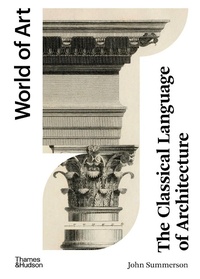
The Classical Language of Architecture
Published on 7. September 2023
Book
Paperback/Softback
152 pages
978-0-500-29734-6 (ISBN)
Description
A revised and updated edition of Sir John Summerson's classic book.
Derived from the principles of Greek and Roman architecture in antiquity, the classical style has long dominated the history of western architecture from the Renaissance to the present. Sir John Summerson's timeless text, as relevant today as it was when first published, distils the visual language of architecture into its core classical elements, and illustrates that building throughout the ages express an awareness of the 'grammar' of style and its rules even if they vary, break or poetically contradict them. From the original edifices of Greece and Rome to the recapitulations and innovations of the Renaissance; the explosive rhetoric of the Baroque to the grave statements of Neo-classicism; and finally, the exuberant eclecticism of the Victorians and Edwardians to the 'stripped Neo-classicism' of some of the moderns; Summerson explains how every period has employed classical language to make their statement.
With a new introduction by academic and architectural historian Alan Powers, this introduction continues to be one of the defining texts on the subject and is essential reading for all students of architecture.
Derived from the principles of Greek and Roman architecture in antiquity, the classical style has long dominated the history of western architecture from the Renaissance to the present. Sir John Summerson's timeless text, as relevant today as it was when first published, distils the visual language of architecture into its core classical elements, and illustrates that building throughout the ages express an awareness of the 'grammar' of style and its rules even if they vary, break or poetically contradict them. From the original edifices of Greece and Rome to the recapitulations and innovations of the Renaissance; the explosive rhetoric of the Baroque to the grave statements of Neo-classicism; and finally, the exuberant eclecticism of the Victorians and Edwardians to the 'stripped Neo-classicism' of some of the moderns; Summerson explains how every period has employed classical language to make their statement.
With a new introduction by academic and architectural historian Alan Powers, this introduction continues to be one of the defining texts on the subject and is essential reading for all students of architecture.
Reviews / Votes
'An easy introduction to both the grammar and the superstructure of classical orders' - GuardianMore details
Series
Language
English
Place of publication
London
United Kingdom
Illustrations
142 Illustrations, black and white
Dimensions
Height: 209 mm
Width: 24 mm
Thickness: 12 mm
Weight
330 gr
ISBN-13
978-0-500-29734-6 (9780500297346)
Copyright in bibliographic data and cover images is held by Nielsen Book Services Limited or by the publishers or by their respective licensors: all rights reserved.
Schweitzer Classification
Other editions
Previous edition
John Summerson
The Classical Language of Architecture
Book
06/1980
Thames & Hudson Ltd
€32.32
Article exhausted; check for reprint
Persons
Sir John Newenham Summerson, CBE was one of the leading British architectural historians of the 20th century. He wrote mainly about British architecture, especially that of the Georgian Era. He was a Commissioner of the Royal Commission on the Historical Monuments of England, curator of Sir John Soane's Museum, London, and Slade Professor of Fine Art at the University of Oxford.
Content
Preface
1. The Essentials of Classicism
2. The Grammar of Antiquity
3. Sixteenth-Century Linguistics
4. The Rhetoric of the Baroque
5. The Light of Reason - and of Archaeology
6. Classical into Modern
Glossary
Notes on the Literature of Classical Architecture
Sources of Illustrations
1. The Essentials of Classicism
2. The Grammar of Antiquity
3. Sixteenth-Century Linguistics
4. The Rhetoric of the Baroque
5. The Light of Reason - and of Archaeology
6. Classical into Modern
Glossary
Notes on the Literature of Classical Architecture
Sources of Illustrations