

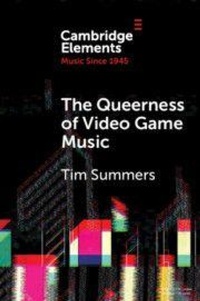
The Queerness of Video Game Music
Published on 3. August 2023
Book
Paperback/Softback
84 pages
978-1-009-37140-7 (ISBN)
Description
Video game music is a significant site of queerness where normative demands are questioned, suspended or loosened. Games resist hegemonic musical logics, challenge musical value systems and use music to complicate essentialist notions of identity. This Element proposes three areas of queerness, each representing different relationships between 'queer design' and 'queer engagement', ranging fromunintentionally resistive to explicit engagement with identity. First, this Element examines musical structures that provide queer temporal alternatives to normative linear development, and interactive systems that reframe the power relationship between musical material and listener. Second, it considers 'retro' or 'chiptune' timbres that queer notions of technological progress to be improvements, rejecting chrononormativity. Finally, the Element discusses music that queers the self/other binary of identity. Games present ways of listening to, engaging with and understanding music that provide opportunities to challenge inherited assumptions and reductive or monolithic values, practices and identities.
More details
Series
Language
English
Place of publication
Cambridge
United Kingdom
Product notice
Paperback (trade)
Illustrations
Worked examples or Exercises
Dimensions
Height: 231 mm
Width: 156 mm
Thickness: 6 mm
Weight
130 gr
ISBN-13
978-1-009-37140-7 (9781009371407)
Copyright in bibliographic data and cover images is held by Nielsen Book Services Limited or by the publishers or by their respective licensors: all rights reserved.
Schweitzer Classification
Other editions
Additional editions
Tim Summers
Queerness of Video Game Music
E-Book
08/2023
Cambridge University Press
€22.49
Available for download
Tim Summers
The Queerness of Video Game Music
E-Book
08/2023
Cambridge University Press
€22.49
Available for download
Person
Content
Introduction; 1. Structure: queer time and the power of imagined alternatives; 2. Timbre: queering technological progress and anti-chrononormativity; 3. Identity and queer anti-essentialism; Conclusions; References.