

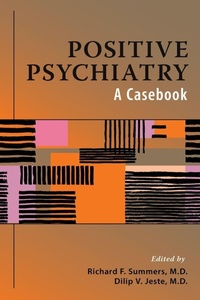
Positive Psychiatry
A Casebook
Published on 30. July 2018
Book
Paperback/Softback
255 pages
978-1-61537-139-6 (ISBN)
Description
Positive psychiatry is a new field, but one with a growing empirical database and a developing literature. Still, for all positive psychiatry's potential to improve outcomes and transform care systems, many clinicians remain unsure as to how to apply these interventions with their patients.
It is this uncertainty that makes Positive Psychiatry: A Casebook such an indispensable resource. This guide illustrates how clinicians have successfully combined traditional psychiatry approaches and positive interventions, how positive interventions can enhance the quality of medical care, and how these interventions are employed in educational and coaching settings.
The book opens with an overview of the history of the positive in psychiatry, a summary of the effectiveness of positive interventions, and an overarching conceptualization of the field of positive psychiatry.
Thirteen extensive, detailed cases follow, organized into three sections: mental health treatment (e.g., schizophrenia and bipolar disorder), medical care (e.g., diabetes and chronic stress in caregivers), and educational and coaching interventions (e.g., medical internships and law school).
The clinical cases include a summary, a description of the patient that takes into account his or her strengths and weaknesses, a detailed discussion of the intervention(s), and the outcome of treatment. The examples from the third section on education and coaching provide a unique opportunity to assess the effectiveness of positive interventions in nonclinical settings. All chapters feature ""take home points"" that summarize the salient concepts and allow for ease of reference.
Featuring a wide array of settings unmatched by any other compendium of psychiatric or positive case material, Positive Psychiatry: A Casebook is a must-have reference for any clinician seeking to apply positive interventions to their practice.
It is this uncertainty that makes Positive Psychiatry: A Casebook such an indispensable resource. This guide illustrates how clinicians have successfully combined traditional psychiatry approaches and positive interventions, how positive interventions can enhance the quality of medical care, and how these interventions are employed in educational and coaching settings.
The book opens with an overview of the history of the positive in psychiatry, a summary of the effectiveness of positive interventions, and an overarching conceptualization of the field of positive psychiatry.
Thirteen extensive, detailed cases follow, organized into three sections: mental health treatment (e.g., schizophrenia and bipolar disorder), medical care (e.g., diabetes and chronic stress in caregivers), and educational and coaching interventions (e.g., medical internships and law school).
The clinical cases include a summary, a description of the patient that takes into account his or her strengths and weaknesses, a detailed discussion of the intervention(s), and the outcome of treatment. The examples from the third section on education and coaching provide a unique opportunity to assess the effectiveness of positive interventions in nonclinical settings. All chapters feature ""take home points"" that summarize the salient concepts and allow for ease of reference.
Featuring a wide array of settings unmatched by any other compendium of psychiatric or positive case material, Positive Psychiatry: A Casebook is a must-have reference for any clinician seeking to apply positive interventions to their practice.
More details
Language
English
Place of publication
VA
United States
Target group
Professional and scholarly
US School Grade: College Graduate Student and over
Product notice
Paperback (trade)
Illustrations
4 tables
Dimensions
Height: 229 mm
Width: 152 mm
Thickness: 14 mm
Weight
348 gr
ISBN-13
978-1-61537-139-6 (9781615371396)
Copyright in bibliographic data and cover images is held by Nielsen Book Services Limited or by the publishers or by their respective licensors: all rights reserved.
Schweitzer Classification
Other editions
Additional editions
E-Book
07/2018
American Psychiatric Association Publishing
€45.99
Available for download
Persons
Richard F. Summers, M.D., is Clinical Professor of Psychiatry and Senior Residency Advisor in the Department of Psychiatry at Perelman School of Medicine, University of Pennsylvania, in Philadelphia, Pennsylvania.
Dilip V. Jeste, M.D., is Senior Associate Dean for Healthy Aging and Senior Care, Estelle and Edgar Levi Chair in Aging, and Distinguished Professor of Psychiatry and Neurosciences, and Director of the Sam and Rose Stein Institute for Research on Aging, at the University of California, San Diego, in San Diego, California.
Dilip V. Jeste, M.D., is Senior Associate Dean for Healthy Aging and Senior Care, Estelle and Edgar Levi Chair in Aging, and Distinguished Professor of Psychiatry and Neurosciences, and Director of the Sam and Rose Stein Institute for Research on Aging, at the University of California, San Diego, in San Diego, California.
Content
Overview of Positive Psychiatry
Part I: Mental Health
Chapter 1. A Family and Wellness Based Approach to Child Emotional-Behavioral Problems
Chapter 2. A Strength-Based Approach to the Psychotherapeutic Management of Schizophrenia
Chapter 3. MDMA-Assisted Psychotherapy for PTSD
Chapter 4. Recovering Strengths: Combining Psychodynamic Psychotherapy and Positive Psychiatry for Improved Self-Esteem
Chapter 5. Positivity in the Treatment of Opioid Addiction and Trauma
Chapter 6. Effective Use of Positive Psychiatry Concepts in the Psychotherapy of an Older Patient Living with Bipolar Disorder
Part II: Medical
Chapter 7. Diabetes as a Family Illness: A Positive Approach to Diabetes Management
Chapter 8. Surfing the Urge to Avoid: Using Acceptance Commitment Therapy and Cognitively Based Compassion Training to Treat PTSD
Chapter 9. Use of an Integrated Positive Psychiatry Approach in a Veteran with Tinnitus
Chapter 10. Building Resilience to Chronic Stress in Caregivers
Part III: Education and Coaching
Chapter 11. Stress Management and Resiliency Training in Medical Internship
Chapter 12. Acting 'As if' in Executive Coaching
Chapter 13. Teaching Positive Psychology in Law School
Part I: Mental Health
Chapter 1. A Family and Wellness Based Approach to Child Emotional-Behavioral Problems
Chapter 2. A Strength-Based Approach to the Psychotherapeutic Management of Schizophrenia
Chapter 3. MDMA-Assisted Psychotherapy for PTSD
Chapter 4. Recovering Strengths: Combining Psychodynamic Psychotherapy and Positive Psychiatry for Improved Self-Esteem
Chapter 5. Positivity in the Treatment of Opioid Addiction and Trauma
Chapter 6. Effective Use of Positive Psychiatry Concepts in the Psychotherapy of an Older Patient Living with Bipolar Disorder
Part II: Medical
Chapter 7. Diabetes as a Family Illness: A Positive Approach to Diabetes Management
Chapter 8. Surfing the Urge to Avoid: Using Acceptance Commitment Therapy and Cognitively Based Compassion Training to Treat PTSD
Chapter 9. Use of an Integrated Positive Psychiatry Approach in a Veteran with Tinnitus
Chapter 10. Building Resilience to Chronic Stress in Caregivers
Part III: Education and Coaching
Chapter 11. Stress Management and Resiliency Training in Medical Internship
Chapter 12. Acting 'As if' in Executive Coaching
Chapter 13. Teaching Positive Psychology in Law School